

Primetime is just as the show and star it’s trying to unveil, disturbing and fascinating. It’s complicated, complex and requires a nuanced conversation. An understatement to say career best from Robert Pattinson. ‘You see how this looks,’ isn’t just a Chris Hansen catchphrase but a question directly at Primetime’s audience…
Something about “To Catch a Predator” was the way it captured audiences with that irresistible pull of being as disturbing as it was fascinating; the cable TV version of rubbernecking. This wasn’t some Hollywood set, this could happen in your back yard. What’s strange enough is that the events that take place in Murphy, Texas happened minutes away from where I grew up; I have vivid memories of word spreading Chris Hansen and the production were headed to the town next to us and following the true events depicted at the end of this film. American reality TV in the early aughts is an interesting place because it navigates that line of disturbing and fascinating no matter where you look, from “The Girls Next Door” to “American Idol” to “Survivor,” and ultimately, “To Catch a Predator.” This is all in line with how Americans were consuming media post 9/11, a mix of mindless escapism that needs something to keep their mind operating. For a Kardashian or Hilton show, you had a counter with “The Swan” or “Hoarders,” where it had a dark side to it. The rise of scripted shows such as “24” or “Lost” brought this “American” sense of how the worst of times can be solved at our hands. Americans, in a sense, were desperate for a reality show that showcased finding justice on American soil and for a form of media that wasn’t going to be something with terrorism like viewers were watching on the news, it was going to be something they felt they could be a part of. When Robert Pattinson’s character comments on the show being bigger than “Lost,” it touches on how thirsty America was for self-claimed justice and surveillance as a form of self defense. It made you feel dirty watching it, hearing the messages sent by these predators, but you felt your sense of duty fulfilled seeing these accused perpetrators tackled to the ground by authorities at the end. Lance Oppenheim, a brilliant documentarian, was the perfect filmmaker to tell this story in a narrative form not just for how easily America fell for this show, but how Hansen was prey, predator, and just a man playing a complicated character.
Primetime opens with Pattinson’s Hansen repeating a script, “I will undress you. Then you will undress me,” as a mantra in the mirror. It becomes clear he’s about to go onto set, which is a staged house in order to catch a predator. He’s slipping out of the man he is and becoming the vengeful angel known for bringing these pedophiles to justice before they can commit a crime (or perhaps another crime). It reminded me so much of Brady Corbert’s Vox Lux with this slip of internal ugliness, ethically complicated and personal trauma weighing on someone before going on stage. Despite what Hansen is portrayed as saying throughout the film, it’s all just a show. Celeste in Vox Lux was a nightmare with no care in the world other than being the best, at the expense of everyone around her, how is Hansen any different? Turning on a face and more worried about delivering a line for the utmost impact to viewers versus the task at hand. The moral ambiguity running throughout America at this time is personified through someone like Hansen and the TV show “To Catch a Predator,” where the good outweighs the bad. It’s all just means to an end. When then-NBCUniversal TV Group CEO Jeff Zucker (played cheekily by Zucker himself) says they’re getting bumped up to a better time slot, but this means the stories need to be juicier, the set ups need to be more salacious, and they need some headline-grabbing lead ins. The ethical qualms here become what should be the forefront of the film, how do you do that when this is reality? Hansen’s longtime brilliant producer Andie Bender (a career best Merritt Wever) is the only one on the production side (aside from the decoy) who shows any qualms at changing a schedule to best find a whale. The script should dive in deeper to the moral ethics at play of ignoring cases that had already been at play for production to lead into; the decoys working hard at building rapport with these potential predators on some level is opening up these offenders into crossing a line, they get hung out with no capture by the show, and now they’ve moved on…to what? Perhaps this is on purpose given David Osit’s 2025 documentary about the show, Predators, that dives deeper with testimonial on the effects of the show filming, production and what happened after it aired (with an interview from Hansen himself). When Hansen is confronted by a rabbi, “You don’t have the right to do this. Who do you think you are,” the film comes close to confronting the moral uncertainty of what the show is and what Hansen is doing, but despite Pattinson’s brilliant performance in that moment, we quickly move to the next staging.
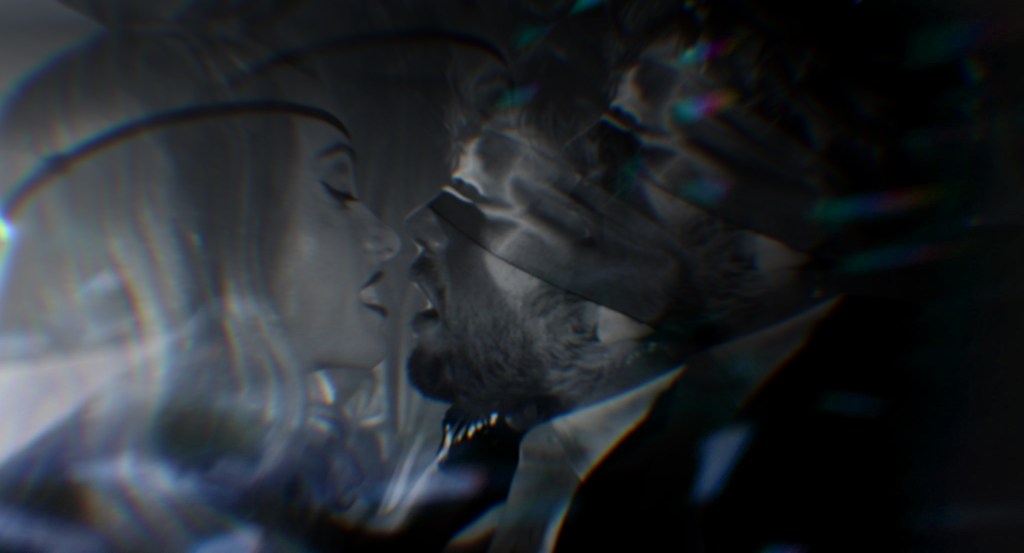
Ajon Singh’s script (which pulls from Luke Dittrich’s 2009 Esquire article, ‘Tonight on Dateline This Man Will Die,’ a deep exploration of the events leading up to the final sequence of Primetime and the end of the show in real life) is too loose and somehow has a lack of momentum building after about two-thirds of the way through. It’s purposefully messy thematically and with its story but visually, it’s the best looking film of the year. Oppenheim’s direction is perfect for the dizzying quest for morals and fame within a story of a man’s misunderstanding of justice and life itself. David Bolen’s brilliant cinematography is inventive, so incredibly textured and a character all on its own. The nightmare fuel of being watched and what these producers are reading is palpable through his lens and the suffocating use of close ups throughout the film. All of this hypnotic work is only intensified by the outstanding editing from Daniel Garber and otherworldly score by Ari Balouzian.
It’s an understatement to say career best work from Pattinson. It’s not just the voice, it’s not just the hand gestures, it’s the way he breathes, the way he thinks. You can actively see Hansen himself processing what someone is saying to him and how best to respond; it’s calculated through Hansen himself. Pattinson has always been the most interesting actor but when he plays someone so complex and full of traits that have weight to them, he’s never better and Hansen is truly one of the most complicated characters he’s ever played; he’s not just a husband and a father, he’s a host, a self-proclaimed evil cleanser, above all that he’s an actor working to deliver that performance that allows middle America to sleep better at night. Wever is unreal all throughout Primetime; she is deliberate and methodical, but never to a fault. That show is her baby and Hansen isn’t her equal, he’s her instrument. She can’t leave ‘Predator’ to go to a heartwarming show, she’s too cut throat. Wever, an actress I’d say radiates warmth typically, brings this sadistic nurturing to life that is reminiscent of Jake Gyllenhaal in Nightcrawler and Courteney Cox in the FX show ‘Dirt,’ where you know it’s the wrong approach but they’ll do anything for the success of their media.
The decoys are the moral compass or heart and soul of the film. In her first film role, Phoebe Bridgers is honestly remarkable. I believe not just her babyface innocence, as both young boy and girl, luring in these potential offenders, but her comment about a quest for justice. Audiences now will probably say she’s the ‘woke insert,’ but she’s the one face-to-face with these predators. Their stink is real to her for a few moments that others involved can’t relate to and her dedication to actually bringing them down and standing for something (not selling ill intended merch) is real through Bridgers’ performance. Skyler Gisondo as Decoy Dan is brilliant, his wide eyed innocence but determination to be a star feels like a new hop off my plane at LAX success story. You know this actor if you live in LA and so his palpable fear when he’s tossed into this staged house feels all the more terrifying, you see the risk on his face.
The final act of Primetime is truly the end of ‘Predator’ as a show and a dark line in the sand for reality television built upon a quest for justice that should be left up to professionals. Against Bender’s wishes, Hansen takes the team to Murphy, Texas in search of a whale rather than their planned programming. The build up to Murphy displays the cracks in the show. The research and build up with the possible predators is messy and unorganized, a decoy quits the show and the moral line of what is reality and what is acting feels more blurred. The whale they’re after ends up being an assistant district attorney and the man commits suicide when he realizes the show and law enforcement are coming. The real decoy Gisondo is portraying, Dan Schrack, has spoken about feeling responsible for the man’s suicide and his complicated feelings of that specific incident.
I have a young daughter and I don’t post her on social media and you can’t help but acknowledge the general enlightenment this show had on not just putting a face to the evil idea of a pedophile but the realization they really could just be next door. This show was off the air before social media took off and the constant flood of family-provided images of their children, their location and more became much more normalized. There’s a moment early on in Primetime where one of the predators says he has a four year old, almost as if it was a defense, and everyone around me gasped as if this isn’t a common thing. There’s a taboo of discussing the threat of pedophila and it’s led to some dire consequences and assaults that will never be brought to justice. It’s interesting to see an actor my age, a new father at that, take on this role. Primetime coming out in a time where US leaders won’t persecute anyone involved with the Epstein files and a biopic of a musician accused of such crimes was a box office hit is not lost on me; it’s both interesting and horrifying to comment on society and where we’ve progressed. There’s a moment in the film that Hansen says something like “you can’t understand because you don’t have a child,” and while you want to be angry at Hansen, he’s correct. This fear, this outrage, this disgust is all very real for anyone without a child, but the consuming weight of it once you do have a child is something you can’t explain. The idea of writing about this while my daughter sleeps down the hall brings a chill down my spine because you simply don’t want to imagine these monsters but you have too.
Throughout the film, Hansen is telling a story about being in India and this folklore of a monster he believed in and it’s setting him up in the belief this show is about cleansing, at any cost. Through editing and some visual tricks, the monster is visible both as the predator and Hansen himself, which allows Primetime to hint at this idea of moral complicity of the show and Hansen. “What would happen if I hadn’t been here,” is a throughline allowing the film to show the complex ideas of what the legacy of ‘Predator,’ Hansen and the eventual copycats have left. Primetime isn’t some massive hit piece on Hansen, it’s fascinated by him and paints him in a fully dimensional, complicated lens, the way real humans are. The way audiences were drawn to the show is the same kind of person Hansen is portrayed here, disturbing and fascinating. His by any means necessary tactics mirror the content at any cost we see today, from influencers to journalists. The societal appetite of both viewers and networks hasn’t changed, it’s only grown. His ‘you see how this looks,’ isn’t just a Hansen catchphrase but a question directly at Primetime’s audience…
Grade: B+
Oscar Prospects:
Likely: None
Should Be Considered: Best Lead Actor (Robert Pattinson), Best Supporting Actress (Merritt Wever), Best Cinematography, Best Original Score, Best Film Editing, Best Sound
Release Date: September 25, 2026
Where to Watch: In Theaters

Kenzie Doyle
she/her @kenzie__xcx
Lives in LA. Misses Arclight, loves iced vanilla coffees.
Favorite Director: David Cronenberg
Sign: Capricorn




Leave a comment