
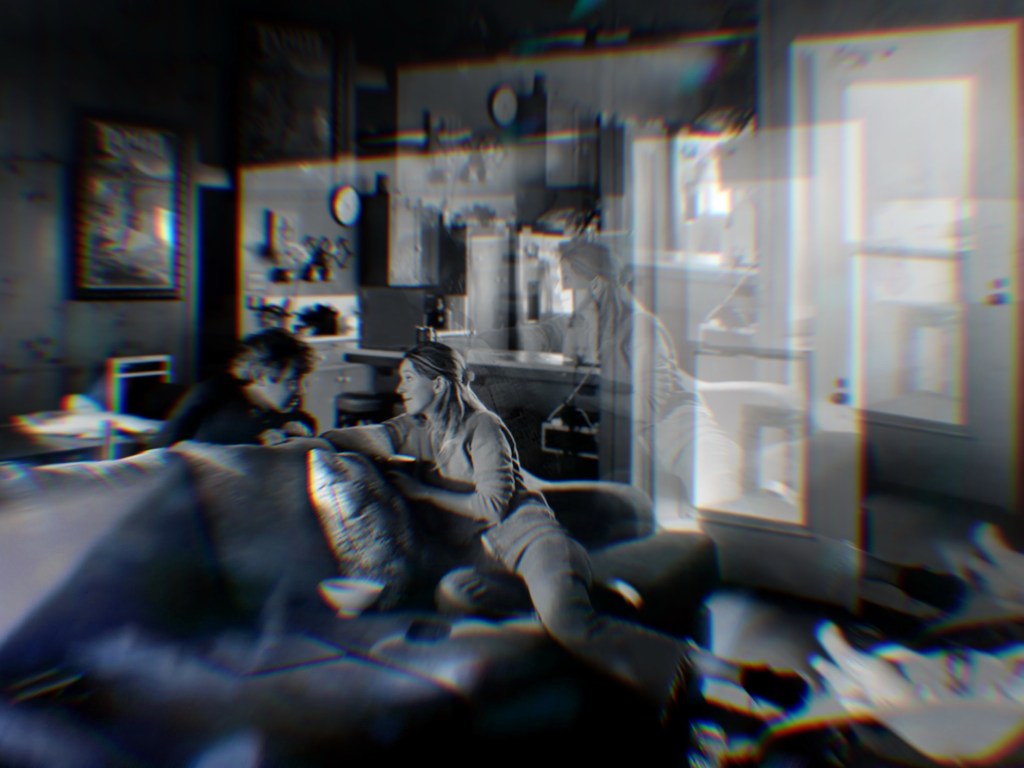
You Can See Everything has already made history with its astounding audience reception and box office. This is an indescribable theater experience you do not want to miss. With stunning commitment, storytelling, image-making, and sheer audacity, this documentary is one of the best films of the year.
This review will contain spoilers.
The president’s statements always contain at least one lie. Our coworkers conspiratorially discuss the latest culture war over a female celebrity’s inane statement. Is Rachel Zegler on drugs at the Met Gala? Is Taylor Swift Satan incarnate? AI’s haze over our world will intensify; rendering every image and video on the internet in question. Our connection to reality is slowly becoming untenable. We live in a post-truth world.
In the face of this existential dread, Nathan Fielder and Lance Oppenheim mount an attempt to confront and understand a human representation of all this confusing madness. In a quite intimate fashion, we follow Nathan Fielder living with Elizabeth Holmes in the immediate lead-up to her 10+ year imprisonment for fraud. We watch a woman– a few months post-partum– grapple with the fact that she is about to be separated from the world for a long time. Holmes is teary and hesitant, smiley and restrained in the weeks leading up to her imprisonment. And yet – Holmes is the most alien character of this story because we are removed from her by confusion regarding her authenticity. The documentary becomes a mystery with the filmmakers– and the viewer– trying to understand Holmes. We as the audience become implicated in this search for meaning.
This documentary is not questioning if Elizabeth Holmes lied about Theranos and her “invention.” There is no big reveal at the climax of this film that her COO backstabbed her or the jury missed some piece of evidence. Instead, we are watching a woman twist her way around a haze of semantics and weaponized incompetence. We are meant to ask: is she delusional? Does she believe what she is saying? Is she continuing to lie to Fielder and– by extension– us?
The filmmakers display incredible storytelling talent with their ability to create characters out of the subjects of this documentary. Holmes’ husband Billy Evans with his bloated anger. Amanda Seyfried (more on her later) with her gushing sensitivity as she grapples with her role in all this. Nathan Fielder with his probing eyes. Holmes’ father with his sad searching for some kind of safety, some version of stability in his daughter’s future.
Fielder in particular is a stand-out, implementing his blunt, simple questioning with miraculous clarity. Questions like: “What is your definition of a lie?,” “You mean to tell me you’ve never lied in your life?,” “Do you think she has a track record of standing up for herself in relationships?,” and my favorite: Why are you being so weird and cryptic with your words? An unstoppable force meets an immoveable object. Fielder sits with Holmes at the kitchen table and gazes at her as Holmes refuses to directly state if her invention did what she said it did. This scene, along with a later scene of Fielder trying to gauge if Holmes understands an Abbott and Costello skit, are genius ways of illustrating Holmes’ ability to wiggle out of making a direct statement.
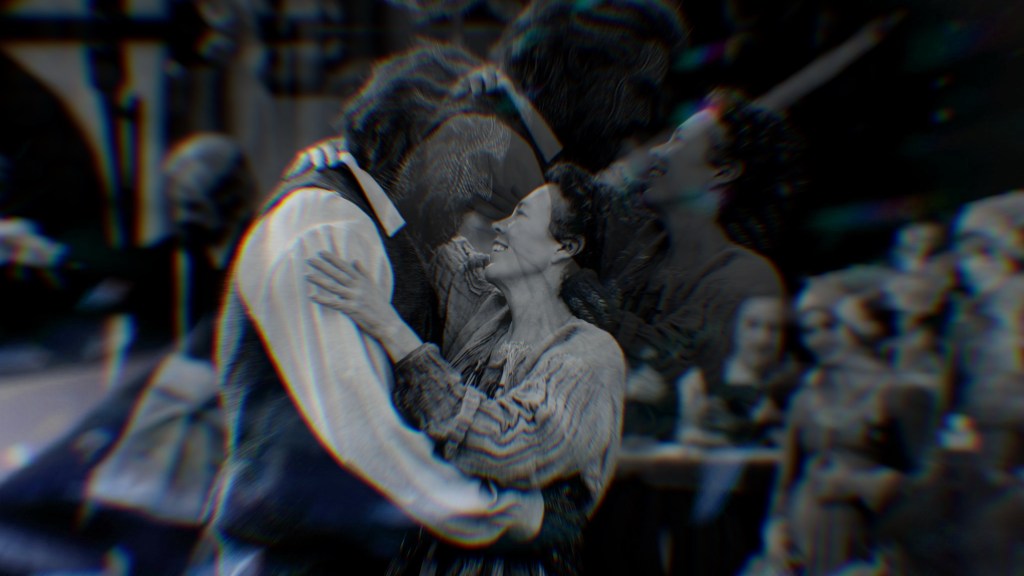
Other characters populate our film with stunning clarity. We almost instantly hate Holmes’ husband Evans, and his whining, dominating presence introduces a complicated dynamic of interpersonal power struggles with his wife. Fielder introduces Amanda Seyfried to this project, and asking for her help in reenacting certain unfilmed moments of this documentary. But Seyfried also acts as a sounding board for Fielder, offering her perspective as a woman and mother. We learn more about Billy Evans and Holmes’ relationship with Seyfried. As a woman, I am instantly concerned by a man cosplaying as his wife on Twitter, obtaining a hologram of his wife, and cementing this with a power of attorney. Seyfried immediately has the very human response of being concerned for Holmes’ autonomy. Seyfried is captured in an honest moment of questioning her role in all of this mess as a person whose performance influenced the public’s perception of another woman. I felt my audience proxy was Seyfried, in her very human– sometimes messy– reactions to Holmes’ manipulation and situation. The filmmakers including Seyfried as a feeling collaborator, rather than using only her as a meta reenactor of Holmes, elevates the documentary as an exploration of acting that is in-conversation with May December and Mulholland Drive. Ironically, Seyfried is the actress, but her presence felt the most real.
You Can See Everything was one of the most reactive screenings I have ever attended. My audience laughed with every Fielder reaction shot, cheered with Fielder’s dismissive “You don’t know how I feel” to Evans, and gasped at a reference to Charlie Kirk. In a stunning reveal, we learn Holmes’ husband attempted to negotiate for a cut of the profits of the documentary. Instantly, we as the audience are implicated in the film by the mere act of buying a ticket. It is an incredible journey to go on as a viewer, and the release when we learn the end result of this give and take is palpable.
This documentary is a stunning portrait of a transition in tech. In 2023 San Diego before Holmes’ imprisonment, Billy Evans talks about “radical transparency,” and Holmes coaxes Fielder to just see her “as a human being.” The ocean washes the shoreline in the background. We watch the couple on the phone in a horrifying montage of their pitches for what is essentially a sequel to Theranos. It’s an open horizon like the broad language the couple uses to persuade others to “join the cause.” It is the world that put Elizabeth Holmes on magazine covers. An old world of the 2010s– of Sheryl Sandberg Lean In politics and when the internet felt like portal to the rest of the world. When Holmes goes to prison, the film makes a hard jump to two years later. A Cybertruck flies down the too-hot concrete of a Texas highway. It is a world of guns, male anger, and AI as a Swiss Army knife for insufficient tech. Billy Evans types on a laptop with a hologram of Holmes’ AI likeness speaking platitudes to him in an invocation. A lizard walks across the table in an uncanny version of home. This depiction of the tech’s embrace of the political right is simple, undidactic filmmaking at its finest. And why wouldn’t tech embrace the right? Less regulation for AI, more wealth for a few men, and maybe even a presidential pardon. Holmes will reenter a world she doesn’t recognize; but not a world she rejects.
Grade: A
Oscar Prospects:
Likely: Best Documentary, Best Picture
Should Be Considered: Best Director (Lance Oppenheim, Nathan Fielder) Best Supporting Actress (Amanda Seyfried), Best Cinematography, Best Film Editing
Where to Watch: In Theaters

Madelyn Land
she/her @maddiexdrew
Lives in Seattle with her large earring collection.
Favorite Director: Sofia Coppola
Sign: Aries




Leave a Reply