
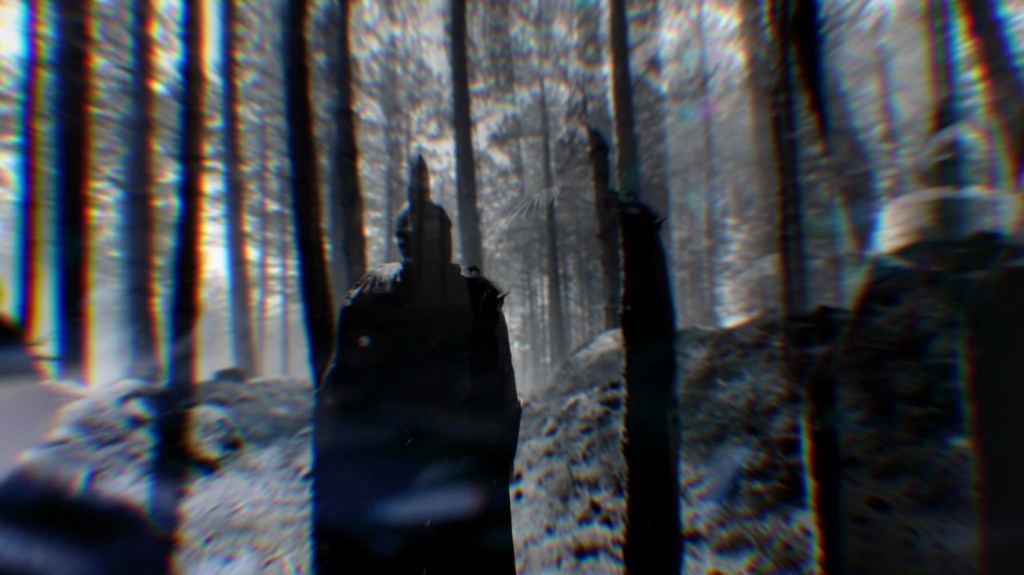
The Odyssey is one of humanity’s oldest stories, an epic that has been passed down from generation to generation. Christopher Nolan has taken this mythic story and pushed the boundaries of what’s possible, from the cinematography to the practical effects and the acting. Hollywood is on the brink, fighting against the rise of AI and the continued consolidation of historic studios. If there was ever a hero that Hollywood needed to defend the spectacle and artform of large-scale, epic filmmaking, they couldn’t have found a better champion than Nolan.
Humanity is bound together by storytelling. Across a millennia, we tell stories as a form of entertainment, connection, and a way to keep cultures alive. It’s a piece of history that has the power to outlive us all. Don’t believe me? Just look to Homer. One of the ancient world’s greatest storytellers, his recounts of the Trojan War through The Iliad and The Odyssey has spread beyond his lifetime to the far corners of the world. His tales of these heroes have been retold from generation to generation, and with every new advancement in storytelling, these legends live on. Now, one of our great modern storytellers is making his mark in this myth’s legacy.
In the time of Homer, epics were more recognized as a noun, that of a long, narrative poem that recounts a tale of a hero. Now, “epic” is often associated as an adjective — grand, heroic, and massive in scale. Christopher Nolan’s The Odyssey brings both definitions together in one movie. It’s an impressive feat of filmmaking, raising the bar for what can be achieved in the medium; it is also the story of Odysseus, the “hero” of Troy who fights and finds his way home from exile.
It was a euphoric moment in March 2024 when Christopher Nolan finally won both Best Director and Best Picture at the Academy Awards. For decades, fans of his had been waiting for that day when the Academy would finally award him, not just for the technical brilliance of his films, but as a producer and director. His Ithaca was out of reach for decades, and now it’s not. It didn’t take long for the question to arise: What’s next? How do you top what many consider your magnum opus? What type of story should be told next? Simple, an epic.
In the wake of Oppenheimer, the team Nolan assembled for The Odyssey feels like a victory lap. Oscar-winning collaborators like Hoyte van Hoytema, Jennifer Lame, and Ruth De Jong all reunited to run it back again without phoning it in. With each film since Interstellar, van Hoytema continues to raise the bar of what’s possible with IMAX film, and The Odyssey is no different. It’s the first feature film to be shot entirely in IMAX, a genuine feat made possible thanks to a newly designed camera that’s lighter and quieter than the standard IMAX camera. Lame, once again, steps in like an artist at her loom to weave together the classic epic in a way that honors Homer’s story with Nolan’s creative vision. De Jong reinterprets our vision of Ancient Greece through the architecture of Odysseus’ palace to the isolated beaches that keep Odysseus away from Ithaca.
And then, there’s Ludwig Göransson. The journey this conductor has taken from his days scoring Community to his grand, almost mythic orchestrations in films like Sinners is nothing short of excellent. There are conductors who define different eras of film. John Williams created iconic scores by utilizing the French horn. Hans Zimmer blended orchestration with synthesizers to create unique sound designs. This current era belongs to Göransson. His specific attention to incorporating cultural relevant sounds and instruments with modern sounds create an original sound that’s transcendent and timeless. His score for The Odyssey is yet another masterpiece that fuses bronze gongs and lyres with synthesizers. Tracks like “Troy” and “Cyclops” ratchet up the tension, while tracks like “Hades” create a sense of dread and foreboding. We don’t need an oracle to know that Göransson will be nominated again for this soundtrack and is easily the frontrunner to win another gold statue.
Even with his team of frequent collaborators, Nolan doesn’t play it safe. In fact, The Odyssey marks the director’s attempts infusing fantasy and horror elements in his film. The movie begins stating that this is an era of “apparent magic”, an ambiguous stance to take on the mysticism present in this man’s journey. But the fantasy at play here lends more to the horror aspects of the epic. The monsters and creatures Odysseus faces along the way are meant to invoke danger. From Polyphemus to Scylla, there are a few jump scares. From a fantasy perspective, Nolan is more interested in the grounded nature of the story; as far as horror goes, he flirts with it more than pushing it further.
One sequence that captures a fuller sense of horror lies with Circe, played to perfection by Samantha Morton. Eurylochus and the rest of the crew approach her cottage in search of food. Circe screams after she discovers Eurylochus. Although he assures her he means her no harm, Circe protects herself. She makes the men leave their weapons outside, and she prepares them a meal. As they ravenously devour her stew, body horror is on full display as she transforms them into pigs, a sequence achieved in-camera. It’s haunting as she pulls food out of their mouths and molds their faces into new shapes.
The horror doesn’t stop with the transformation. The real horror lies in Circe’s conversation with Odysseus. With her gift of sight, she confesses that she merely changed his men to their true form. A man, like Odysseus, can be clever, but men left to their base desires are pigs — fixated on their hunger for food, power, and destruction. They plundered Troy of its people, stealing that which wasn’t theirs to take. The destruction of Zeus’s law brought this dark nature to the surface, no longer suppressed and hidden behind humanity’s mask. When Circe does transform them back, she whispers to each of them “back to your disguises.” It’s chilling yet poignant.
Staying with the cast, there’s an embarrassment of riches with Nolan’s cast. Robert Pattinson is magnetic as the scheming, sniveling suitor, Antinous. Elliot Page is haunting yet tragic as Sinon, a soldier who took Antinous’ place to serve alongside Odysseus in Troy. With her limited screentime, Lupita Nyong’o delivers the duality the twins, Helen and Clytemnestra. Zendaya carries the grace of the goddess of wisdom, and as Athena, serves as a reminder to Odysseus the consequences of his intellect.
Not to be lost in the shuffle of such an A-list cast are John Leguizamo and Himesh Patel. The former plays Eumaeus, Odysseus’ loyal swineherd, and the latter plays Odysseus’ second-in-command, Eurylochus. Outside of Penelope, these men know Odysseus the most. Eurylochus is one of the only men to genuinely challenge the king when destruction continues to follow them home, which Patel brings that tension in the role. Meanwhile, Eumaeus proves to be one of the few men Odysseus can trust when he returns home. As the blind pig farmer, Leguizamo delivers one of his best roles in years.
Another performance that worked better than anticipated was Tom Holland as Telemachus. Despite Holland’s age, it’s generally been hard to view him beyond his younger years when most were introduced to him, whether it was Billy Elliot, The Impossible, or that kid from Queens. He’s matured over the years, bringing new depth and intensity to performances like in The Devil All the Time and Cherry. However, outside of his Spider-Man movies, The Odyssey might be the first time his boyish demeanor actually works in his favor. Telemachus is a young heir who isn’t taken seriously by the suitors nor even by his own mother; that’s why it’s significant that towards the end of the film, he’s able to silence a room by simply yelling “Enough!” and sends the suitors away for the night. The story of The Odyssey charts the evolution of Telemachus from a boy who grew up without a father into a man worthy to sit in his father’s seat and rule Ithaca. It’s his coming-of-age story, and Holland captures this story well.
For how grand of a story The Odyssey is, it is also a love story between a couple separated by time, an ocean, and the fury of the gods. Odysseus and Penelope are the heartbeat of The Odyssey. Their love and loyalty to each other allow them to endure every trial and threat they face. (Although, Penelope remains more faithful than Odysseus, but that’s a larger point of criticism that’s been around for longer than Odysseus’ journey home). The scene between Odysseus and Penelope before they separate is tender and intimate, a true sense that they are partners and each other’s guiding lights.
Ithaca’s throne may have looked empty for two decades, but Penelope has been the one who has ruled in her husband’s absence. She has kept the wolves from attacking and stealing the throne. Anne Hathaway brings that ferocity to life. She is both regal in her presence yet vulnerable as the years of Penelope’s waiting take its toll, which beautifully comes together in scene between her and Holland before Telemachus sails off to Sparta. In a stacked year of films for the actress, from Mother Mary to The Devil Wears Prada 2, Hathaway weaves together a tour de force performance as Ithaca’s defender.
After two previous supporting roles in Interstellar and Oppenheimer, Matt Damon becomes the legendary king of Ithaca, and it’s one of his best performances of his career. Damon is commanding as Odysseus, taking on the brutal nature of the elements. There’s a weight behind every blow he lands. Not just the physical demands of the role, Damon gives Odysseus the pathos needed for his performance. The agony on his face as he’s tied to ship’s mast as they pass the sirens and the devastation of broken promises he’s left with afterwards is brutal. He’s tender with Penelope yet ruthless in battle. It’s 20 years of a man’s life wrapped in a grounded performance that deserves to be part of Damon’s legacy.
Since its official announcement, it’s been an enigma as to why Nolan wanted to adapt The Odyssey after Oppenheimer. Perhaps this was his full-circle moment for being passed over to direct Brad Pitt in Troy. Perhaps he wanted to compete with Wishbone for the definitive version of Homer’s classic. Perhaps he was drawn to the epic because of the narrative speaks to his own manipulations with time in his scripts (The Odyssey begins in medias res). Yet after watching one particular scene, it’s clear that Homer’s epic shares thematic elements of his previous movies. After being brought back to his court in Ithaca, Odysseus speaks with his wife in disguise. As he tells her about her husband’s time in Troy, Odysseus confesses the reason why he hasn’t been able to return home. He is haunted by Athena and the destruction of her statue. His invention, the Trojan horse, broke Zeus’s law forever. In doing so, he set humanity on a path of destruction and violence, the likes of which they’ll never recover from. He may have defied the gods, but they still punished him with a decade-long exile to return home.
Sound familiar? That’s because Odysseus mirrors the American Prometheus himself, J. Robert Oppenheimer. Both Odysseus and Oppenheimer were praised by their commanders for their intellect until they were out of their sights. Like Odysseus, Oppenheimer’s invention, the atomic bomb, may have ended a war but it changed the course of humanity forever. He set the world on a new path of destruction, the likes of which we continue to live in fear of our destruction. Oppenheimer defied the gods by making the theoretical a reality, and he lived the rest of his life punishing himself for it. With this understanding, it makes complete sense why The Odyssey was a natural next movie for Nolan. The setting may be different and his filmmaking more advanced, but at the heart of it is a protagonist burdened by the weight of their greatest achievement and isolated as a result.
The Odyssey is one of humanity’s oldest stories, an epic that has been passed down from generation to generation. The hero’s journey after a decade of fighting an enemy force, only for the hero to he is his own worst enemy, yet still finds his way back home. Humanity continues to gravitate towards these stories. Nolan has taken this mythic story and pushed the boundaries of what’s possible, from the cinematography to the practical effects and the acting. The narrative adjustments he makes to the adaptation largely enhance the impact of the story of his brilliant, yet burdened protagonist.
Hollywood is on the brink, fighting against the rise of AI and the continued consolidation of historic studios. If there was ever a hero that Hollywood needed to defend the spectacle and artform of large-scale, epic filmmaking, they couldn’t have found a better champion than Christopher Nolan.
Grade: A-
Oscars Prospects:
Likely: Best Picture, Best Director, Best Lead Actor (Matt Damon), Best Supporting Actress (Anne Hathaway) , Best Adapted Screenplay, Best Cinematography, Best Film Editing, Best Original Score, Best Production Design, Best Costume Design, Best Makeup and Hairstyling, Best Sound, Best Visual Effects, and Best Achievement in Casting
Should be Considered: Best Supporting Actress (Samantha Morton), Best Supporting Actor (Robert Pattinson), Best Supporting Actor (John Leguizamo)
Where to Watch: In Theaters

Meredith Loftus
she/her @meredithloftus
Lives in LA. Enjoys baking, hiking, and explaining why Mamma Mia deserves its own cinematic universe.
Favorite Director: Wes Anderson
Sign: Gemini



Leave a Reply