
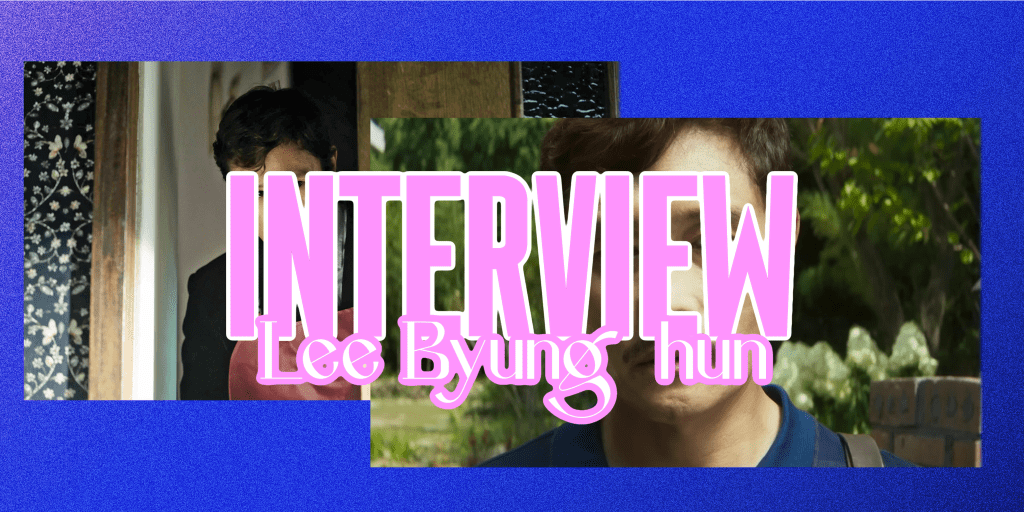
Following the conclusion to Squid Game Season 3 releasing on Netflix in June, Lee Byung-hun returns to the big screen in a story that, once again, speaks to the modern world’s financial and moral struggles under capitalism.
In director Park Chan-wook’s No Other Choice, Lee Byung-hun plays Man-su, an ordinary Korean man who has dedicated 25 years of his life to climbing the ladder at a paper company. After being unexpectedly let go, Man-su struggles with a loss of identity and must find a new way to provide for his family’s growing needs before they lose their house. In an act of pure desperation, Man-su’s idea is to literally eliminate his competition in order to win a job at Paper Moon, a top company in his field. But actually stomaching the nerve to kill off the other job applicants is another challenge altogether.
While Park’s previous film Decision to Leave was snubbed by the Oscars in the Best International Feature category, No Other Choice looks poised to potentially land nominations in above the line categories, including Best Picture and Best Adapted Screenplay. Fresh off his Golden Globe acting nomination, Offscreen Central had the chance to chat with Lee Byung-hun about his role as Man-su in director Park’s darkly comedic satire, how his collaboration with director Park has evolved since 2000’s Joint Security Area, and why it was important for the film to directly tackle AI in relation to the workforce.
The final question of this interview contains a spoiler for the ending of No Other Choice.
Matt Minton: Congratulations on your Golden Globe nomination. I’d love to start off hearing about where you were when you heard the news. How are you celebrating? How do you feel right now?
Lee Byung-hun: I got a text from my friend [Ji-yong Kim], and that’s how I got to know the news. He was the director of photography from Squid Game Season 2 and A Bittersweet Life. And I was going to tell my family, but it’s three in the morning in Seoul.
Matt Minton: I’m very excited to see you nominated, as well as the film in Best Picture Musical/Comedy. Talking about your role in the film, I know that you and director Park have worked before, and your collaboration goes back decades. Can you recall your first encounter with him and how your collaboration has evolved over the years?
Lee Byung-hun: Years ago, like you mentioned, I met director Park through Joint Security Area (2000), and even then, I felt like our collaboration was really great. I’m the type of actor who always loves suggesting fun ideas, I’m a storyteller, and director Park is the type of director who loves to listen to these ideas and stories. Since then, we have maintained a great friendship and we meet often, so it felt like a really comfortable experience working with him again.
One thing that has changed since Joint Security Idea is the fact that I’ve always had a lot of ideas and have funny stories, but back then he would never apply these ideas I had on set. However, forNo Other Choice, even the ideas I would say as a joke he would apply. So I actually wanted to stop coming up with ideas because I was worried that because so many of my ideas were in the film, if the movie failed, he would blame me and I would take all the responsibility.
Matt Minton: That’s funny. Are there any specific changes you suggested that you’re happy to see in the finished product?
Lee Byung-hun: One idea that I did pitch was in the music room scene. It’s the three characters, they’re all scrambling to grab the gun after Man-su loses his grip, and it’s almost as if they’re a bunch of worms. They’re squirming about trying to wrestle and get this gun. I thought this moment would be really funny, but on the other aspect, it’s also the story of people that really must take a life day by day, so I thought that it would be a somber sort of visualization as well. Director Park really loved this idea and incorporated it into the final scene.
Another idea I had was after Man-su killed the second victim and he is digging a hole in which to bury him. He gets so exhausted that he falls asleep on the couch and the next morning, when the police come, he mistakes the police coming to arrest him and not his son for his petty crime. So he blurts out, “I’ll tell you everything at the station.” I made this suggestion because I thought it would be a really fun element and I really like the way it’s expressed in the final cut of the film.
Matt Minton: Speaking more about the physicality of your performance, I was really blown away with how much of the dark comedy comes from the way you play Man-su. You’re not afraid to tap into the absurd. And with that first kill scene you’re referring to, there’s so much choreography that goes into these scenes that starts off messier but gets more refined as your character transforms. Could you speak to your approach here for physical comedy?
Lee Byung-hun: I actually never thought I was doing slapstick comedy when I was acting. But it was the Venice Film Festival where this slapstick element was introduced or mentioned for the first time. I was really surprised to see that my acting was seen in that way. My biggest intention is not to really push or force the comedic aspects of it. I just thought about Man-su — he’s an ordinary man that’s under extreme pressure — and how clumsy and nervous he must be in committing this first murder. And at the same time, he’s extremely desperate and anxious in being able to execute this. So while it might seem funny to the audience, these are the emotions he’s feeling.
Matt Minton: Man-su’s relationship with his wife, played by Son Ye-jin, is particularly interesting. From the dance scene to her turn at the end when we can read between the lines with what she’s saying versus truly thinking about Man-su’s actions. Can you talk about developing that relationship with Son Ye-jin? So many people are celebrating her performance online.
Lee Byung-hun: A month before the shoot, we actually had to start getting dance lessons for the scene you mentioned. But because this is a moment where Miri’s character has to show off her dance moves, my co-star had to take a lot of lessons. However, because my character doesn’t have to dance so well, he can be a little bit clumsy with it, so I didn’t have to go as diligently as she did. When it comes to my collaboration with Son Ye-jin, though it was our first time working together, we were already familiar with each other because she is a good friend of my wife. We’ve had meals and played golf together, so there wasn’t really an element of awkwardness or time needed to get to know each other. We naturally were able to build great chemistry together on screen. She was so great at capturing the detailed elements of her character and was so sensitive to each of those details, so I actually think the scenes that we’re in together became that much more plentiful and rich.
Matt Minton: Talking more thematically, part of why this film seems to resonate so much is how it tackles people experiencing job insecurity and fears around AI. This film isn’t officially out in the U.S. yet, but I know it topped the Korean box office at the end of September. I’m curious if there are any specific themes that have resonated more with Korean audiences than others?
Lee Byung-hun: The film has screened in London, Canada, U.S. and of course Korea. Judging by the audience reactions, they are reacting differently to the humorous aspects as well as when very depressing reality is reflected. I noticed that a Korean audience has more focus on the serious and somber elements of the film, especially an older audience — maybe in the similar age range as Man-su or even a little bit older. They have reactions where they really empathize with his joblessness, because they too have been fired from work or have been forced into early retirement. Speaking of the Korean audience, I do think the older generation of audiences really enjoyed the somber reflection of reality, however the younger audience enjoyed the black comedy aspects more.
*Spoiler for the ending of No Other Choice*
Matt Minton: There’ve been many sci-fi films over the years that have speculated on what the future of AI could look like, but this is one of the first films since AI has really become a part of society that directly tackles its inevitable consequences. I know AI is something actors are concerned about across the world when it comes to digital replication and the ethical boundaries around that, too.
Lee Byung-hun: In terms of the story, Man-su is eliminating his competitors. In actually committing these murders and getting to the end of the film, he faces an even bigger competition which is the AI. He realizes that all this effort he’s put in up until this point is completely useless. I think this is an issue that’s really of the now because even as an actor, I see clips floating around of videos that I didn’t shoot, that people have superimposed or created with AI. At first I thought, “This is interesting or novel,” but without the correct rules or regulations to manage this, I think AI is really developing at such a rapid pace.
There is some sense of anxiety about what will happen in the future for me as well. I’ve heard there are people coming together to try to make regulations about AI. However, I think AI is developing at a much more rapid pace than these regulations, so I think that’s why the anxiety over it is really mounting.
No Other Choice opens in select theaters on December 25th.
You can find our review here.



 offscreencentral.com
Leave a comment