

Robert Eggers is known for his perfectionism when it comes to the details in his film and his incredible team he’s worked with over his entire filmography are key to ensuring the audience is transported to the time and place the story of each film is set in. Linda Muir has been the costume designer on all four of his feature films and her beautiful designs have always immersed audiences in whichever world Eggers has created within his films.
Offscreen Central had the opportunity to speak with Muir ahead of the film’s upcoming Christmas Day release and discuss the beautiful experience of seeing the film with a crowd, the long process to get the production of Nosferatu started, the amazing looks Bill Skarsgård wears as Count Orlok, and much more!
This interview contains plot descriptions of Nosferatu.
Kenzie Vanunu: Hi, it’s so amazing to speak with you! Congratulations on the film. It’s so amazing. I literally have seen it twice this week.
Linda Muir: Excellent!
Kenzie Vanunu: I loved it so much!
Linda Muir: Did you see it with a lot of people?
Kenzie Vanunu: I did! The first time I saw it was actually with a mostly SAG audience. And it was so amazing. I got to hear Nicholas [Hoult], Willem [Dafoe], and Lily-Rose [Depp] talk about it after.
Linda Muir: Excellent!
Kenzie Vanunu: Everyone was just so invested in it. It’s also so fun to see ‘horror’ films with audiences that may not be typically seated for a film like this.
Linda Muir: I think that it is this kind of wonderful little apparition; it’s like a horror film, but it’s got such great story, backstory, performances, nuance. For me, I call it a horror film, but it’s much more.
Kenzie Vanunu: I completely agree. I’ve said this a few times to the team at Focus, but my parents have talked about seeing The Exorcist in theaters my entire life. And they would always say that it just transcends what a horror film is and can be. And I think this is the closest I’ll ever feel to the way my parents felt seeing The Exorcist for the first time.
Linda Muir: I would definitely agree. I’m probably the same age as your parents, so, I can completely identify with that. I am always so shocked when people say to me, “Oh, I saw The Northman on the airplane,” and I’m kind thinking, “No, it’s not an airplane movie!”
Kenzie Vanunu: Oh, nooo! That is a full screen, you need an IMAX kind of movie!
Linda Muir: Exactly!
Kenzie Vanunu: I was so excited when I saw your name attached to Nosferatu since you’ve worked with [Robert] Eggers on all of his previous features. Even as a viewer, you can tell the whole team really speaks the same creative language. I know Nosferatu has been a longtime dream of his to bring to the screen. When did he first approach you about officially working on it?
Linda Muir: Either it was next up after The Witch or it was next up after The Lighthouse. I mean, things happen and then you kind of put it out of your mind and you move on. And then we had one false start. I’m going to say in between The Witch and The Lighthouse, and then I’m going to say that we had another false start the fall before we actually were in Prague. It was me, my assistant and Craig Lathrop, our production designer. We were in Prague for about a week. And then it became clear that Robert just was not going to be able to promote The Northman. And I think he might’ve actually even been still finishing some of the additional photography for The Northman because with COVID, that schedule just was so eviscerated.
For whatever reason, it was determined that this was just going to be too insane. So, we went home and then finally, the start that we had, it was late October, November of I think 2022. That was when we actually then kind of got going, so, you start reading and you start researching and you start putting it into your head and your heart and then you stop and then we had cast changes in between one iteration and the final one.
But once you do start, then you’re full throttle, research, research, research. Because, you know that there are multiple locations that the protagonist travels through. And, and so in his initial scripts, he indicates the flavor of the place, he indicates that sort of more general tone, it’s embedded in the script, you know? So, then it becomes clear once I start doing the very detailed research, we have to decide which of the many, many counties in Romania at that time are we saying that we’re at. For instance, the inn, where is that in? Because, you know, the embroidery, the footwear, the beautiful headgear is specific to one area, and it looks very different in another area. So, all of that very specific research doesn’t really happen until we are going. Robert set his Nosferatu in 1838 in Wisborg, Germany. Wisborg is a fictional town. We based it on Lübeck and that has its own very, very specific military, police, and hospitals.
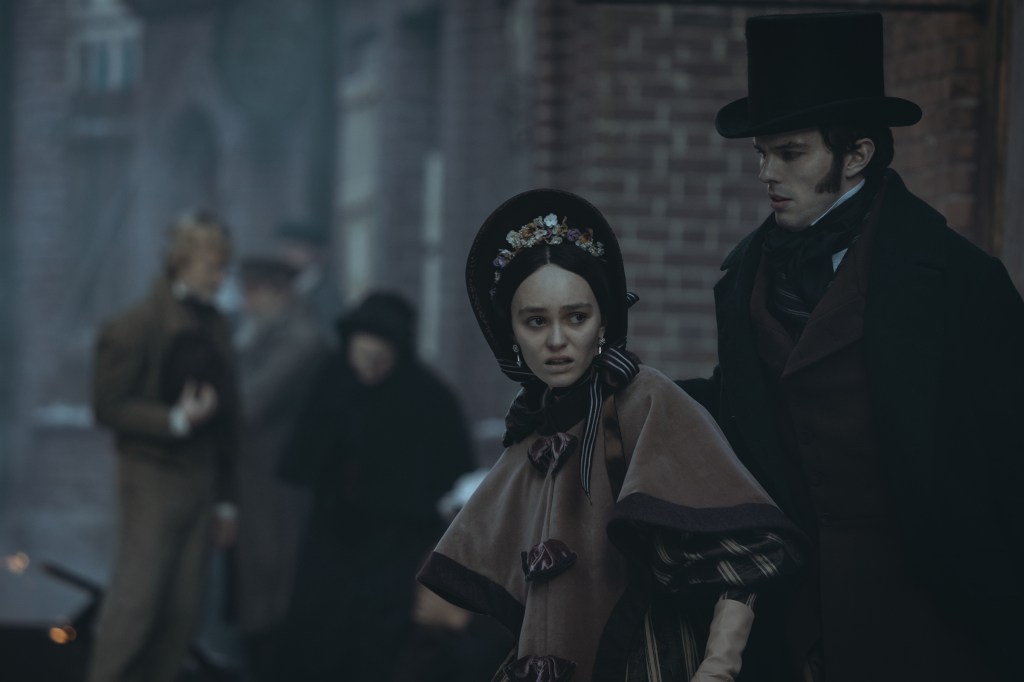
Kenzie Vanunu: That is actually something I was going to bring up! There are so many fascinating chapters in the story of Nosferatu. From obviously Ellen and Thomas but contrasting them with the wealthy Harding’s to the plagued hospital scenes to the village outside of Count Orlok’s castle.
Linda Muir: Yeah. And Ellen starts off with wealth, which is apparent from the bedroom in the estate and the lilacs that she’s writhing around under. And when she goes to Thomas, she doesn’t care about the wealth. All she wants is Thomas and to be free. He’s the one that is driven to want but it’s just in order to give to her. And it’s his downfall.
Kenzie Vanunu: It’s an amazing story exploring relationships. Nicholas actually was talking about the detail in the script, the first time he read it, it was describing the score, and he was like, “I’ve never read a script like that.” Does Robert describe anything about the costumes in the script?
Linda Muir: No, he doesn’t describe the costumes and doesn’t describe the rooms in detail in the script. What he does is he starts his own personal research. And at some point, along the way, he does a lookbook.
It could be not just to inform Craig and I, props later on, hair and makeup later on. It is probably also to indicate to the studios, this is the scope of what I’m talking about, you know. And so, Craig and I start with images and then that’s usually the first order of business in addition to reading many, many books and also looking at about 30 films that Robert sends and none of the films are specifically for anything other than inspiration and tone: it’s not that we’re using that as a kind of guide. It’s all kind of just fuel.
One of the first order of businesses for me is to go through his lookbook, his research, and to actually verify that there aren’t anachronisms and often there are, because again, we’re not reproducing this, we’re just using it as inspiration. And so, I’ll point those out. I’ll say, don’t get your heart set on that because that’s actually later or earlier or whatever; earlier is not always a problem, unless it just isn’t appropriate. And then Craig and I will start to bring to Robert additional research because he’s in all of the departments, he’s looking at locations, and he’s doing storyboarding with Jarin [Blaschke], so the guy’s a bit busy.
I start my research and bring to him, “Hey, you know, this is really amazing. This is so great. It fits so perfectly into the story. There is this kind of a corset and there’s this kind of the sleeves… Oh my God, Robert, who knew you picked the craziest year in the 1830s.” For this brief little moment in time for a couple of years prior to 1838 and a couple of years after, the sleeves are totally different than any time else in the 1830s. We’re making most of the things.
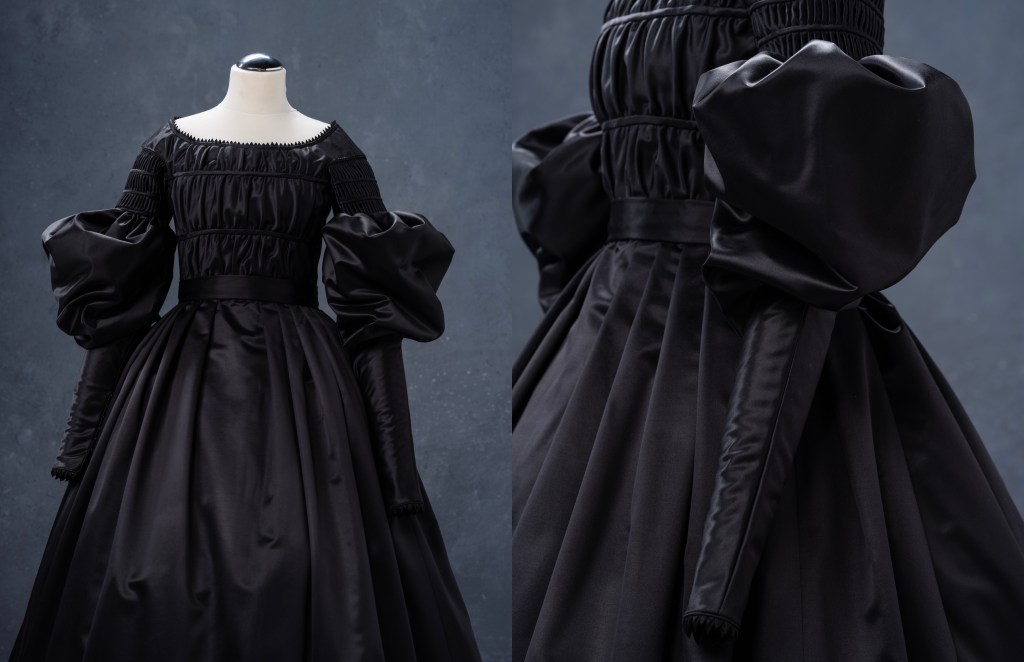
Linda Muir: He sets the bar really high for himself, in terms of the language, in terms of the look, in terms of the locations, what do they offer? Do we need to build something or can we find, no, we can’t find it. So, yes, we are building it. And that is typically the case for costuming as well, because there is a lot available to rent but it is not specific enough.
And so, you’re looking for things that really collectively transport you as an audience member. So, in the end, you end up making if not a total outfit, you’re making most of it. And you’re augmenting the key pieces that say, this is Bukovina, this is Transylvania, Hunedoara, you know.
And then all of the hand embroidery. With The Northman, it was all that incredible tablet weaving on all the costuming and handmade, hand loomed wool. On this it was pleating, pleating, pleating, pleating, the sleeves, and the amount of hand embroidery.
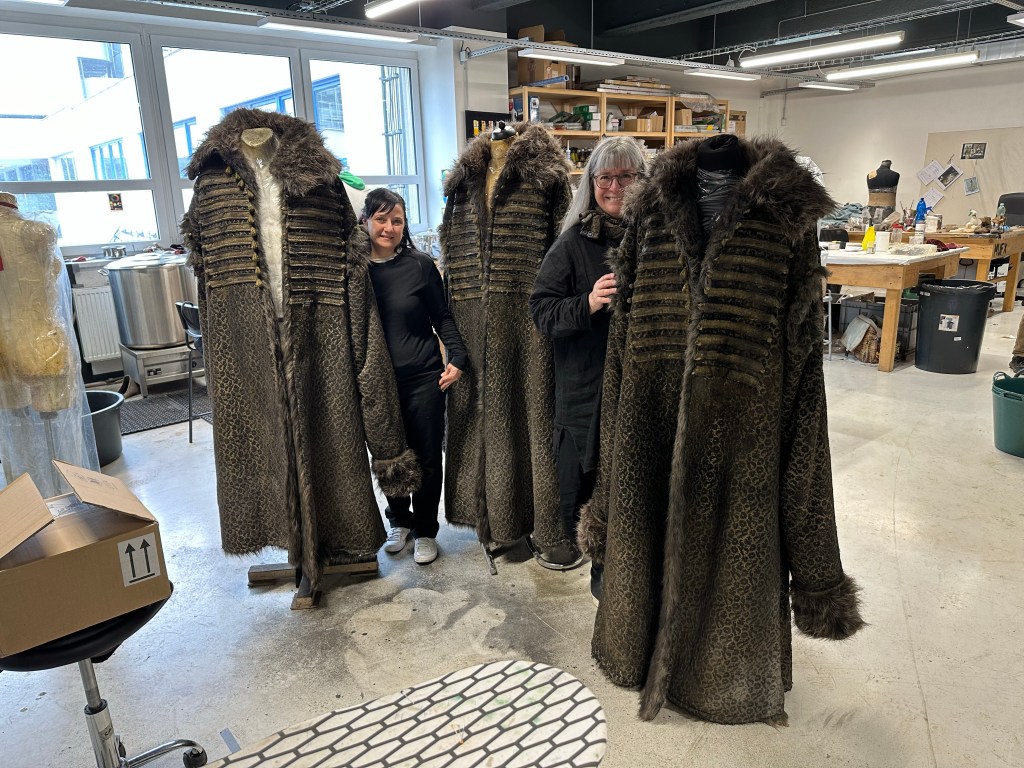
Kenzie Vanunu: Speaking of key pieces, I have to dive right into Count Orlok’s amazing looks. His coat is such a standout amongst all of these incredible costumes. What I love about costumes in vampire stories is that these are characters who have lived such long lives, many different lives, so their wardrobe always reflects that. Obviously, his physical appearance has been shielded from the marketing, which I love, so his costumes have been taking front and center display. Can you talk about creating his looks?
Linda Muir: I should watch Interview for the Vampire again because there isn’t anything that completely jumps out. But when you say that I remember feeling when I watched it when it came out, that there was the sense, they weren’t decrepit, but you definitely got the feeling of that they had lived a very long time. I should watch it again to see how I got that feeling, where did I get that feeling from?
Kenzie Vanunu: It’s one of my favorite things rewatching anything with vampires to look through their belongings in the backgrounds. So, obviously Count Orlok’s physical appearance has been shielded from the marketing, which I love so much because it makes it so incredible when you finally see him. But he also truly hides in the film at first, especially from Thomas, he’s for a bit using the coat to almost shield himself their first night.
Linda Muir: Yes, it’s so beautifully done with his reveal.
Kenzie Vanunu: I just love every moment with Count Orlok. How did you go about creating all of his looks and building this iconic character with all of these layers?
Linda Muir: I started the designs for Orlok on the first trip to Prague. I design in Toronto and then I usually take most of the principal characters with me to wherever we’re going, in terms of sketches and a lot of the fabrics I’ve researched already. But with Orlok, Robert was always very, very clear that he is a Transylvanian Count from around 1580. And with Romania and Transylvania, depending on what period of time you’re looking at, the boundaries are changing and the definition of what the country is, is changing.
Because it’s Austro Hungarian at the time that Orlok would have been a young, vital, you know, “I’m a sexy, handsome, gorgeous, rich beyond belief man.” And so, we had several books that were more military books, and they also had portraits of counts. There were family names that were fabulous, and I would start to look at things very specifically because if you have to design them, you have to cut them, you have to know what the back looks like. But you know, in every portrait, the back is under a cloak. And so, I have to go to museum photographs of their extant pieces and say, “Oh, okay, that’s what the dolmen looks like. That’s underneath the cloak. That’s what the back of it looks like. Well, that’s an interesting detail, you know.”
Robert always knew that Bill [Skarsgård] would be dressed as a roughly 300-year-old count. And so, to put together layers and layers and layers of fabric and to actually make many of the accessories. For instance, the buttons that hang down one side of that cloak, and that cloak is called a mente; it has super long arms, but they’re not intended to be used as sleeves. They hang along with the cloak and then you have these two little slits that the arms can go out, or you can just wear it over the shoulders, which is much more elegant. And it seems effortless, but in fact, it’s got a huge harness underneath the whole costume to keep it floating on his shoulders. But, so, to make those buttons, because I kept seeing examples of just the most beautiful painted glass buttons, gold buttons. We had some extraordinarily talented embroiderers in our workroom. We ended up actually with the finest Gossamer gold thread, actually embroidering a kind of star shape. And then the whole thing was drawn up into a closed bell, but it didn’t have any weight. It just was kind of papery. And so, I said, well, let’s get some fishing weights and then they’ll have the heft, and they’ll seem as if they are really made of metal and gold. We did three mentes for photo double, for stunt double and for Bill, so there’s like 36 of those buttons that had to be made just for that one side of that one cloak, and then it goes on and on and on and on.
The breakdown process was pretty incredible. Silvana Sacco was our lead textile artist, and we went really slowly. I could have selected a dark velvet for the collar that stands up in the, in the cuffs. But I actually went with an almost stone color distressed velvet. And then we did a fine, fine gold lace overlay over that, and we took it down and we took it down and we took it down and we darkened, and we darkened, and we made it rotten looking and putrid looking. And it was so much fun. But we went slowly, and Robert was always brought in to see what he thought and by then he was further along in the storyboarding with Jarin, so we had a better idea, when are we going to see the back… Robert was very, very specific about the collar, he’s very specific about the height and the fur, the weight of it, the length of everything.
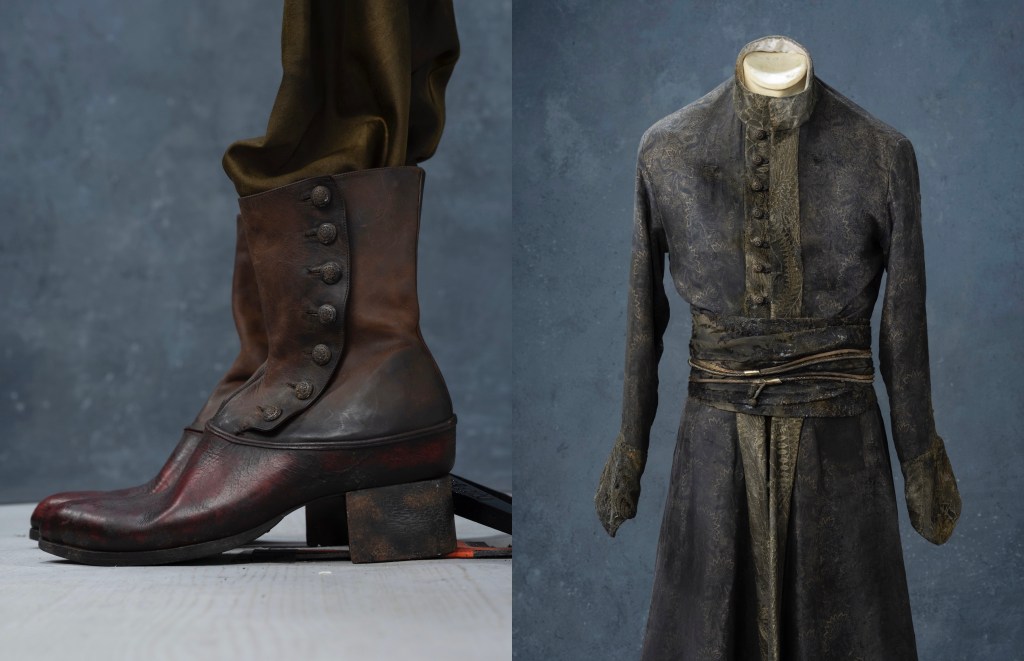
Linda Muir: And so, I can give him a much better idea of what he’ll be working with on Bill along the way by bringing him in and showing him on a stand. We did a really early test with Bill in London at Shepperton Studios with David White, who just did the most incredible prosthetic makeup. I mean, whole body makeup, face makeup, hands, nails, everything. He is just so talented. And I went with my assistant, and we took with us toiles or mockups for the dolman, which is the tunic, his Mick Jagger trousers, a model of his hat, and one of the most fabulous things that I love about his costume are his boots. I don’t know that we ever see them in, in any kind of a real close way in the film. They are like little leather mules with four-inch steel heels, they’re a horseshoe shape. And then there’s a leather sock that he wears. We attached the two for safety and for ease, but historically there would’ve been this, this crazy little leather mule leather socks slips into it. These counts totter around in them, but they actually wore them on horseback too. So, it couldn’t have been that, um, unstable unless they were just, you know, sitting on horseback, not really fighting. Bill, when he first got into that costume in, in London, he was really working it. He was really ingesting all the points on his body where he was feeling, and particularly the boots really gave him that creepy walk that he has that’s there. It also gives him a lot more height. He’s already very, very tall. And he lost weight for the film and he just remarkable in the film.
Kenzie Vanunu: I’m a huge fan of Bill’s and even I was like, “is that really him? Like, are we sure?” I was really taken aback both physically and his voice. It’s incredible the way he completely becomes Orlok.
Linda Muir: You know, he has such a beautiful young boy face in person and so there was always this really crazy disconnect to pop in and talk to him in the morning before makeup and then he’d come back out and it would be like whoa.
Kenzie Vanunu: Absolutely cannot imagine seeing him both ways in a short span of time. I love that you mentioned the boots though because that scene where Count Orlok does disappear on the stairs… I love the sound of the boot, I love how threatening it is and then you immediately don’t hear him anymore and it’s such a great detail with the costumes into the story and character.
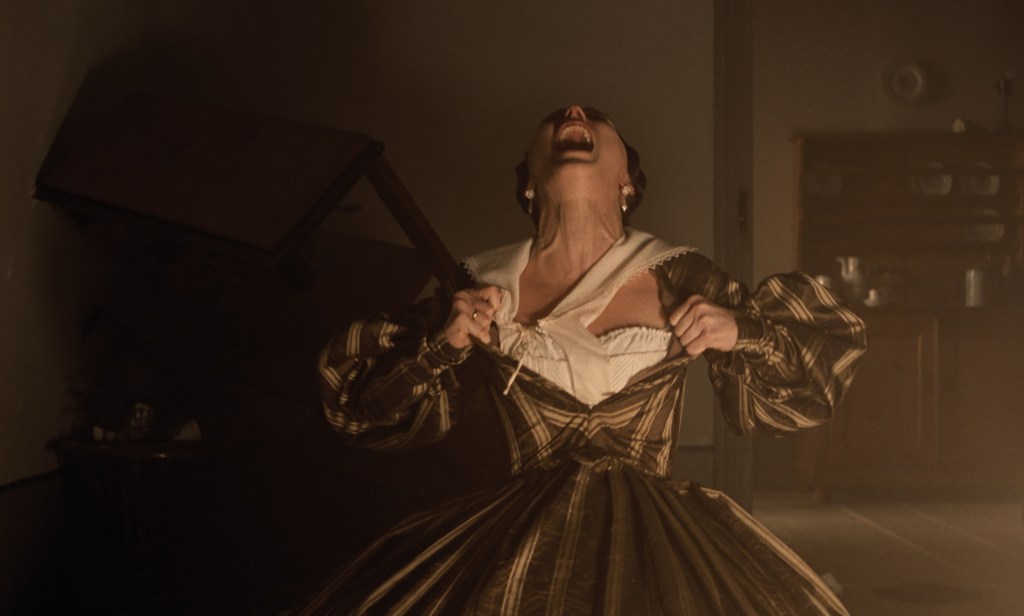
Linda Muir: Robert and I talk through these things, and how do we kind of arrive at this and arrive at that. For instance, the scene with Ellen and Orlok at the end when she’s in her wedding outfit from her wedding to Thomas. She’s fully dressed and she’s in a dress that ties up the back and she’s in a corset and she’s in a petticoat and she’s in the veil. And I said to Robert, “are we imagining that this is the two of them come together and they’re both fully dressed and then they’re on the bed and they’re naked?” And he said, “yeah, that’s what we’re imagining.” There are moments like that throughout where sometimes it is written in the script and sometimes you have to find those beats.
Sometimes you have to talk him through and how is he doing this? He’s going to go from here to here to here. So, let’s just follow those costume pieces. And it was the same in all of Robert’s films, in The Witch, The Lighthouse, and The Northman, that he has these very epic scenes and they’re active, with Nicole Kidman is ripping her dress open. And now Lily-Rose Depp is ripping her dress open. We do multiples. And so, you have to arrive at what is the most economical way of giving Robert, Jarin and Lily what they need on set. We talk through everything. How are these things constructed? So, what can we use? We ended up building more bodices than skirts. Nothing was happening to the skirt. It was just the bodice. So, you try to find efficiencies and instead of building full costumes that cost more money, you try to take that money and make the earrings or whatever else.
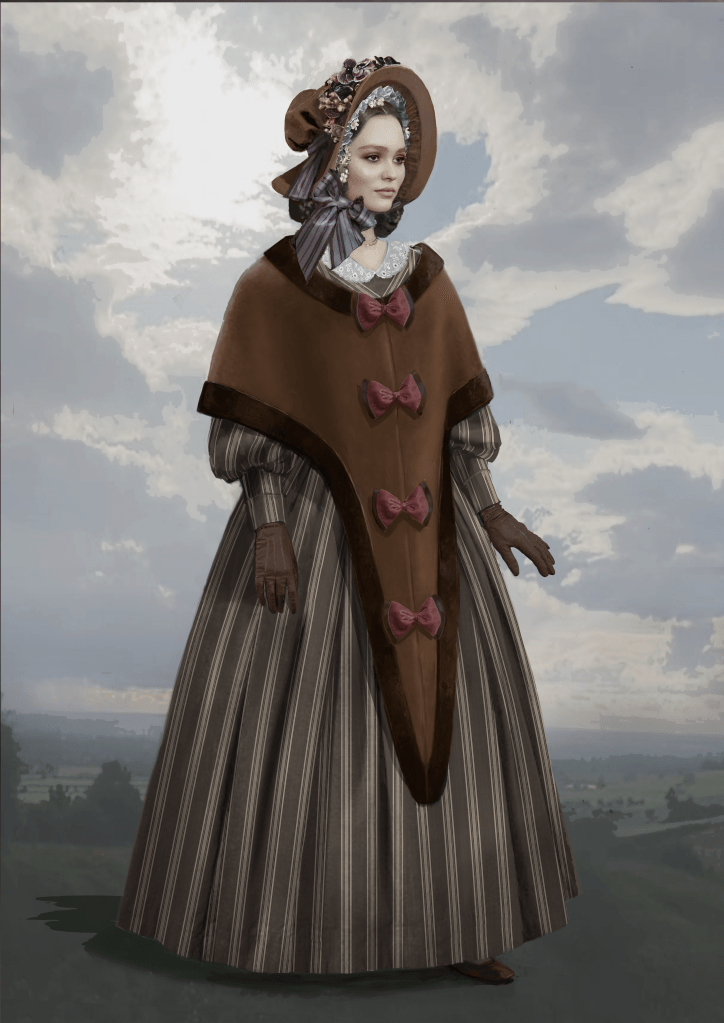
Kenzie Vanunu: Absolutely love that. You can see all the extra details, especially with Ellen and Anna. Well, thank you so much for speaking with me and I’m just such a fan of all of your work, especially with Robert Eggers. His films really stand out to me personally because of the amount of detail in every aspect of the film and your work always truly transports us to the time of the story y’all are telling and it was really an honor to speak with you!
Linda Muir: Thank you very much! It was an honor to speak with you!
Nosferatu opens in theaters on December 25, 2024, including in IMAX and Dolby.
You can read our review of the film here.



 offscreencentral.com
Leave a reply to ‘Nosferatu’ – Interview with Production Designer Craig Lathrop Cancel reply