
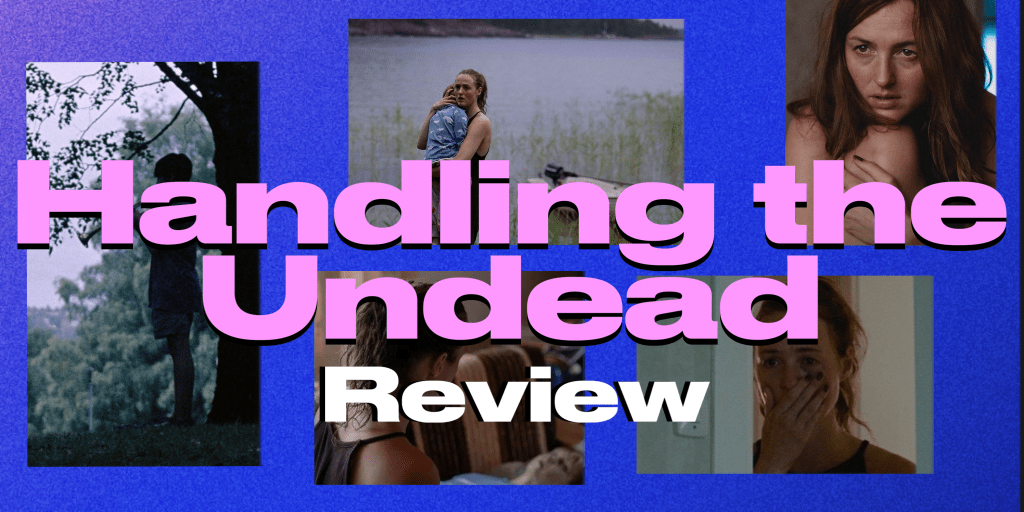
Thea Hvistendahl’s Handling the Undead reimagines the typical zombie flick through a sedated meditation on what defines the living: having a body or possessing a soul?
The modern-day zombie genre is synonymous with fast-walking zombies tearing the living from limb to limb in adrenaline-rushing sequences, but Handling the Undead turns it down a major notch in favor of a slow-motion approach with the same eerie gore. The change of speed mirrors the decaying of the body going through death as time escapes and the world closes in. There is even a cheeky moment of one of the young kids playing a zombie video game juxtaposing the zombies of the culture and the zombies of Hvistendahl’s world.
On a hot summer night in Oslo, a supernatural event occurs causing traffic lights to blink amongst the moody evening sky and ceiling fans to come crashing down in homes. Animals are always the first to notice a shift in the universe as the birds swarm in peculiar migration patterns throughout the ominous sky to the sound of beeping cars. Populating this humid landscape are three families impacted by the spring death of their loved ones.
Three simultaneously numbing storylines play out between three families in their different approaches of bereavement and grief all brought together by the aura of sadness surrounding the northern city. A grandfather and his daughter have lost their son, a wife saying her final goodbye, and a family of three witnessing their mother suddenly not being there anymore. Each features different phases of the process from beginning to end with the loved ones being at varied stages of death. For Anna when her little boy returns, she is instantly turned back on again as a human tries to take this supernatural occurrence to return to normalcy. Then Tora takes her final moments with her wife to let her know she is loved and the young children in the family of four realize how they should’ve spent their last moments with their mother instead of pushing her away. The reactions to the sudden reanimation of their loved ones are not met with shock or curiosity in how this could happen but a tinge of sadness.
The beauty in the film comes from the performances. Seeing this plethora of actors experience different shades of grief adds nuance to a feeling that isn’t just overall sadness. There is a foreign sense in their once-full homes that they show their inability to adapt to the new normal. Their grief imprisons them into a neverending cycle with no cure unless a sign of relief comes. Anna for example who the film largely surrounds is so numb when first introduced as she wades through life and it’s when she sees her son again she isn’t freaked out but grows warm to make sure her boy is safe. Limited dialogue leads this story to play out almost like a silent film of just watching the interactions between the living and dead where every emotion is worn on their sleeve. Their subtle mood changes guide the atmospheric aura of the film. After blocking themselves off from pain they then become the most vulnerable causing emotions to take over their judgment.
The deconstruction of the zombie genre here focuses on these beings as a sign of love instead of fear. It is unknown what they will eventually grow into or if they can take down the living, but their living counterparts use it as a chance to have an extra moment with the outline of who they used to be. Holding onto their loved ones past their livelihood starts to consume them both literally and metaphorically. Hvistendahl beautifully blends realism with the supernatural in her adaptation from how the grandfather bathes the bloated boy to Tora feeding a piece of bread to her wife. Being in this dazed state they believe their loved ones are still in there using their bodies to continue to walk through the normalities of life without thinking differently. In contrast to these two is the family of four unable to comprehend who this person is lying on the hospital bed who looks just like their mother and wife but from her animal cruelty is not the same person. Going to lengths to make sure these silent carcasses are fed and bathed won’t bring them back to life or solve the living’s grief, it hints at accepting the worst and putting down the irrational actions.
Taking from the novel of the same name, the film also examines the relationship between parents and children almost in reverse from the perspectives of a young boy and a mother dying. Losing a child so young is one of the most unimaginable things in the world, life is not guaranteed but a child’s life feels like a given. In comparison with parents, we know they won’t be around forever but sometimes in life, we reach points where we move out of their grasp, losing those precious moments we also thought were given. It is an inevitable conversation but when we imagine it being our closest bodies it becomes unfathomable that natural forces could take someone away. The aftermath is assuming new roles within the family dynamic shown by the family of four as the father tries to return to the status quo with a birthday party and the children step into roles of caretaking left open by their deceased mother.
Handling the Undead is the traditional definition of horror with jumpscares, its horrors derive from the very thought of watching a loved one decompose and then sitting with it. Staring upon a corpse may spark the memories of cherished times with that person making the presence of their shutdown soul a symbol of that. Just like in reality when a person is gone, people are left with the absence of their love and soul only memories or objects to fail in replicating their lively presence. It is the use of darkened black frames in decayed sets and an orchestra building to a crescendo that sends chills down the spine as anything could disrupt the peace at any moment.
Hvistendahl and her collaborators build a mournful space that ushers in the audience to connect their grievances to the characters at large. It is a film that requires the viewer to seep in the swirling sorrow and anxiety fully letting their guard down for whatever emotions wash over. The floating camera mixed with the stillness allows the more gut-wrenching moments to painfully punch the heart causing pain so deep. Through these movements, it intrudes on the characters wallowing in their grief while not being too pressed into their space making a perfect balance to linger on the oncoming dangers to come. When those final moments of consumption hit it possesses the sensation of taking a large inhale at the beginning of the film and finally being able to exhale letting go of all tension and worry.
Handling the Undead is a practice in meditation for a subject that is still so hard for many people to comprehend when the time comes for either them or their loved ones, Thea Hvistendahl keeps a steady hand to tell this poignant poem about the pain of love and loss of life.
Grade: A
Oscars Prospects:
Likely: None
Should be Considered: Best Adapted Screenplay, Best International Feature, Best Score, Best Makeup & Hairstyling
Release Date: May 31, 2024
Where to Watch: In Select Theaters
Jillian Chilingerian
she/her @JillianChili
Lives in LA. Loves Iced Americanos and slow burns.
Favorite Director: David Fincher
Sign: Leo

 offscreencentral.com
Leave a reply to ‘Handling the Undead’ – Interview with Director Thea Hvistendahl – Offscreen Central Cancel reply