
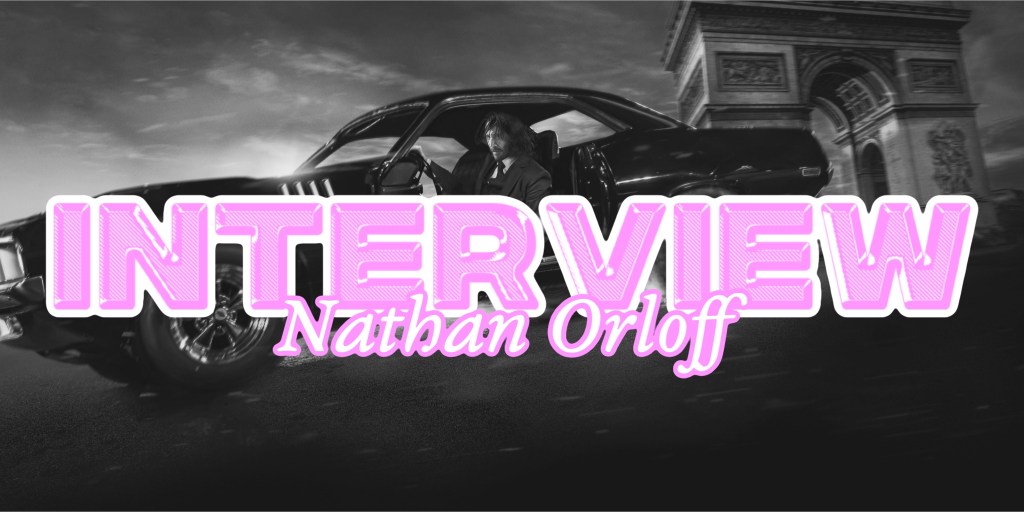
John Wick: Chapter 4 may have been released in theaters early in the year, but the film is never far from our mind here at Oscars Central. The fourth installment in the John Wick franchise is one of the most thrilling watches of the year, in large part due to its incredible film editing. Our Awards Editor, Jillian Chilingerian, was lucky enough to speak to the Editor, Nathan Orloff, about his work on the film.
Jillian Chilingerian: Hi, I’m Jillian from Oscars Central. It’s so nice to meet you!
Nathan Orloff: Nice to meet you!
Jillian Chilingerian: I am so excited to talk with you about this film. I’m going to admit that I had never seen a John Wick film until this year. It was like kind of post Oscar season. And I was like, ‘what’s the next film? Like, what are we gonna be into?’ And then I bought a ticket on a whim and watched the first three films. And I was like, ‘Okay, I’m getting into this.’ And then I watched the fourth one in IMAX, I was like, ‘Wait, this is insane.’ And we’re in November, and it’s still at number five on my rankings of 2023 films. So it’s one that has just really stuck hard.
Nathan Orloff: Oh, awesome! That’s so great to hear. I love that.
Jillian Chilingerian: Yeah, and I feel like a lot of it had to do with your work. I’ve never been an action person, but watching this come together was just very magical. So just to dive in, there’s a lot of moving pieces, there’s a lot of different action sets. We go from Paris to Berlin to Osaka, so much is happening. So, where do you start knowing all of this different kind of footage is coming in? And then also working with Chad Stahelski, did he give you any notes or guidance, like going into this, how you were gonna sort through all of this coming in?
Nathan Orloff: I think one of the reasons that I’m glad that that film resonated with you and, and and hope you’d agree is that this is very much not a typical action movie. And the way Chad approaches these movies is not I’d say typical, and I found out later in the process, that one of the reasons he actually even hired me is that I haven’t really cut an action movie. The only the only big budget film I did before that was Ghostbusters: Afterlife. And yes, on that film, I was more around the action and horror scene sequences of that movie. It’s obviously a completely different beast. You know, and because I know, he interviewed many other editors, as Evan Schiff was unavailable, the editor of John Wick two and three. And I think, you know, he told me about these editors would come on and be like, ‘Yeah, I’m gonna really spice up the John Wick style and do this, and this’, and Chad kind of was like, ‘ahhh’, you know, and, and he really, you know, sort of liked my approach in terms of I just wanted to make a good movie that we would enjoy, you know, whatever that meant. And, you know, some of the guidance he taught me was how he loves old school musicals, like Singin’ in the Rain has always been one of his favorite movies. And, you know, he really emphasized the idea that he never wanted to use an edit to punch up to make something more intense, you know, just as in these old school dance musicals were very much editing around the dancing, it just showed you how good they are. And then they would cut and then do the next part of the number, instead of it being cut on a move, to try to make it look better. And so I really resonated with that approach. Because I feel that Keanu was so good, the stuntmen are so good. That’s like one of the reasons you go to see this movie, is you should just sit and watch it all these shots are so much like head to toe, we’re not doing any tricks. And it’s just you’re supposed to be like a spectator. And the edit is to get out of the way of these action sequences. And so what was cool about the process is he gave me that guidance going in. And then you know, what’s interesting is the way he shot those sequences, and sometimes there’s only certain ways to link them. And then the rest of the edit process was very much about just trimming, trimming, trimming, be like, ‘Okay, this stunt is not as good as this one. So how do we get from this to this? How do we skip over this?’ It wasn’t the type of like cut that where I did an assembly of an action sequences and then we got to the director’s cut and threw the whole thing away. I looked at it as like a rock that just needed to be chiseled and polished and polished versus like a deep reconstruction, which was, you know, one of the reasons I think him and I worked so well together, I felt like okay, we started off on the right foot.
Jillian Chilingerian: Yeah, no, I love that. And I love that you brought up because I really love where you see the full body of these action shots being played out where, again, there’s not just cutting away and then we jump to something else. It just really allows you as the viewer to kind of lean in and track, you know, these characters were following and just immerse yourself into the whole experience and I felt like it was very unique. And going back to the musicals, John Wick: Chapter 4 felt very much like a dance, very choreographed with the editing, the cinematography, like the sound. I just felt very special watching it. Sometimes with violence I’m a bit like, ‘oof,’ but this one I was able to kind of sink in because it was just so pretty.
Nathan Orloff: No, totally.
Jillian Chilingerian: Obviously, we have a lot of character journeys, in the midst of John’s journey. So I’m wondering how you were able to kind of track each of these people, like, obviously, we have John and then we have Caine, and then we have pop icon, Rina Sawayama in there, and kind of just allowing the space for them to grow as characters amongst what’s going on around them, because I felt like that was also something I really admired about going into each journey, and what made it so kind of meaningful when you get to the end to kind of as you spend time with them?
Nathan Orloff: I also admired, like, with Chad’s approach and walking into this film, is that I’ve looked at each sequel as like a growing outward spiral of not just scale. Because it’s like, yeah, you know, the idea of the sequel has to be bigger as is kind of, you know, ubiquitous and understood that just, he understood that John’s journey, even just the thematically what does it mean, and the first movie is so simple and straightforward. And instead of sort of convoluting, what John goes through, it talks about consequences about the people around you. And the first movie is obviously just about him and the loss of his wife. But as this series grew, it kind of adds people and then Halle Berry in the third one. And then this one, really, to me added the dimension of, you know, consequences and the people that you rely on being hurt by your actions. And on the tracker, in some ways, I feel like also the people you can inspire by your actions. And that’s one of the things I appreciate is that’s how we bounced around, even though that, in some ways, you know, this is the first film in the John Wick franchise that will cut away to another protagonist. You know, I guess, I guess I looked at Caine as the protagonist, even though technically, he was technically sort of a villain most of the movie. But, you know, the goal in the beginning was to sort of empathize with him because of the sequence with his daughter. And so that was kind of new for the series, and figuring out how to cross cut all those beats and not make people go, ‘Wait, Am I in a John Wick movie?’ You know, so it was kind of like having to return to Keanu. And make it satisfying in a way of like, the spare all pay off and entertaining as we go. So whether that was trimming, keeping with what was best, and finding the hearts of those themes. Shamier Anderson is fantastic and Donnie Yen is so great. And you know, it was it was really a pleasure. And Hiroyuki Sanada was great, great, great. And so I really enjoyed it, I just kind of followed our hearts in terms of what we enjoyed and what was like, Okay, this is starting to drag here. So let’s try to lose this.
Jillian Chilingerian: Yeah, I love that. I have to talk about like the stairs. Watching that with an audience is just probably one of the most memorable theater moments for me this year. I got to see it twice in theaters, probably gonna go to one of these FYC screenings because I definitely want to see it in a theater again. There’s like the collective moment where everyone goes, ‘Oh my gosh.’ So I’m kind of curious about editing that and also injecting that moment at, such a time where, you know, he needs to get to the top to the church for the duel and the pressure is on and then we get this sequence where it’s funny, but then also tragic, and then I feel like it’s a good kind of breakup. So about how you approached balancing these themes.
Nathan Orloff: Totally. And again, this is a part where I felt really in sync with Chad from the outset. And it’s one of those I kind of follow my gut and later on realize what I was doing. I kind of had this instinct that we needed to lean on because no one really talks about it, but all of the films in the franchise are actually pretty funny at times. To me, it’s like an adult Looney Tunes almost where it’s just like, the stunt team and Chad take all this time designing these unique ways to kill people in just that or it’s like, you know, Buster Keaton’s another actor that he really told me to study and watch some of his films before I came on to this. And in this film, you can see the influences of solid film comedy in terms of like, just visual comedy. And so there’s a reason that like, when he jumps out the window of the apartment building, I cut down to the whole big wide shot. There’s another camera that like traveled down with him. And I just had this instinct that like, if I made all those moments, dramatic, you’re not going to buy that he lives. If at all, if you make those moments, like it has to be a punch line. And then we save the drama for the actual end. And so it’s that the stairs sequences, the length of it and the sound of when he’s falling down the stairs, we did the same in the sound mix. That is one of my favorite things, where after he gets thrown down the second time, we just we just hold on that shot. And we have the sound of him going. And it’s this is Wile E. Coyote like it fades off of the distance, and we cut to the bottom and then you don’t hear anything. And then you start to hear it. It’s like this trailing reverb like, you know, Wile E. Coyote moment, and it’s to be so funny. And to let in that top, you know, that toggle between laughter and then when you cut to the close up of him, like in pain, he’s like, ‘Oh, my God, I can’t be at the bottom.’ And to me, that’s a journey. And I know that movie is long, but I hope that like it’s those like oscillations of tone, that make it not feel long that you’re laughing and then it’s dramatic, and then you’re happy. And then you’re like shocked. And then versus trying to like, do something that’s like always one tone and just hammer it down to the ground. The comedy to me was essential in this film.
Jillian Chilingerian: Yeah. I just really love that that moment, it is so good. It’s a great tonal balance. And then there’s a lot of good musical moments, obviously, like the club sequence. When you’re editing these sequences, are you in tune with, you know what music is already gonna go in so that you can match up beats or at what point do music and sound come into your process?
Nathan Orloff: That sequence was so unique and it was so much fun to put together. The first part of the song before he falls down, that was actually something Chad had Dylan Eiland [Le Castle Vania] do first before production, so they were on set to play back with those songs. Now, of course, the sync of what happened during the playback like was all different, but at least everyone was dancing to that beat. He liked that track, it was kind of like a goalpost. I wanted when he fell off the bridge, I wanted that to be huge break and change of music to really feel like an actual club that changes from song to song. And we had a temp track in there that we loved, but then Dylan came in later on and brought that track in and it just elevated to a whole new level. But I think matched are the beats per minute, just instinctively, and then we modified the sequence a little bit around that new track. So it was very much a hand in hand process where the edit was was tailored and built around. And the music was also cut and edited around you know, so it was all in sync.
Jillian Chilingerian: love when you can tell the editing, the sound, and the music are all really coming together when you watch different movies because I feel like it just elevates the experience. As you mentioned, John Wick: Chapter 4 is a bit on the longer end, how do you distinguish what feels like a central beat? Because again, in this installment, we have so many different characters and places we’re moving. So as in the role of the editor, how do you distinguish the central narrative?
Nathan Orloff: That was probably the most challenging part of editing this movie. Because it is a very linear story. It’s not a movie that you can sort of reconstruct and move this sequence around. But it was the one thing we could just cross cut between the different characters journeys, especially in the third act. We have so many versions, like that we kept finding, you know, we would trim and trim and realize that the scene, yes, the movie is shorter, but the scene is not as good. And it started feeling longer. Like there was a two hour and 30 minute cut of this movie that feels longer than the two hour and 40. Because they’re these character moments don’t hit as hard.And these moments don’t land and are on set up. And so the movie was weird to watch it be shorter and feel longer. And so it was constant balance and tweaking and whatnot. Because I enjoyed where we ended, I hope it feels like a sort of hypnotic rhythm. And the pace, you know, changes and flows and feels very, very natural versus an artificial. You know, pure adrenaline rush. I mean, there’s another movie that I worked on where it’s like, this needs to feel like a roller coaster ride, you just need to go, go go. And that’s great. And that’s good for that movie, and, but this one really felt like, you know, it was designed to be showing sort of the end of John’s journey. And I think it needed to honor this sort of, you know, pace and this sort of big epic Western, that Chad’s been very influenced by in the sort of like contemplative moments. And those things didn’t really land with me if we’re cutting them short. And so it was sort of became this like, okay, really, what’s the difference between, you know, the cut that’s two minutes shorter, three minutes shorter, it’s just let each scene be the best version of that scene possible.
Jillian Chilingerian: Yeah, I love hearing that. Thank you so much for this time and this amazing dive in. As I said, this movie really surprised me as being one of my favorites this year. And just it’s one of those ones you watch and you’re like, ‘how did they do that?’ I want to watch a simultaneous screen of the entire team breaking it down. Congratulations again on the film, you deserve all the praise for this movie. It’s a really a special one.
Nathan Orloff: Aw, thank you so much. I love to hear that. Very special one to work on.
The film is currently available to purchase or rent at home.
You can read Jillian’s review of John Wick: Chapter 4 on her website, Offscreen, here.
You can read our review of John Wick: Chapter 4 here.

 offscreencentral.com
Leave a reply to ‘Saturday Night’ – Interview with Film Editors Nathan Orloff and Shane Reed Cancel reply