
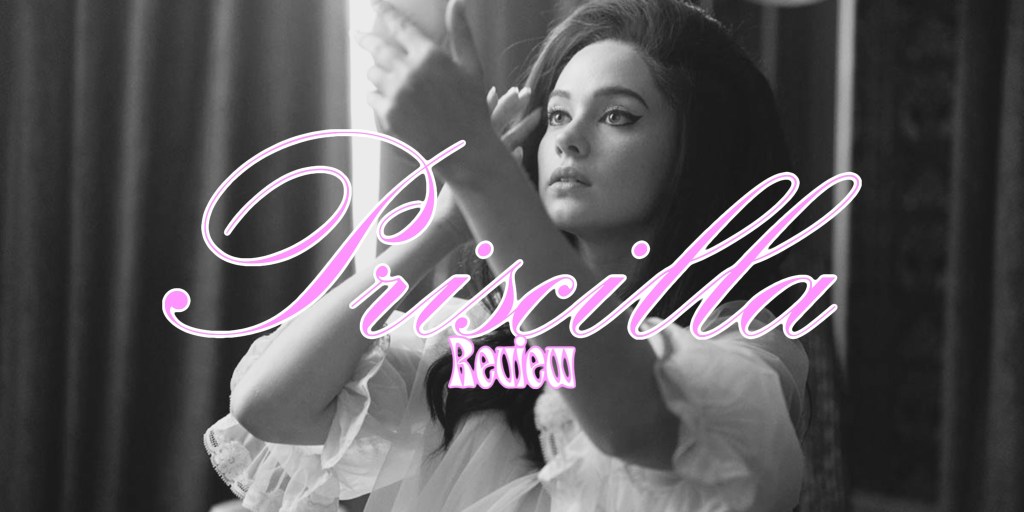
At Oscars Central, we stand in full solidarity with SAG-AFTRA. Priscilla received a SAG-AFTRA Interim Agreement. This piece was written during the 2023 SAG-AFTRA strike. Without the labor of the actors currently on strike, films would not exist. If you are able to, you can make a donation to the Entertainment Community Fund here.
Sofia Coppola delivers one of her strongest films to date with a sensitive, caring meditation in Priscilla. Coppola was the perfect director and writer to both honor Priscilla’s life as she remembers it, but also examine the disturbing environment she found herself in.
If you were to ask most women which filmmaker was an expert on the interiority of young women, most would respond with Sofia Coppola. From her debut feature film, The Virgin Suicides, to her epic Marie Antoinette, Coppola has always had a deep understanding of the inner workings of not just teenage girls, but women as they become a new version of themselves. Priscilla Beaulieu was just fourteen years old when she met Elvis Presley and her life changed forever. What better filmmaker to explore this complex, first love than Coppola?
As a very lonely American fourteen-year-old girl living on an airbase in Germany, Priscilla Beaulieu (Cailee Spaeny) sits at a diner, bopping her head to the music as she works on her homework when an older man asks her if she likes Elvis Presley. Spaeny plays this moment with such innocence and really makes you believe she is this young ninth grader. The man continues to ask her if she’d like to meet Elvis and Priscilla responds she’d have to ask her parents, the first verbalized hint as to her age. This moment, entirely skipped over in last year’s Elvis biopic, is played straightforward, but audiences, especially women, can easily pick up on the predatory undertones. Priscilla is entirely played from start to finish as how Priscilla herself felt and remembers these moments; nothing is ever spelled out for the audience, it’s entirely from Priscilla’s memoir to the screen and for the audience to interpret.
Coppola perfectly captures teenage angst as Priscilla begs her parents to let her go as if there’s no danger or anything strange about an older man taking her to the home of not just another older man, but a world-famous sex symbol. There are many moments within the first section of the film where Priscilla and her mother (Dagmara Dominczyk) seem just like mother and daughter; the way Priscilla begs her mom to plead with her dad the same way any normal daughter would. Priscilla is just a normal teenager and Coppola and Spaeny perfectly capture it.
After much convincing, Priscilla is granted permission by her parents to attend a party at Elvis’s home under supervision from the adult man that invited her (and his wife). When she arrives at his house, Elvis (Jacob Elordi) is casually dressed in a sweater, drinking on the couch and doesn’t seem to even glance in her direction until they’re introduced. He’s tall, beautiful, and charismatic as he chats others up until they’re introduced. He asks her if she’s a junior or senior and she responds by saying she’s in ninth grade, he lets out a low whistle and says, “you’re just a baby,” before asking if she wants to go somewhere quiet to talk. Once alone in his bedroom waiting on him to join her, Priscilla eyes some pills on his nightstand and love letters from a woman back home, foreshadowing of problems to plague their future relationship for years to come.
Elvis is tired and lonely; he’s grieving his late mom while thousands of miles away from his home. He opens up to Priscilla worried his stardom is fading and he’s out of touch with what’s happening in the world. She almost acts as a tether for him back to life in the US even though she’s in Germany alongside him. It’s easy to see why Priscilla easily developed such strong feelings; the biggest sex symbol in the world opening up to you in private and needing you to be there for him. The red flags are easy to ignore for Priscilla and Coppola handles her point of view with such delicate care.
Priscilla was lonely and desperate for connection before she met Elvis. Now that Elvis was in her life, it felt almost like a fairytale for her. She dealt with late nights, which he tried to ‘help’ by giving her pills to stay awake, and gossip at school to spend any time she could with the man of her dreams. When he leaves Germany, they ride to the airport together and he tells her he expects her to stay the way she is, one of the many times within Priscilla he makes a demand of her to uphold when he’s not around. There’s nothing he’s shown offering her in return other than his jacket before he flees into a crowd of women and heads back to the states. Months go by and Priscilla never hears from Elvis again other than reading tabloids about his rumored love affairs. He calls his ‘little one’ late one day and tells her she needs to come visit. Priscilla expertly shows how from day one of their relationship she was very lonely in their relationship, constantly waiting and doing anything he asked of her.
After much convincing, her parents allow her to take a trip to visit Elvis at Graceland. As soon as Priscillaleaves Germany, the muted, dark color palette becomes brighter and filled with whites and blues. Priscilla has been desperately waiting to see Elvis again and both the audience and her assume it’ll be a joyous, private reunion, but when she enters Graceland, Elvis is playing pool with his Memphis Mafia. From the moment she arrives, she’s never the center of his attention, another major foreshadowing of their impending relationship. On Priscilla’s first night with Elvis in Graceland, he offers her a sleeping pill and they head to sleep. The next scene is someone trying to wake Priscilla and when she eventually stirs, Elvis tells her she’s been asleep for two days, he didn’t know what he was thinking giving her such a strong dose. Not only was he not thinking of her response to the pill, but he’s instilling in her she needs to figure out how to keep up with him. When they head to Vegas, she yearns to stay on his level from taking pills to stay awake to gambling (which he points out she loses) to drinking. When her trip comes to an end, Elvis assures her she’ll be back, and he’ll handle it with her parents.
Priscilla continues to highlight that she was just a normal teenage girl having conversations with her parents like any other girl; she begs her parents not to ruin her life by keeping her away from the boy she likes, except for the fact that the boy she likes is a man ten years older than her of worldwide fame and asking her to move across the world with him while she’s still in high school. The film shows her parents agonizing over whether or not to allow her to follow her heart. As her dad says Priscilla won’t be able to get there on her own, Priscillacuts to her father dropping her off at Graceland. Elvis is off filming and she’s really on her own with his staff and father. Comparisons to Marie Antoinette are inevitable as the film follows Priscilla wandering around Graceland’s hallways and empty rooms as she waits for ‘The King.’ At one point she mentions she may get a job at a boutique to pass the time and Elvis firmly instructs her she must be home when he calls. Once again, reminding us, and Priscilla, who calls the shots in this relationship. When Elvis is back, her routine of school and aimlessly waiting for his call changes. Her schedule is played out within a beautiful montage from Coppola with a blaring alarm, a pill to keep awake, a long school day, and then a night out with Elvis, his mafia, and more pills. From renting out the theater to bumper cars to fireworks, their montage of love makes it easy to see both why she fell, but also how hard it was on her. Elvis only awakens from the night before when Priscilla returns from school.
Coppola emphasizes both their age gap and power dynamic with scenes of her struggling to do homework while he’s planning his next record or film. He tells her he’s taking her shopping and completely transforms her into a new version of herself, someone older and more in line with his vision. He tells her to wear more make up and dye her hair darker, she becomes his doll. She has no grounds to say no and just cooperates to become the woman he wants. He confides in her his dreams and goals within his career and things he wants to do with his life, in a way he’s dumping all his pain and suffering on her, but never allows her to do the same. He never asks what her dreams for herself are.
Priscilla doesn’t shy away from the ugly and downright terrifying moments within their relationship. In one scene, they’re having a fun pillow fight, and he becomes filled with rage accidentally hitting her in the face. Throughout the film, he pushes her to wait and hold on until their wedding night to consummate their relationship, but he pursues other (older) women throughout their relationship. When she asks him about the cheating, he scoffs at her and gets angry, but then he’ll only admits to the affairs once they end. Things take a vicious turn the deeper their relationship grows; he asks her opinion on a song and throws a chair at her (blaming his mama’s temper). She finds a love note from a woman and when she confronts him, he packs her bags showing her how quickly she can be removed from his life.
Before Elvis, Priscilla, and his Memphis Mafia head to her graduation, she asks Elvis if he wouldn’t mind waiting outside so the attention remains on the graduates. Elordi plays this moment so well as he clenches his jaw yet calmly agrees to wait outside. Now that Priscilla has graduated, she’s a bit more outspoken and Elvis brushes it off. They spend days in bed, watching TV, and just lounging without real responsibilities. The lack of romance continues as he doesn’t as much propose but just tells her they’re going to be married. Even when taking their relationship to marriage, he doesn’t give her the voice to say yes. Soon after they’re married, Priscilla finds out she’s pregnant and she immediately is worried their relationship will change. Elvis essentially pats her on the head and tells her not to worry. As soon as Lisa Marie arrives, Elvis refuses to touch Priscilla as he ‘doesn’t want to hurt her’ despite her longing for his touch. Eventually, he takes off on tour and she begins to live her own life with friends, a handsome karate instructor, and Lisa Marie. She’s grown out of her heavy eye makeup and black hair; she wears minimal make up and her hair is her natural light brown. While the audience doesn’t get an understanding of who Priscilla is without Elvis, the point is that she does. Priscilla needed away from under his influence to see who she was outside of just being the icon’s (controlled) wife.
But just as in the memoir, Priscilla isn’t a movie about how Elvis is a bad guy, he’s just shown through the eyes of someone who saw a different side of the superstar the world knew and loved, the real human he was. Priscilla, through it all, loved Elvis and Coppola’s film presents the good and the bad from Priscilla’s memories. Priscilla does not ever set out to show Elvis only as a monster, but a man of that time and a complicated one at that. Elvis yearns for connection and a real love but doesn’t understand how to be a partner back to someone. The film does show he groomed her from day one and he’s fully aware of his power over the young girl every step of the way. His predatory behavior doesn’t just end once they’re married, he continues to manipulate and abuse her throughout their marriage. Priscilla never allows the audience to see Elvis the icon, only the man he was at home through Priscilla’s eyes.
The comparisons between this and Elvis from last year are understandable given the man is portrayed in both (and in some cases the exact same moments), but they shouldn’t be made. Elordi’s Elvis is the man no one really knew except Priscilla. He’s the private, homelife man who keeps his career removed from his wife. His performance is haunting as he’s both charismatic and dangerous. Elordi creates an Elvis on screen that’s never been seen before, you can’t help but fall in love and be terrified at the same time.
Spaeny is transcendent as Priscilla; just as Coppola was the only person who could bring this story to the screen, Spaeny was born to play Priscilla. The film isn’t dialogue heavy and much of the storytelling relies on Spaeny’s performance through gestures and expressions alone. She perfectly guides the story along as you can always understand not only what she is feeling but how she’s anticipating what Elvis wants her to do next and eventually when she begins to think of her own plans. You can feel Priscilla’s heart break through just a simple look delivered from Spaeny. Her Priscilla is lived in, thoughtful, and never an imitation. She becomes Priscilla in every stage of her life from fourteen years old to late twenties at the end and it’s truly believable in every scene. Spaeny’s performance is one of the best of the year and perhaps the decade.
The film feels shot almost as a memory with Philippe Le Sourd’s cinematography bringing light to the screen only when Elvis is around. Priscilla feels so intimate almost as if you’re walking through a dream at times, but then quickly becomes a nightmare. Stacey Batatt’s incredible costumes transport you through each moment of Priscilla’s life as she ages her from school uniforms to lingerie to the famous wedding gown. When Elvis tells Priscilla ‘Blue is her color,’ we see her in blue throughout the rest of the film. The storytelling on display throughout the costume design is breathtaking. Tamara Deverell, production designer, brings life to the reimagining of Graceland after a muted Germany. The magazines, Aqua Net, and Chanel No. 5 become new Coppola iconography under Deverell. While the Presley Estate did not authorize the use of Elvis music, the soundtrack is another classic from a filmmaker known for her use of music. From the Ramones to Dolly Parton, the soundtrack not only perfectly fits, but foreshadows much of what is to come. The lack of Elvis music also serves the story so well as another reminder of how secluded Priscilla was from the Elvis the world knew.
Priscilla is an adaptation that stays extremely faithful to its source, which is producer of the film Priscilla Presley’s memoir, ‘Elvis & Me.’ The film follows as fourteen-year-old Priscilla meets the iconic singer and ends when the couple’s relationship ends. There is no focus on what happened to either of them once the relationship ended or even their lives before meeting. The memoir is Priscilla’s recollection of her marriage to Elvis, an insight no one else can have. The film honors her memoir in every way possible. There are moments in the memoir that are carefully yet exactly captured within Coppola’s film.
The writer/director has such an incredible understanding and respect for Priscilla’s story. The fragility in which Coppola handles the tone of the film is so important for this story. Priscilla essentially is what a young girl thinks is a fairytale of the man of her dreams coming to save her, but the ending is about a woman leaving what she loved before she resents it. There was never going to be another filmmaker who could succeed with the delicate nature of showing and not telling the way Coppola does in Priscilla.
Grade: A+
Oscars Prospects:
Likely: Best Lead Actress, Best Adapted Screenplay, Best Costume Design, Best Production Design
Should be Considered: Best Picture, Best Supporting Actor (Jacob Elordi), Best Director, Best Film Editing, Best Cinematography
Release Date: November 3, 2023
Where to Watch: In Theaters

Kenzie Vanunu
she/her @kenzvanunu
Lives in LA with her husband, daughter and dog. Misses Arclight, loves iced vanilla coffees.
Favorite Director: David Cronenberg
Sign: Capricorn




 offscreencentral.com
Leave a reply to Lexi’s Top Ten Films of 2023 – Offscreen Central Cancel reply