
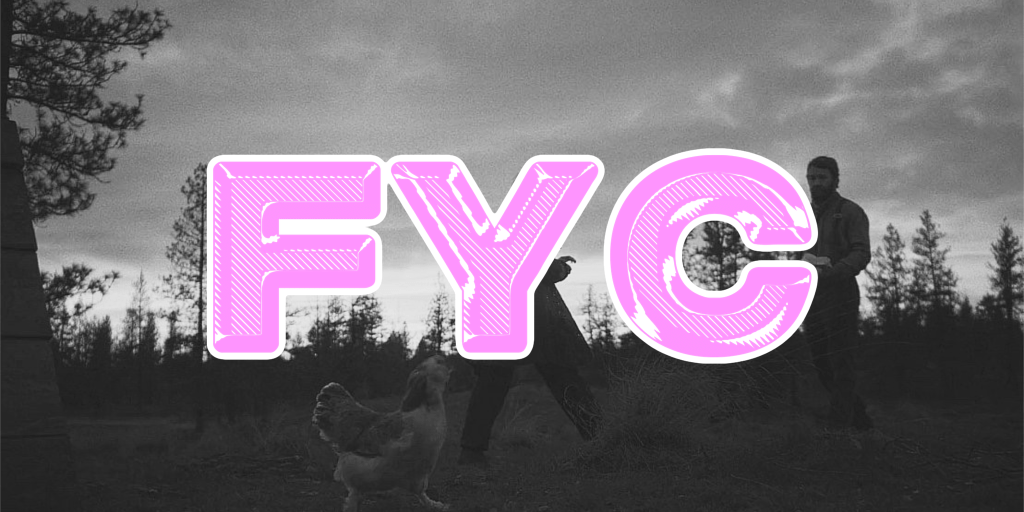
“Bryce’s score is the wind to set it [the film] off the ground.” — Clint Bentley introducing an orchestra screening
Just like films, music has this special power; it allows us to feel so many different things. Whether you feel sad, nostalgic, or happy. Whether you’re trying to let go of the things pressing on your chest, or chasing a moment you don’t want to end. Music becomes the space where you’re allowed to feel everything, loudly, or quietly, freely, and finally release what words can’t carry.
2025 gave us so many beautiful original scores and songs, but the ones that stood out the most are, without a doubt, Bryce Dessner’s score for Clint Bentley’s Train Dreams and its title track, which he co-wrote with singer and musician Nick Cave.
The score perfectly complements the beauty and melancholy of the film. If you close your eyes and listen to the score Dessner meticulously composed, it transports you elsewhere and, on its own, in every note, tells a story rooted in the countryside of another time — one filled with happy, sad, and scary moments in time. “The sweep of the forest, the sense of the earth were really important for me in the music,” Dessner said in an interview for TUDUM. “I wanted to explore all those sounds and the poetry of the filmmaking.”
Thinking about the music for the film, he told in his interview for TUDUM, that he was thinking about old music instruments that would remind of American folk music of the early 20th century to mid 20th century of the American West. And you can hear it in tracks like Cross Cutting, The Gadabout, Part II or Cross Cutting – Redux. You don’t even need context; the moment the music starts, you’re instantly placed in a small village in a period setting, among workers and the rhythms of the everyday life. The violin, especially, plays a huge role in creating that atmosphere.
But the score isn’t entirely inspired by early-20th-century music; there are analog sounds in the film, but he also ended up adding synthesizers and processed electronics, he told The Hollywood Reporter. “Clint had the idea that he wanted, on some level, for the music to reflect the time and place, but also not necessarily be a period film.” So even though some tracks feel like they’re from a specific moment in time, there’s a blend of different sounds and styles that ultimately feels timeless.
“You know, people say America is a melting pot, and if you talk about the music, it’s really true,” Dessner to Indiewire
When it was time to record the score, Dessner decided to work in recording studios that weren’t set up for film, “these older studios have this gear from the 30s and 40s, and the old analog boards and microphones, so you can kind of hear it on the score, a little bit of a crackle in the sound,” he told IndieWire, which only adds to the film’s textured, lived-in quality and makes it feel rooted in the past, while still not being tied to any one specific era.
“Lately, I’ve been having dreams, crazy dreams I can’t explain. A woman standing in a field of flowers. And a screaming locomotive train. Crazy dreams that go on for hours. And I can’t begin to tell you how that feels.”
When they started talking about a title track for the film, director Bentley and Dessner immediately thought about how amazing it would be to collaborate with Nick Cave, and it truly feels like the perfect fit — I couldn’t imagine anyone else singing this oh-so-beautiful song. And ultimately, Dessner and Cave’s song tells Grainier’s story, but in a different way — in a way that gives voice to the unspoken, letting every note and lyric carry the weight of the words he couldn’t find, making the whole thing quietly devastating and unforgettable.
“And I can’t begin to tell you how that feels” are such evocative and beautiful lyrics, not only because they represent Grainier’s state of being in the film, his restraint, his quietness, but also because they capture what it’s like when there are too many emotions and we don’t even know what to say or where to begin. Some feelings are so hard to explain and to put into words, and sometimes music, wether it’s lyrical or not, is the only way to express them. And since there isn’t much dialogue in the movie, music plays a huge part in telling the story and making the audience feel what the characters are going through, whether it’s joy, melancholy, or even hope.
Dessner told The Hollywood Reporter that “the music had to balance reaching that depth without overwhelming the film,” and that “he had to find a tone between light and dark. It was a challenge to find those moments of levity, lightness, and playfulness while also allowing the bigger things to bloom,” and when you hear The Great Mystery at the end of the film, you realise he absolutely did that with brio. This track makes you feel everything all at once — all the melancholy, but with a hopeful twist, like everything’s going to be alright.
For music that can move people to tears in just a few notes, it’s clear that Dessner and Cave deserve recognition from the Academy. Not everyone has the ability to capture this level of emotional storytelling, where every note and every word carries the weight of all those feelings.
Train Dreams is currently streaming on Netflix. Read our review of Train Dreams here.
 offscreencentral.com
Leave a comment