
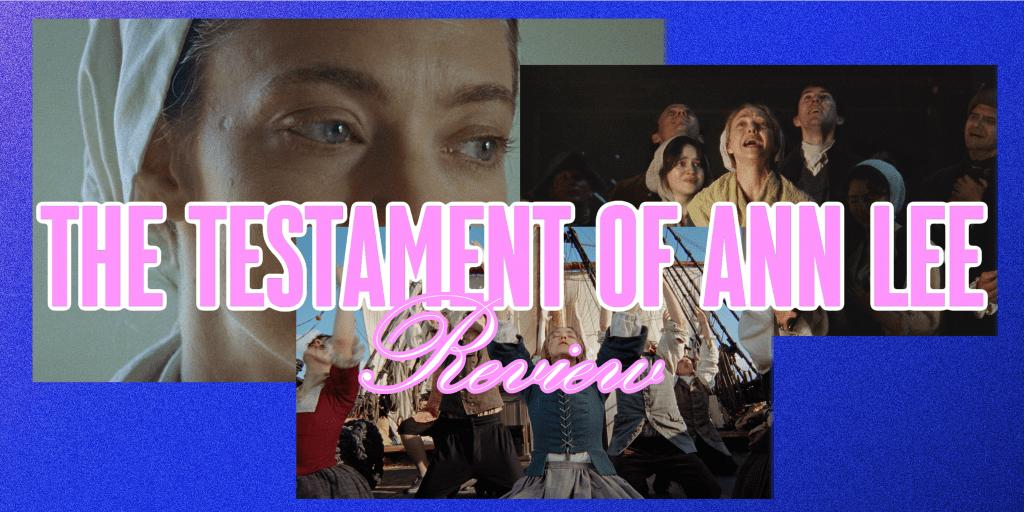
The Testament of Ann Lee is vulnerable, ferocious and visceral, an absolute showstopper. Mona Fastvold’s latest is a testament to filmmaking, storytelling, and seeing one another. There is a place for everything and everything in its place. There’s no place I’d rather be than a world with Fastvold making films. Praise be!
The Testament of Ann Lee will surely be described by some as structured and made up with trappings of a typical biopic while some will say it’s all technical and not spiritual despite its story at the center. For me, this felt all-encompassing, an epic hallucinatory tale of both agony and ecstasy. Women live so many lives while experiencing traumas that would burden most but we’re expected to consistently go about our day. Mona Fastvold takes the story of Ann Lee to display that even the most powerful women bottle up their suffering and move on to the next thing until they simply can’t anymore. The Testament of Ann Lee is structured as girl, woman and mother, but takes on a whole new meaning to the final stage. Many will say they feel detached but that’s exactly how most women feel, especially in stories set in such a prominent religious time. Religious stories are often so male led, as those were the times, even if a woman is pulling the strings behind the scenes. Ann Lee is such a force as leads a group in the midst of the dominating Puritanism and she’s advocating for equality for everyone with the Shakers movement. At the center of the film is the dominating yet tender Amanda Seyfried. Seyfried harnesses greatness as she brings both a kindness and gentleness to Ann Lee while at the same time displaying such power and madness. Her performance is simply breathtaking and allows for The Testament of Ann Lee to be vulnerable, ferocious and visceral, an absolute showstopper.
A biopic that passes as a musical, historical film, religious drama and period piece sounds impossible to pull off and yet Fastvold, alongside co-writer Brady Corbert, is able to achieve the unthinkable. Her seamless, powerful direction and steady hand over the entire film allow for the heavy, impossible themes and stunning visuals to come together to deliver a timely, breathtaking masterpiece. It’s not easy to say that about a film that feels so audacious but the further away I get from the film, the more I feel it in my consciousness. The exploration of sins not deserving punishment, but an understanding is not a new theme in any film let alone religious text but in The Testament of Ann Lee, Fastvold combines that with a dive into the traumas of lost children on a mother after horrific birth experiences and the nuance of sex and punishment. Early on, Ann Lee is shamed by her father for bringing up seeing sex and she’s beaten, conflating sex and punishment in her mind at an early age, laying the groundwork for her Shakers beliefs. Her relationship with sex is pushed further in the wrong direction with her eventual marriage with Abraham (Christopher Abbott), a man with sadistic sexual tendencies. Women always have a complicated relationship with sex and so many of my own memories with sex before I understood it are from public personas discussing sex and those are what stay in my mind. Fastvold captures how a young woman being aligned with negative explorations of sex from the only men in her life allow for her to get to such an extreme belief of chastity as the only option. Following the most horrific, painful musical montage set to screen of four traumatizing births and eventual deaths of Ann Lee’s children, we see the correlation between Ann Lee’s horrific traumas and passionate teachings.
Seyfried delivers a tour de force performance; while she is always incredible, she’s allowed to dive into so many sides of herself as an actor to bring Ann Lee to life. It’s unreal to watch her bring this woman alive in a way no one else could. It’s a performance for the ages that we’ll talk about for decades to come, no matter how you feel about the film. She’s charming yet visceral. She’s animalistic yet soft and vulnerable. There is no performance like this, and we will probably never see anything like it ever again. Lewis Pullman is genuinely wonderful and captivating as Ann Lee’s soft, tender brother, William. He commands the screen in such a different way as the perfect scene partner, but he has his own moments to shine. Stacy Martin, a true staple of the Fastvold-Corbet universe, is impeccable and always brilliant on screen but the way Fastvold captures her is so special.
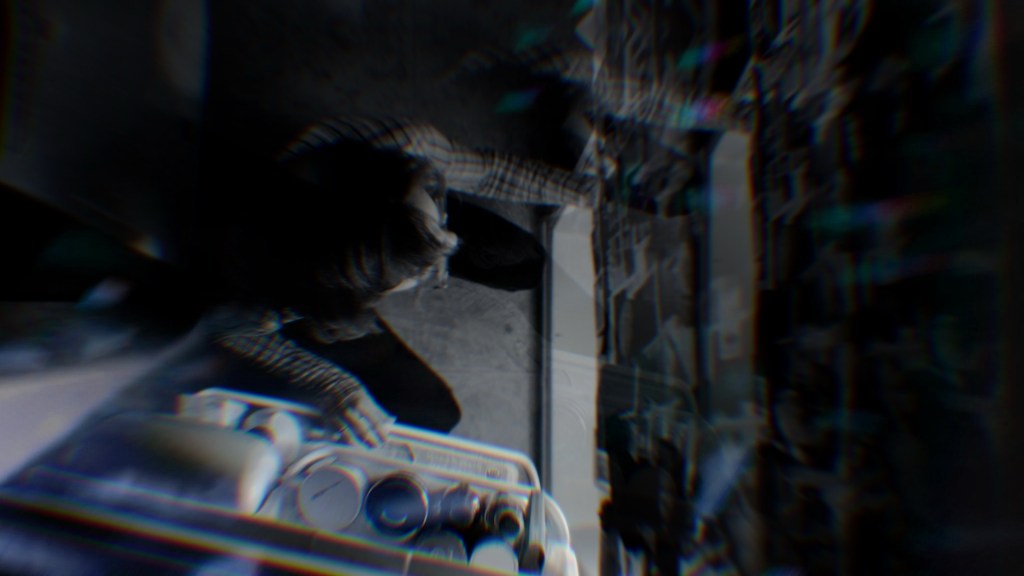
To build the world for this incredible ensemble, the production design (Sam Bader) is so unnerving as it never feels like a period piece, you just are truly transported to the time and place. You can smell the dust, you can feel the wood and as the camera moves through each scene and musical sequence, you’re fully encompassed in the world, it really never feels like a set. The cinematography, on 35 mm stock, by William Rexer is rich and so beautifully textured. The shadow and lighting work is unreal as it’s almost like a fever dream yet feels so realistic with its natural lighting or candlelit work. If there’s a film to see on the biggest screen possible, it’s this one. The stunning music and spellbinding score by Academy Award Winner Daniel Blumberg transport you to a place you have never been and will most likely never be again. The music drowns you in this humanistic yet dreamlike state that feels both like a memory of what once was but somehow could be what the world will become, it is such a unique score, and collection of songs only elevated by the brilliant choreography by Celia Rowlson-Hall. Not since 2018’s Suspiria has there been choreography so vivid and blunt yet full of passion and embodying liberation. The music, choreography and performances come together to bring this ingenious script to life in a way you could never imagine.
The Testament of Ann Lee is what Fastvold’s career has been building to. I’m sure to many it’s unsuspecting that this is a film of the moment, but the story of Ann Lee combined with the poignant writing of Fastvold and Corbet is a lethal combination. The Shakers had an impassioned dedication and it’s clear Fastvold idenitifies with that, as many creatives, particularly women, will know you have to lock in on your beliefs and passions to get your point across and your objectives met. The discipline of the Shakers feels paralleled with what artists, especially filmmakers working on a lower budget, stick to in order to have their vision fully realized. On the opposite side of the coin, Ann Lee herself was illiterate, her story and teachings never put on the record in her own words. Everything we know about her is second-hand, both from her followers and her opponents. How we leave behind our story, our legacy, is up to us, but what even is our role in that if the dominant voice is just the loudest? However, if you walk away with anything, what the film speaks to in this moment is an idea of acceptance being a form of liberation. The Testament of Ann Lee is cathartic in a way I never dreamed of. A sequence with a mother confessing to a thought of something both haunts and graces my dreams with the response not only of Ann Lee but the film itself. Fastvold has such a deep understanding of humans and our needs, wants, and desires. All humanity needs is to listen, accept, and forgive one another and it would be liberating, not disarming or a sign of weakness. The Testament of Ann Lee is a testament to filmmaking, storytelling, and seeing one another. There is a place for everything and everything in its place. There’s no place I’d rather be than a world with Fastvold making films. Praise be!
Grade: A+
Oscar Prospects:
Likely: Best Lead Actress (Amanda Seyfried), Best Cinematography, Best Original Song
Should be Considered: Best Picture, Best Director, Best Supporting Actor (Lewis Pullman), Best Film Editing, Best Sound, Best Original Score, Best Costume Design, Best Production Design
Release Date: December 25, 2025
Where to Watch: In Select Theaters
Kenzie Vanunu
she/her @kenzvanunu
Lives in LA. Misses Arclight, loves iced vanilla coffees.
Favorite Director: David Cronenberg
Sign: Capricorn

 offscreencentral.com
Leave a comment