

Die My Love is the film of the year. Lynne Ramsay’s latest is a hallucinatory ride that doesn’t guilt mothers but asks the audience to reckon with, do you even see us?
Die My Love feels almost like a postpartum fever dream; as someone who experienced both postpartum depression and anxiety, it all feels like a blur and despite being what’s touted to be the ‘happiest time of your life,’ there are chunks of time that feel distorted and hazed from my memory. It’s hard to watch films exploring this period of time after having a baby and postpartum disorders as it can feel almost like PTSD to the hardest time on your body and mental health. What Lynne Ramsay achieves with Die My Love is anything but triggering; the film plays out like a visceral yet tender memory of how isolating and overwhelming the first-year postpartum feels for many women. You’re fighting internally while being the weakest you’ve ever been you don’t want to feel this way, you feel at fear for yourself and desperate for someone to understand.
Die My Love is not really about postpartum depression, anxiety or psychosis, there are no doctors explaining the causes or symptoms or what to look at for. The film focuses on the brutal feelings that overtake your body after giving birth. Your body is no longer your own and while you can attempt to plan, nothing truly prepares you for how it feels to lose your body and your mind to this life you created. We live through the feelings all through Jennifer Lawerence’s life-altering performance as Grace, her highs and lows through manic arguments spurred on by neglect to pure elation leading to consuming (often feral) sex. Lawrenceis always incredible but her performance in Die My Love is what many actors chase their entire careers; it’s unsettling, complex, full of light and darkness, she simply is outstanding.
The film follows as Grace and Jackson (Robert Pattinson) move from New York into a house in the country left to him by his uncle. Their first time in the house instantly lunges into untamed, fiery, passionate sex and the next thing we know, there’s a baby. Die My Love is not a movie about pregnancy and it’s better for it how quickly the sex evolves into the child already being there. Giving birth is not a topic of discussion quite often; it’s a little taboo to talk about the nitty gritty details of birth and the fact that it’s entirely skipped over plays right into it. Jackson is quite often on the road for his job, long stretches of time Grace is alone with the baby and her days are filled with a sort of fraught emptiness. There’s a pure joy with her child but her eyes are empty, she’s desperate for some sort of connection. Her imagination runs wild with visions of Jackson cheating on her, she’s only half listening on the phone with him, and when she walks the baby to her mother-in-law, Pam (a radiant Sissy Spacek), she’s clearly not all there. Pam can sense Grace is not herself, but what is wrong? Pam is kind and sympathetic, trying to tell her no one is all there the first year, yet she’s clueless to just how far Grace has floated away.
The film brilliantly tackles the concept of proving you exist by destroying yourself. It’s entirely out of your control despite everyone around you telling you how it will pass after a certain amount of time, you’ll adjust, motherhood gets easier. You are so desperate to prove you’re not just what motherhood has done to your body and mind; you are a person, yet it feels suffocating in a way you can never explain. People, other mothers especially, explain at you how it’s not only the best thing to ever happen but how gratifying it is. Sure, you may not know what’s happening the first year, but nobody does. It feels unnerving to be told this over and over, especially from other mothers that you feel a sort of forced camaraderie with. Months after giving birth, you itch for being in a room with adults that isn’t only for conversation about children, yet you typically are now only around people with kids. Even if they get how isolated and paralyzed you can feel, it’s hard to turn off the feeling of it feeling forced on their end or the voice that tells you they are judging you. Especially the added bonus of a partner as Jackson, who genuinely struggles on his own managing being a parent, yet he refuses to see what Grace is struggling with. He never says the words, but every glance and action are almost telling her to simply get over it. Grace is reckoning with a hysteria from inside herself, making it impossible for anyone to rescue her, but he barely tries… His language dictates a resentment she cannot just go through the motions of motherhood. Watching it, especially in this tight Academy ratio of 1.33:1 on beautiful, gritty 35 mm, feels exhausting and claustrophobic as you’re desperate for someone, especially her partner, to not just help her, but see her. No one sees how she’s drowning in the depths of psychosis and she’s frantic to be freed of feeling this way.
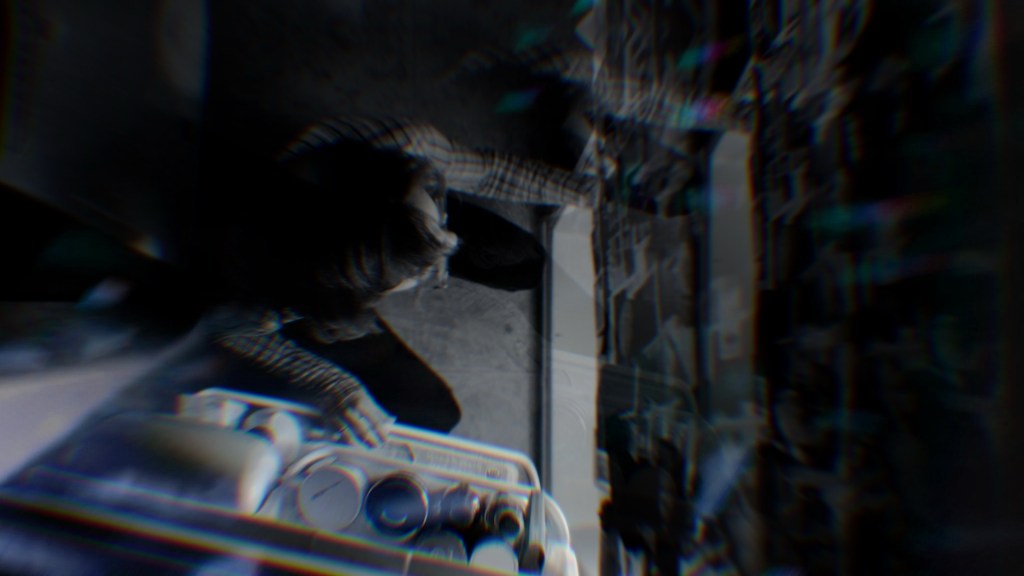
Ramsay’s brilliant adaptation puts you inside Grace’s mind just as the book did but without the narration. When reading the book, I was confused how this would be achieved in a way that didn’t feel a traumatic reliving of postpartum, but Ramsay is so tender with the depictions of how it’s all out of your control. It’s a wave crashing over you again and again. Ramsay never directs the feeling of depression, anxiety or even anger at the child, it’s never in spite of or derived from the child, it’s our body unable to process these massive changes. Grace says, “I’m stuck between wanting to do something and not wanting to anything at all,” which perfectly describes what the postpartum period feels like. You itch to do something to prove you’re more than just a body that created life or mother responsible for feedings, changing diapers, and the constant source of comfort and soothing for the household. Grace was a writer and there’s a nonstop chatter of why can’t she just write, what is she working on, or how is the writing going, yet how is she supposed to write when there’s this sinking feeling in her head that clouds everything. All she can see is the routine laid out for her and no end in sight. Similar to Darren Aronofsky’s mother!, Lawrence finds herself alone in a country house and it only adds to the claustrophobia. Her best performance to date (for me) remains mother! and many will compare the two performances, not simply because of the mother of it all but the dread creeping in quietly and softly but turning into a manic, unsettling plunge into a lonely despair. Die My Love may not work for some because the film is structured and paced almost just as experiencing psychosis, it’s sporadic going from zero to one hundred. It feels confusing and overwhelming with what is real, what is in Grace’s head? This brilliant editing (Toni Froschhammer and Adam Biskupski) combined with the hypnotic, dreamy yet claustrophobic cinematography from Seamus McGarvey creates a narrative film that feels as if you’re experiencing everything rather than watching as a spectator.
A spectator all throughout the film is Jackson, as he’s never truly part of what is happening. Some of this is his refusal to look at what’s happening to Grace, while some of it is a partnership is between two people and both people have feelings needing cared for. However, their relationship is entirely off balance once their child arrives. What a woman experiences with birth and the first year of postpartum is something their male counterpart will never understand. We grow this child only for them to be pulled out of us and we’re immediately expected to not only take care of and provide food and comfort for the baby but there’s a loss of this very close connection to what was once grown inside of us, part of us. The loss is hard to explain and even harder to comprehend. Jackson never considers Grace’s struggle and just expects her to play dotting mother and wife. This creates a pressure between them and she’s begging him to understand her and see her, yet he’s just clueless. He means well but never does well and it’s infuriating to watch, and Die My Love brings the audience into the experience, you just want to shake him. Pattinson fades into Jackson effortlessly and while Lawrence is the star of the show, what Pattinson achieves is something only an actor of the highest caliber could pull off. Jackson is infuriated at times and full of a passion he’s angry is fading yet he never overpowers the moment as the character is meant to not be the visceral type until specific outbursts; it’s a hard balance and Pattinson is absolute perfection. Spacek is a definition of a supporting role, despite her major name, she’s a blip throughout the film, however, she’s absolutely magnetic and reminds you why she’s such a screen legend. Her Pam is clueless and in typical mother-in-law fashion inserting herself under the guise of offering help. Spacek is a marvel to watch, and her scenes shared with Lawrence are so special to watch, two different sides of the coin of greatest of all-time leading ladies. Nick Nolte and LaKeith Stanfield both pop up and are excellent despite mimimal screentime, casting director Lucy Pardee delivered a perfect collection of brilliant actors bringing magnetism to the screen. The film belongs to Lawrence though, as it should narratively. She’s bold and gives Grace such an edge and texture in everything she does. While she is manic, Lawrence is sympathetic and full of, well for lack of a better word, grace in this idea of a human suffering in spite of herself. She’s absolutely fearless and delivers the performance of a lifetime that got under my skin and will probably never leave.
Die My Love is the film of the year. It’s hypnotic, arresting, and unbelievably moving, for a film all about suffering, you can’t help but leave exhilarated. Ramsay achieves something I never knew possible on screen for depictions of the experience of postpartum disorders. When you feel you can only hold onto the love and responsibility for your child, what does this mean for you? Motherhood can be lonely, overwhelming and suffocating, but it doesn’t mean it’s also not the greatest thing in the world. Grace says at one point to Jackson, “I’m right here, you just can’t see me.” The crushing feeling of your body no longer belonging to you, your mind is leaving you, and it feels no one can get to you. Lawrence and Ramsay deliver the definitive film on the postpartum experience. Die My Love is a hallucinatory ride that doesn’t guilt mothers but asks the audience to reckon with, do you even see us?
Grade: A+
Oscar Prospects:
Likely: Best Lead Actress (Jennifer Lawrence)
Should be Considered: Best Picture, Best Director, Best Adapted Screenplay, Best Supporting Actor (Robert Pattinson), Best Supporting Actress (Sissy Spacek), Best Film Editing, Best Sound, Best Cinematography
Release Date: November 7, 2025
Where to Watch: In Theaters

Kenzie Vanunu
she/her @kenzvanunu
Lives in LA. Misses Arclight, loves iced vanilla coffees.
Favorite Director: David Cronenberg
Sign: Capricorn



 offscreencentral.com
Leave a comment