
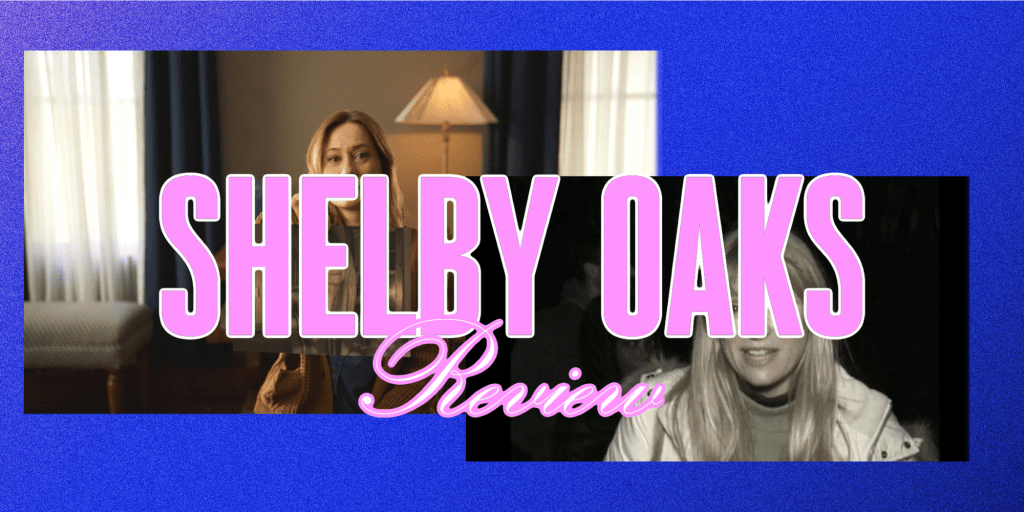
Marking one of the most anticipated directorial debuts for online film fans, Ohio and Youtube’s own Chris Stuckmann’s Shelby Oaks was born from passion, community support, and a lifelong love of cinema. Despite a shaky final act, the film cements Stuckmann as a filmmaker with undeniable promise.
Chris Stuckmann’s Shelby Oaks arrives with a rare kind of anticipation – one that transcends the film itself. After years of cultivating a loyal following on YouTube through his articulate, personable, and passionate film criticism, Stuckmann became something of a symbol for the online cinephiles. His jump from critic to creator, powered by one of Kickstarter’s most successful film campaigns, is not just a personal victory. Rather, it’s a moment that represents what modern independent filmmaking can achieve when enthusiasm meets opportunity. That sense of grassroots excitement is baked into every frame of Shelby Oaks, and it’s part of what makes the film captivating, even when it falters.
From its opening moments, Shelby Oaks feels confident and deliberate. Stuckmann proves immediately that he’s a visual storyteller, using light and sound not merely as tools but as layers of emotional textures. The film’s premise, a woman named Mia investigating the decades-old disappearance of her sister, once part of a group of paranormal investigators, is executed with a haunting patience. Instead of rushing into piles of exposition, Stuckmann allows the mystery to build organically, drawing the viewer into a world of grief, obsession, and fear. The early sequences, filled with lingering camera movements and unnerving silences, showcase a director with a deep appreciation for atmosphere over spectacle. It’s the kind of horror that can crawl under your skin because it feels that real at times.
The performances, especially from lead Camille Sullivan as “Mia,” anchor the film’s emotional core. There is a tangible weight to the characters’ pain that makes even the more fantastical elements of the story feel grounded. Stuckmann’s background as a critic is evident in his understanding of getting the pacing and the mood just right. He knows when to hold a shot, when to cut, and when to let a moment breathe. His direction in the first half is so assured that it’s easy to forget at times that you are watching a debut. For a filmmaker transitioning from online commentary to production, Shelby feels like the work of someone who has been waiting years to tell this story exactly his way.
However, where the film begins to struggle is in its second half. The story’s mythology, while so tantalizing early on, starts to expand beyond what the script seems prepared to handle. The buildup promises revelations that unfortunately never fully materialize, leaving parts of the third act feeling rushed and underdeveloped. Threads that were introduced with great intrigue – questions about reality, guilt, and the supernatural – are left hanging, and the film’s climax, while emotionally resonant, doesn’t quite provide the closure it needs. It’s as if Stuckmann’s ambition outpaced the screenplay’s clarity; the ideas are fascinating here, but the execution wavers.
Yet, even with its narrative stumbles, Shelby Oaks never feels hollow. There is a sincerity pulsing through it that’s hard not to admire. For example, filming took place in various places in Ohio, specifically in the Cleveland Metropolitan and Akron areas, where Stuckmann grew up. This aspect gives the film a sense of familiarity and allows the setting to feel lived in. Additionally, Stuckmann’s passion for storytelling and his respect for the horror genre come through loud and clear. The film isn’t trying to mimic other horror directors, but rather it is trying to carve out its own identity, balancing psychological unease with heartfelt emotion. The imperfections, while noticeable, don’t undermine the achievement. The film still feels alive.
In the end, what Shelby Oaks achieves is more meaningful than a perfectly constructed debut – it marks the arrival of a filmmaker with something genuine to offer. Stuckmann’s journey from Youtube critic to feature director is not just a novelty, but proof that a deep love of film combined with an opportunity that one can hope is afforded to more creators can translate into authentic artistic expression. While the story’s resolution may not satisfy every viewer, the film’s craftsmanship, atmosphere, and ambition make it clear that this is only the beginning of his career behind the camera.
Rating: C+
Oscar Prospects:
Likely: None
Should be Considered: None
Where to Watch: In Theaters

Sarah Abraham
she/her @sarsaraaaaah
Lives in Orlando with her mom & dog. Clarinetist that loves movies, EDM, yoga, hot girl walks, and tzatziki.
Favorite Actor(s): Omar Sharif, Danielle Deadwyler, Hiam Abbass, and Daniel Day-Lewis
Sign: stereotypical Taurus
 offscreencentral.com
Leave a comment