

If you’re drawn to surreal storytelling, punk-grunge energy, and films that hit with raw, unfiltered emotion, Lucid is a must-watch — ideally on the big screen with a killer sound system to fully soak it all in. There’s plenty to unpack and analyze, but honestly, sometimes it’s best to just lean into the experience and let the trip take you where it will. It’s not gonna get you high… just fucking spiritual.
“Take a little nibble every night before you go to sleep. If it doesn’t work, don’t eat the whole thing. Trust the process. It won’t get you high. This is a strong medicine made from Tibetan snowdrops. It was created to help monks explore powerful lucid dreaming, but if you overdo it, you are fucked. You’re opening a door here, and I can’t be responsible for what comes through.”
From the very first frame, Lucid announces itself as something bold, strange, and entirely its own (it feels like its own genre; I don’t think I’ve ever seen any film like this one). Directed by Deanna Milligan and Ramsey Fendall, this dark and dreamlike feature follows a ’90s art student whose creative block leads her down a chaotic spiral — and, thanks to a mysterious lucid dreaming elixir — into a psychedelic underworld of demons, memories, and artistic awakening.
This was, without a doubt, my most anticipated film of the Fantasia International Film Festival — and it did not disappoint. It’s rare to see a debut this confident and fully in its own voice, and it feels genuinely refreshing. Milligan and Fendall have a clear, singular artistic vision — and they fully commit to it. They’re such a perfect pairing, creatively in sync in a way that feels effortless — as if they were sharing one brain (or at least, that’s how they describe it). Visually, sonically, thematically, Lucid is a wild ride.
What makes this project even more special — beyond the incredible team behind it, who genuinely feel like a big family — is the journey it took to get here. A few years ago, Milligan brought the short film version of Lucid to the Fantasia Festival. Now, she’s back with the fully realized feature — and witnessing that full-circle moment was genuinely inspiring. It’s a powerful reminder of what can happen when an artist believes in their vision and follows it through with heart, grit, and intention
When you watch the short film, you can already feel the intention behind every frame. Some shots are nearly identical to what we now see in the feature film, which only reinforces how strong and fully formed Milligan’s vision was from the beginning. She wasn’t chasing trends or tailoring her style to fit expectations — she knew exactly the kind of film she wanted to make, and she stuck to it. That kind of creative persistence is rare, and it pays off in every hypnotic corner of Lucid.
“When it comes to art, make it personal.”
The plot revolves around Mia (played by the incredibly talented Caitlyn Taylor — who honestly gave me Saoirse Ronan vibes at times), a young artist struggling to finish her final project. She’s meant to present a self-portrait, but she doesn’t really know who she is. Who is Mia Sunshine Jones? Who is she as a young woman? As an artist? What does she want? The solution? A lucid dreaming elixir brewed by a goth godmother-slash-witch-slash-psychic, and recommended by a punky all-girl band from her art class who swear by it.
“We used to have those blocks too, but my godmother, she stepped into Satan or something, and she made this magic elixir […]. Each one is customized. You’ll meet with her and she’ll make one that helps you specifically.”
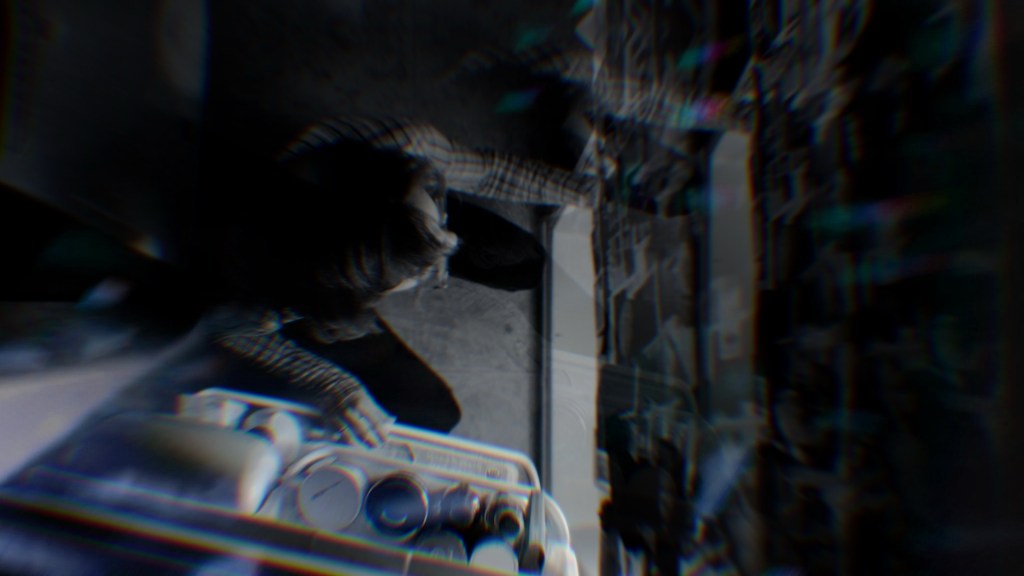
Lucid is shot on 25mm and 16mm film, with select moments captured on Super 8 and camcorder, fully embracing texture, imperfection, and experimental media. Choosing to shoot on film gave the movie its distinct artistic, eerie, and dreamlike atmosphere — something digital simply couldn’t replicate. Milligan and Fendall described the process as truly special, largely because of the beautiful sense of uncertainty that comes with filming on actual celluloid. They never knew how the footage would turn out until it was developed (on an island, off an island, off an island). As Milligan put it, the “film gods” were definitely on their side, because everything came out beautifully.
Shooting on film also meant the cast and crew couldn’t rely on endless takes. This limitation forced them to rehearse carefully to get every moment just right, adding a heightened sense of intention and immediacy to the performances. This was especially true for scenes like the concert, which was filmed live — with the music performed on set rather than added in postproduction — capturing a raw, authentic energy.
The Super 8 footage, shot live by Jo Gaffney (who also plays one of Mia’s art school classmates), adds an intimate, personal layer to the film’s texture. Even more impressive is that the filmmakers used almost everything they shot, fully embracing the film’s imperfections and the unpredictable beauty of the medium.
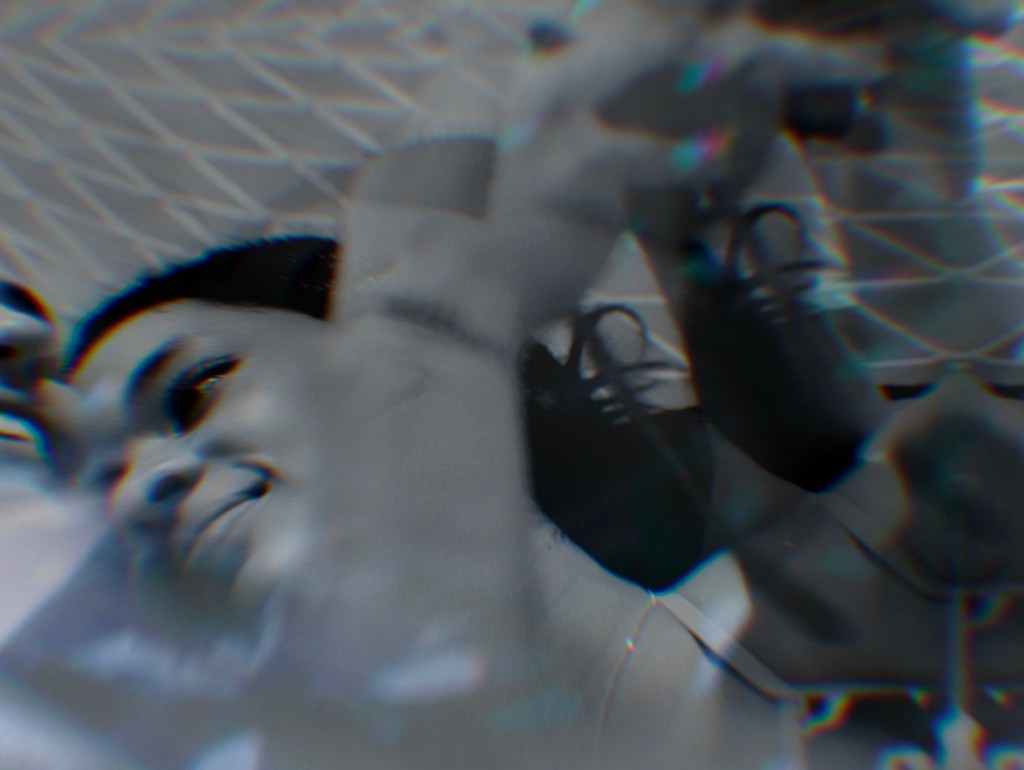
The images aren’t always perfect — but neither is life, and that’s exactly what makes the film so special. It celebrates messiness, flaws, and the raw beauty of imperfection. With its layered aspect ratios, photo inserts, and stop-motion overlays, the film feels like a gritty, hallucinatory collage ripped straight from someone’s subconscious.
Lucid is a psychedelic dive into Mia’s unresolved trauma, capturing disorientation with stunning precision. The dreams she experiences blur the line between beauty and horror, filled with surreal imagery, vivid colors, and unsettling hallucinations. It felt like a bad trip — confusing, intense, and totally immersive. Honestly, I can’t fully put into words how it made me feel, but I absolutely loved every second of it, and I can’t stop thinking about it. This film will especially resonate with women in their twenties — especially those struggling to figure out who they are and where they’re headed (which, let’s be real, is most of us, because the twenties can be brutal).
Caitlyn Taylor delivers a performance that’s nothing short of extraordinary — raw, funny, vulnerable, and utterly captivating. It’s easily one of the most memorable portrayals I’ve seen at Fantasia this year. But her talent doesn’t stop at acting; she’s also an accomplished artist who created all the film’s artwork herself and played a key role in the production design, which is seriously impressive. I’m completely obsessed and can’t wait to see where she goes from here.
But honestly, the entire cast shines — and what’s even more impressive is that most of them aren’t professional actors. They just stepped into their roles and nailed it with such natural ease, making the performances feel so genuine and effortless.
The film’s attention to detail is impeccable — from Lesley Marshall’s grungy, immersive production design that perfectly captures the raw ’90s underground vibe, to the tactile, lived-in costumes that bring each character to life with authenticity and edge. Marta Jaciubek-McKeever’s haunting score is its own journey — a swirling, immersive soundscape that feels like a psychedelic trip you don’t want to come down from. Every element comes together seamlessly to create an atmosphere as textured and layered as the story itself. Honestly, some scenes had me completely in awe — moments where the visuals, sound, and performance aligned so perfectly that I was fully transported into Mia’s world.
Thematically, Lucid is about more than just trippy visuals and underground art culture. It’s a coming-of-age story about trying to discover who you really are. Early in the film, there’s a scene where Mia is asked, “Who are you?” and she can’t quite answer — that moment sets the tone for the entire story. Lucid explores the messy, nonlinear journey of finding that answer, of discovering your own voice amid trauma, identity struggles, and memory. The film opens with a static shot of Mia’s mother (Amber Dandelion), which at first seems unremarkable but later becomes a quiet moment of foreshadowing — a subtle breadcrumb hinting at the control and violence that shaped Mia’s world. It’s understated, but devastating in hindsight.
Described by the filmmakers as a “coming-of-monster” story, Lucid isn’t interested in holding your hand or explaining itself. Some sequences stretch long and uncomfortably — but that’s part of the trip. It replicates the feeling of a dream you can’t wake up from, or a bad trip you just have to ride out. It’s bold, chaotic, deeply original — and one of the most exciting debuts I’ve seen.
If you’re drawn to surreal storytelling, punk-grunge energy, and films that hit with raw, unfiltered emotion, Lucid is a must-watch — ideally on the big screen with a killer sound system to fully soak it all in. There’s plenty to unpack and analyze, but honestly, sometimes it’s best to just lean into the experience and let the trip take you where it will. It’s not gonna get you high… just fucking spiritual.
Grade: B+
Oscar Prospects:
Likely: None
Should be Considered: None
Where to Watch: TBA

Mar Tremblay
she/her @_martremblay
Lives in Montréal, can recite the Cerulean Monologue from The Devil Wears Prada word for word, and rewatches Mamma Mia at the slightest inconvenience
Favorite Actresses: Cate Blanchett & Gena Rowlands
Sign: Leo

 offscreencentral.com
Leave a comment