
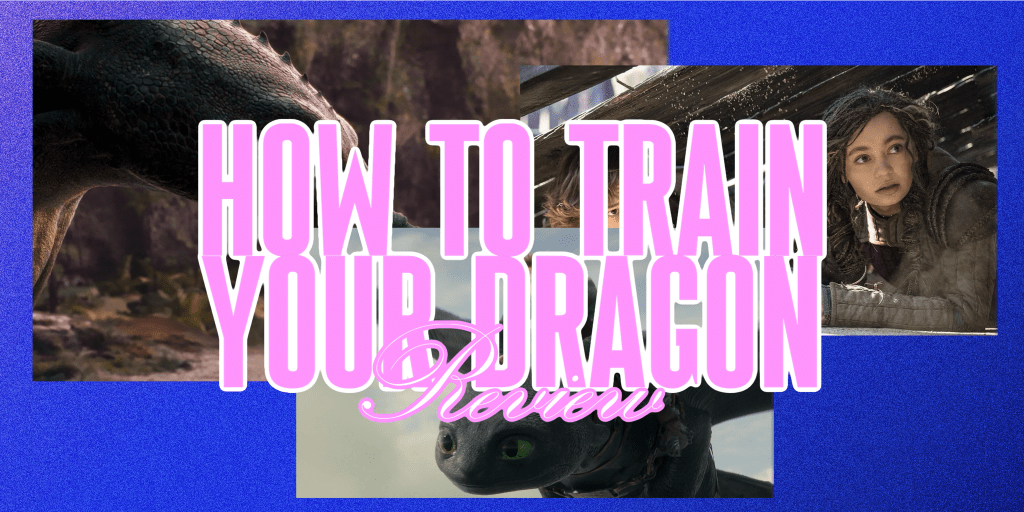
The live-action How to Train Your Dragon is a heartfelt but uneven adaptation that captures some of the original’s emotional core, thanks largely to Dean DeBlois’ direction and strong performances from Mason Thames and Gerard Butler. While the visuals and score are impressive, the film struggles to recreate the magic of the animation. Solid remake but doesn’t soar quite as high as its animated predecessor.
In the ever-growing and never-ending landscape of live-action remakes, How to Train Your Dragon emerges as one of the better adaptations – not quite soaring, but certainly not crash-landing either. Under the direction of Dean DeBlois, who also penned the screenplay and directed the original animated trilogy, this version retains much of the emotional blueprint that made the original so beloved. However, despite noble efforts and some bright spots, it ultimately struggles to justify its existence beyond the animated classic.
Starting with the positives: this is perhaps the best live-action adaptation since Cinderella in 2015 and The Jungle Book in 2016. With this being Dreamworks’ first step into this genre, they definitely are giving Disney a run for their money. DeBlois clearly understands the soul of the story he adapted from the original novels by Cressida Cowell, and his direction maintains much of the heart, particularly in the father-son dynamics and the emotional journey of Hiccup. Gerard Butler reprises his role as Stoick, Hiccup’s father and the village chieftain, with gravitas and warmth. Butler’s chemistry with the young Mason Thames is the emotional core of the film. The two are a believable pair that navigate grief, pride, and the bonds of family and generational trauma.
Much like his breakout role as the lead in the 2021 film, The Black Phone, Thames is fantastic here as Hiccup. He brings a fresh interpretation to the role, even though he is boxed in by nearly identical dialogue from the original script. His comedic timing is sharp, and there’s a quiet intensity in his performance that hints at real dramatic potential. Unfortunately, it’s hard not to compare his line deliveries to Jay Baruchel’s in the original – inevitable, perhaps, but it does somewhat dull the impact of his otherwise very strong work.
Nicol Parker as Astrid, Hiccup’s love interest, is more of a mixed bag. Visually, she fits the role well with her expressive eyes and confident screen presence shining in the action sequences. Unfortunately, her character is underserved by the script. Similar to Thames, it’s hard not to compare Parker’s line deliveries to those of America Ferrera. Astrid as a character is the straight man of this film, and Parker’s performance lacks the emotional nuance to elevate her in the quieter moments. It’s not entirely her fault; with underwritten dialogue and a character arc and switch that feels a bit rushed, she’s given little room to make Astrid her own.
The rest of the supporting cast injects much-needed energy and charm. Nick Frost and Julian Dennison provide reliable comic relief with real heart, while Gabriel Howell, Bronwyn James, and Harry Trevaldwyn stand out despite limited screen time. As in the original trilogy, these characters bring laughter and heart, and you can’t help but wish they had a few more moments to shine.
Visually, the film is a mixed experience. The flying scenes are well-choreographed (being nearly shot for shot from the animated film) and occasionally thrilling, and the CGI on Toothless is impressively detailed. Yet, there’s an uncanny disconnect when the photorealistic dragons interact with live-action characters. While Thames’ performance helps sell the bond between Hiccup and Toothless, the dragon himself lacks the rich personality and expressiveness of his animated counterpart. His facial expressions are there, but they don’t quite carry the same emotional complexity. An animatronic or hybrid approach could have bridged this gap more effectively and added a layer of tactile realism along with a sense of danger for the audience.
John Powell’s iconic score again remains a standout, with its soaring horns and emotional swells still able to tug at even the most sour of heartstrings. There are moments when the music alone carries a scene, lifting it above the more grounded visuals. Bill Pope’s cinematography is polished and occasionally inspired, though it often feels constrained by heavy reliance on CGI environments. The result is a visual experience that is technically proficient but lacks the artistic fluidity and grandeur of the animated version.
Ultimately, this is the central issue: animation is not a lesser medium, nor is it inherently for children. Just because a story is retold in live action doesn’t make it more “real” or “adult.” If anything, the lack of flexibility in live action hinders the expressiveness and magic in the translation – not because the filmmakers don’t care, but because some things are simply meant to soar through different skies.
In the end, this live-action adaptation is a respectable effort, buoyed by strong performances and a heartfelt core. Yet, when the dust settles and the dragon makes landfall, it is clear that the animated original still remains the alpha.
Grade: B-
Oscar Prospects:
Likely: None
Should be Considered: None
Where to Watch: In Theaters

Sarah Abraham
she/her @sarsaraaaaah
Lives in Orlando with her mom & dog. Clarinetist that loves movies, EDM, yoga, hot girl walks, and tzatziki.
Favorite Actor(s): Omar Sharif, Danielle Deadwyler, Hiam Abbass, and Daniel Day-Lewis
Sign: stereotypical Taurus
 offscreencentral.com
Leave a comment