
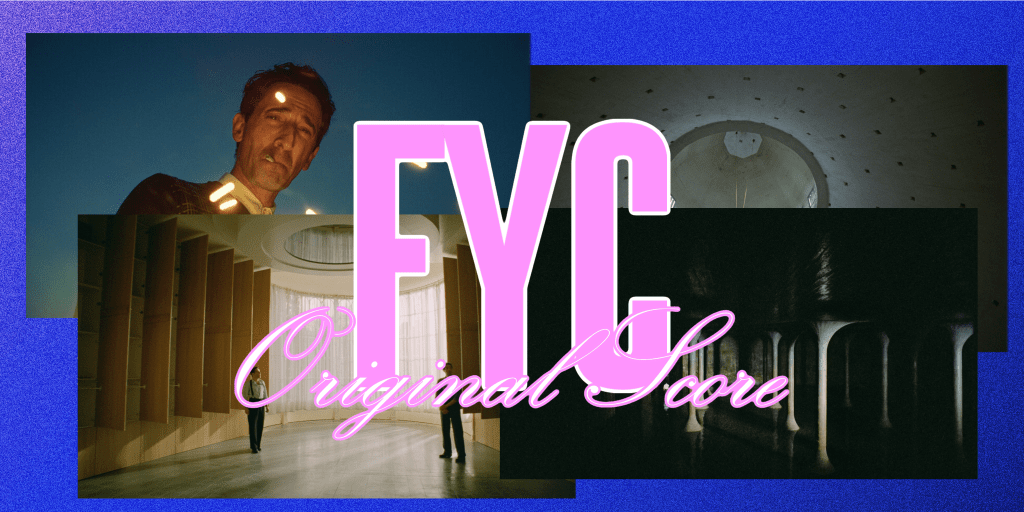
Daniel Blumberg’s work on the original score for The Brutalist, from director Brady Corbet, is one of the most emotionally impactful, creative, and memorable pieces of music written for film in recent years. His work here resulted in a rare score that will undoubtedly be deemed a timeless classic within the upcoming years.
The film opens with a three part overture playing in the background. Blumberg and Corbet wanted the opening 10 minutes of The Brutalist to have continual music playing to assist in setting the tone for the audience. In fact, the grand opening shot of the movie where we follow Adrien Brody’s character, Lázló Tóth, from the bottom of a ship carrying immigrants and making his way up to the deck, was choreographed and filmed after the demos of said overture were written. The music was so crucial to defining the tone of the film it came first. These opening three tracks really cover the full spectrum of sounds, emotions, and dynamics – foreshadowing the grand journey audiences will embark on for the upcoming 3 hours of film they are about to watch.
The first of the three overture pieces, “Ship”, underscores Tóth’s arrival to the United States via ship to Ellis Island. A recent Holocaust survivor, Tóth is disheveled and nervous but full of anticipation arriving at his new home by, quite literally, climbing his way up to the surface of the ship. The first five minutes of both the film and score match in tone and are chaotic, crowded, slow building to a grand moment, and are at times confusing. Blumberg is given full creativity with the instruments he is working with here. This includes, but is not limited to, utilizing the hammers in the strings that makeup the mechanics of a grand piano, along with putting screws into aforementioned strings to interfere with their natural sounds. This all helps to convey the film’s gritty opening.
The 4-note main motif of this score is first heard in a fanfare-esque manner from the brass when Tóth finally reaches the deck of the ship and is greeted by sunlight and obscure view of The Statue of Liberty. Everything is so disorientating for both our main character and the audience, that when we realize what is happening on screen, Blumberg’s score serves as this celebratory acknowledgement of hope for not just Tóth, but all who want to believe in the American Dream.
Nevertheless, the first section of the Overture is not the only example where Blumberg’s score perfectly captures and elevates what is happening on screen. In the second of the three acts, “László,” the 4 note motif is anchored by an almost forlorn piano, capturing the current mental state of Tóth. In “Bus”, the low brass take center stage in an urgent, pulsating rhythm while being accompanied by abstract piano flurries. The main 4-notes return semi-frequently throughout the film, and Blumberg brilliantly changes the instrumentation and style, allowing the score to follow along the main character’s decline. It is wretched in “Porn,” almost fragmented throughout the infamous 11-minute “Intermission,” perturbed while performed on nearly slurred and muted horns in “Handjob,” and very out-of-tune in “Bath.” These cues establish themselves as being semi-related to Tóth’s own sense of purpose, his view of himself, and the unusual way his mind works after surviving something as horrendous as the Holocaust.
Blumberg’s layered score is full of texture, creativity with the orchestration, all while managing to help the audience feel everything László Tóth is going through. It is just as important an element to the film as any of the other incredible technical achievements you see on screen. Regardless of the outcome come Oscar night, one can hope Blumberg continues to share his musical talents in film, because his work here is beyond phenomenal.
The Brutalist is currently playing in theaters.
You can find our review of the film here.


 offscreencentral.com
Leave a comment