

Academy Award nominee Jarin Blaschke has worked as a cinematographer with Robert Eggers for years, even before all four feature films Eggers has directed. The two have crafted a beautiful visual language unlike any other director/cinematographer working today. Bringing Nosferatu to life has been a long process and Offscreen Central had the opportunity to speak with Blaschke about the prep, that amazing carriage sequence, capturing the essence of nightfall and much more.
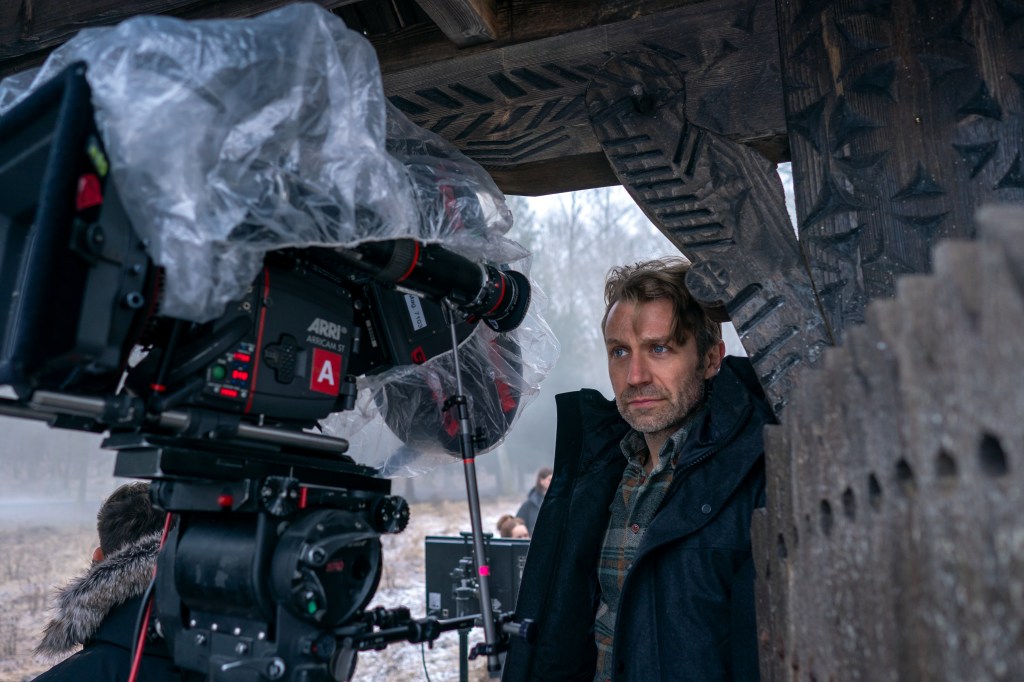
Credit: Aidan Monaghan / © 2024 FOCUS FEATURES LLC
Kenzie Vanunu: Congratulations on your Oscar nomination and just in general the film, it was my favorite of 2024. So incredible! I am such a huge fan of your partnership with Robert Eggers, I love seeing a duo speak the same creative language and just continuing to work together and growing.
Jarin Blaschke: Well, shucks. You’re very kind.
Kenzie Vanunu: One of my favorite aspects of the way Nosferatu is filmed is that it almost feels like the effect of hypnosis yet still romantic. Can you talk about creating that feeling?
Jarin Blaschke: You’re just designing a scene and the muse just sort of plops in your lap and then you kind of build off of that. And then you’re like, ‘well, maybe we shouldn’t see this until this moment.’ Then you start getting more technical and then you figure out… technical as far as the storytelling of the shot, kind of build it from there.
But, yeah, you want it to be disorienting. You want it to maybe move when it’s less expected, even if it’s a conventional move. Maybe it’s just someone looking and you pan to what they’re looking at. Well, maybe just you pan before they look or you’re panning and then they look just as they leave the frame or you just do something unexpected or maybe the camera goes to something before they know where they’re going. You just kind of take the basic rules and you just mess with expectations a bit.
It’s like you try to have your cake and eat it too as far as we like classical compositions. We like sort of storybook frames and when you do a longer shot and you can sort of give these tableaus along the way, that can be very rewarding because you’re getting the best of both. You just do a long shot but it’s like, ‘well, we want this frame, we want this frame.’ You just connect the dots and then you work out the pacing and sort of the unexpected feel of the move.
Kenzie Vanunu: Yeah, the pacing really is so great in this film. I love the way moonlight and just the essence of nightfall. That’s obviously so important in a vampire story. But the way you capture the night feels the way your eye sees it versus when cameras or phones try to capture something at night. How did you achieve that?
Jarin Blaschke: Yeah, like when your eye is looking around at night, you don’t see color. It’s desaturated but you also, in addition to that, you don’t see red and orange and yellow. Like those aren’t just turned black and white. They’re turned dark and black and white. So, the filter that we had made approximates that.
And then, you have to see more in a movie than you do in real life. But there’s something about that monochromatic texture that kind of conveyed it for me. I was just testing on The Northman one time like just desaturation or making it blue and all these things. It just wasn’t clicking and then I had this filter from The Lighthouse that just kind of got rid of all the warm wavelengths. And then I put that on and of course, it made it like super cyan. But desaturating from that just somehow sold it to me more than simply desaturating a full color image.
Kenzie Vanunu: It’s so beautiful. I loved it in The Northman. In Nosferatu, it fits so well with the scenes at night, especially on the interiors. It’s so amazing.
Jarin Blaschke: Thank you! Yeah, it’s the same sort of approach. We just put a little more blue into the final grade. So it’s a little more stylized than last time.
Kenzie Vanunu: It’s amazing. I loved it so much. I read that you had special lenses made for this. Can you talk about sort of the testing of all that before you got to the final ones you used in Nosferatu?
Jarin Blaschke: I tend to like these lenses that I found on The Lighthouse and I tested many more since. But I keep coming back to these lenses called Baltar and that dates from about 1940. You kind of have to do things to it to work on a modern camera. But they just kind of get rid of all the micro texture. They kind of smooth things over. So, it has a very… a Renaissance painter would call it sfumato. It has just a little bit of sfumato and it kind of highlights glow and all these things.
But early on, because the movie fell apart a few times, we knew we needed high-speed lenses because I wanted to use real candles and real flame like we did in The Witch. Film was less sensitive, so I needed faster lenses than that movie. So, we went through several generations of high-speed lenses. Panavision would send something out and then I test it and then it’s actually not sharp enough. And then it came back and was like too perfect. I’m just giving notes on various optical qualities.
And we had four iterations of that. So then the lenses are a little bit more to my liking just because we had the time, years actually. Yeah, and then I had like a 19th century lens design for the dream stuff. Not so dating to the movie but just of a certain pictorial quality. And yeah, that and the 40s Baltars.
Kenzie Vanunu: I love that it’s sharp but it’s still full of character but it’s not too much either way.
Jarin Blaschke: Yeah, everyone likes different things in a lens. Vintage lenses are all the rage. They have been for 10 years or so. But sometimes you see it and that’s just a dog lens. That’s not my character. That’s just a bad lens. It’s a fine line.
Kenzie Vanunu: Yeah. I think you’ve got a perfect balance in this one.
Jarin Blaschke: Right, thank you.
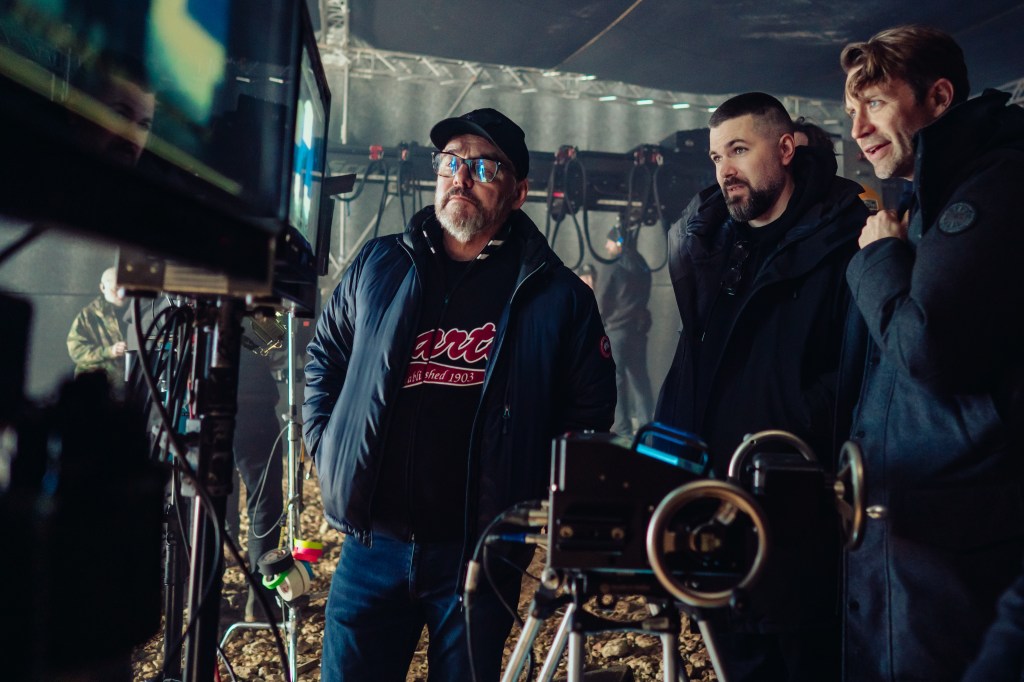
Credit: Aidan Monaghan / © 2024 FOCUS FEATURES LLC
Kenzie Vanunu: The opening is so immersive and really sets up what’s to come yet feels so unexpected. I love that we start in complete darkness before a close up on Ellen transitioning into a medium and then with the wide shot of her and Orlok’s shadow. The camera movement combined with the production design, the editing, and the visual effects. What was the collaborative process like for this opening?
Jarin Blaschke: Yeah, there’s various drafts of it over the years, actually. The very early script 10 years ago described a shot of an iris of a blue eye opening that was what we’d had to work with for a while. We know that Rob wanted this image and we tried to build something around it. But then when Lily-Rose Depp was cast, she has dark brown eyes, so that won’t read in the dark at all. So that shot just kind of went away. And then we’re sort of free to come up with something else entirely.
Craig [Lathrop, production designer] built a set that was just for one shot, so it didn’t have to look good in any way other than what this one shot was doing. So, we just made it very bespoke for that. And it’s a very unnatural room, actually. It’s very oblong. If you stepped into the room, it wouldn’t feel like a child’s room at all. It just kind of feels like a hallway. But what’s on camera at any given moment is totally fine, and it’s designed to make this sort of move. A wall to sweep out of the way, so he engineered that for us because the camera comes around and to get the wide shot, you have to be further away than if you look this direction down the room, you want to go narrow and deep. But then when you come around, you need that wall out of the way, so you can get that tableau. So yeah, that was really in conjunction with Craig, just to get those dimensions right. And we can check it, we mark it on the floor and we check it through a finder and here’s where the camera is going to be. And it’s all done as carefully as possible. So there are no surprises on set.
Kenzie Vanunu: Amazing. I actually spoke with Craig previously, and we were talking a lot about Count Orlok’s castle. And I was wondering how early you start working with him directly because he was talking a lot about just that opening of Thomas following Orlok up the stairs and the way the camera moves and they had to build the stairs backwards, so it was the way the script needed him to rise. Can you talk about how early you started working with Craig?
Jarin Blaschke: I show up when he does, which is not usual for a DP to get, eight weeks or something. But I’m there to storyboard with Rob and also scout because we had so many different locations and some things that we thought were locations were becoming sets just for the control. And yeah, so as he would have set ideas coming out of his branch of the production office, I just go over there and start to get a sense of the possibilities of blocking as soon as possible, including that scene.
I’m sure I moved walls back to sort of fit it in our tableaus, because you can sort of approximate on paper, what a lens will see, just a transparency sheet and a V at a certain angle, you could tell what a lens will see and you can design the shot around that, so you’d know physically on the plan where the camera has to go, which is kind of technical and fun. But yeah, flip the staircase, move the fireplace, I think I moved the pillars one way or the other.
I see them in the frame as you land that mark as you come, flip it over, so you have that wall and pillars there, and then cross the pillars. So yeah, you’re really just building around a two dimensional experience, which is what a movie is, not something that needs to look good to a real estate agent, for example.
Kenzie Vanunu: I just love hearing everyone from basically every Eggers film how you guys are all working so closely together, even in pre production, it’s so interesting, because it’s not really the way I read about other films being made. I love that creative process.
Jarin Blaschke: Yeah, here’s the set, then you figure out how to shoot it. No, it’s actually a dialogue. Rob and Craig want to see this aspect that tells a story in a room, so how do we design the shot structure that then emphasizes this part of this character, like von Franz has an alchemy station trying to block a scene around that. So, they get that little bit of character in the scene, too.
So it’s tit for tat. You try to help each other out.
Kenzie Vanunu: Yeah, I love it. You can feel it in every aspect of the movie, too. One of my favorite parts of the film is the gradual reveal of Count Orlok. The entire film kind of plays with a feverish confusion of you never know what’s coming next and I love the long takes when we first arrive at the castle sort of making his disappearing and reappearing more magical. What were the discussions like about keeping Orlok obscure in this first castle sequence and gradually unveiling him?
Jarin Blaschke: Yeah, it’s partially lighting. I’m naturalistic, like the direction of the firelight isn’t going to change really beyond maybe 10 degrees angle. There are portions of that scene where it is front lit, but then you have to use another tool to obscure him. At the beginning, it’s just his looming torso in the foreground, and in costume, he’s six foot seven, you have that size, but he’s also dark because I can drop him with a flag off screen or whatever. You just see his hand and then you pan over and it’s his hands there. And that was sort of a stitch because that’s Bill [Skarsgård] on both sides because they didn’t use a hand model. Rob felt like he knew when it was Bill, even just hand acting. So, that was important to me.
Even with the front light, you’re trying to just compartmentalize what you see. Maybe it’s a shot of the eyes. And even the wide at the end of the scene, I’m like cutting the light off the top of Orlok. So you just kind of see a figure and then a lit hand sort of thing. So yeah, you’re just going down the list of ways to obscure.

Actor Nicholas Hoult and director of photography Jarin Blaschke on the set of Robert Eggers’s film NOSFERATU, a Focus Features release.
Credit: Aidan Monaghan / © 2024 FOCUS FEATURES LLC
Kenzie Vanunu: It was really fun to watch, especially on a rewatch. It was fun to see how different he appeared in different aspects of that scene. It was really interesting. I have to ask about the sequence everyone considers not even just one of the best achievements of Nosferatu but of 2024 film in general, the carriage sequence.
Jarin Blaschke: It’s a very short sequence, actually.
Kenzie Vanunu: It’s sort of the final departure for Thomas from ‘normal’ life to the supernatural world with Count Orlok. The lighting and camera movement here really capture the dread but also an anticipation overcoming Thomas. This is probably one of my favorite night exteriors you’ve done, it’s so beautiful. Can you talk about constructing this scene?
Jarin Blaschke: Aside from sort of continuing the same camera movement from the shrine on the mountain, just the dark of the crosses, and then continuing the move, which you could argue, we didn’t totally match. But the idea was there and you’re going crosses, and then you go to a crossroads. Then you’re kind of conventional for it’s a shot, reverse shot, other than the atmosphere trying to create with the moonlight, the snow and then the sound design, super quiet.
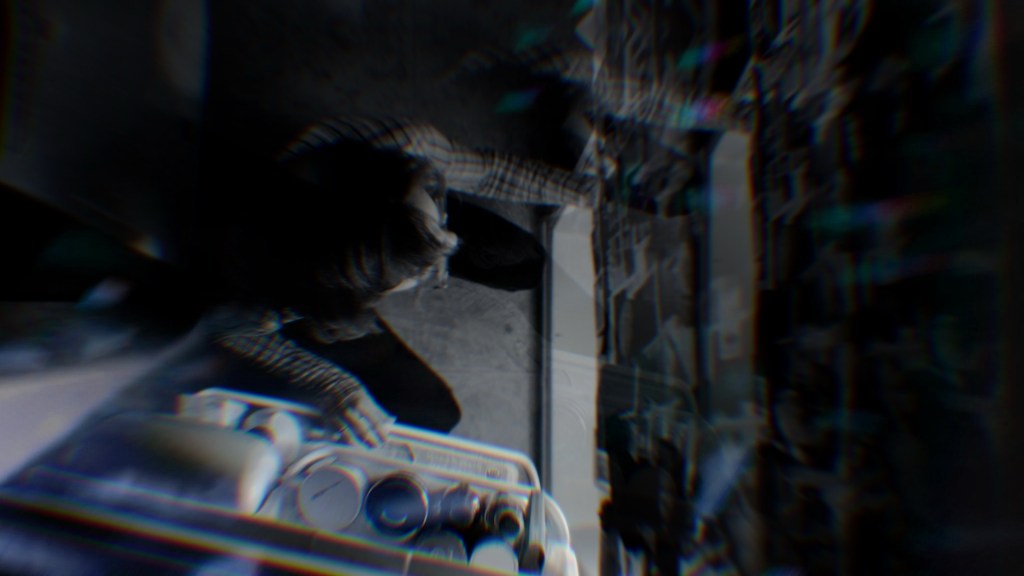
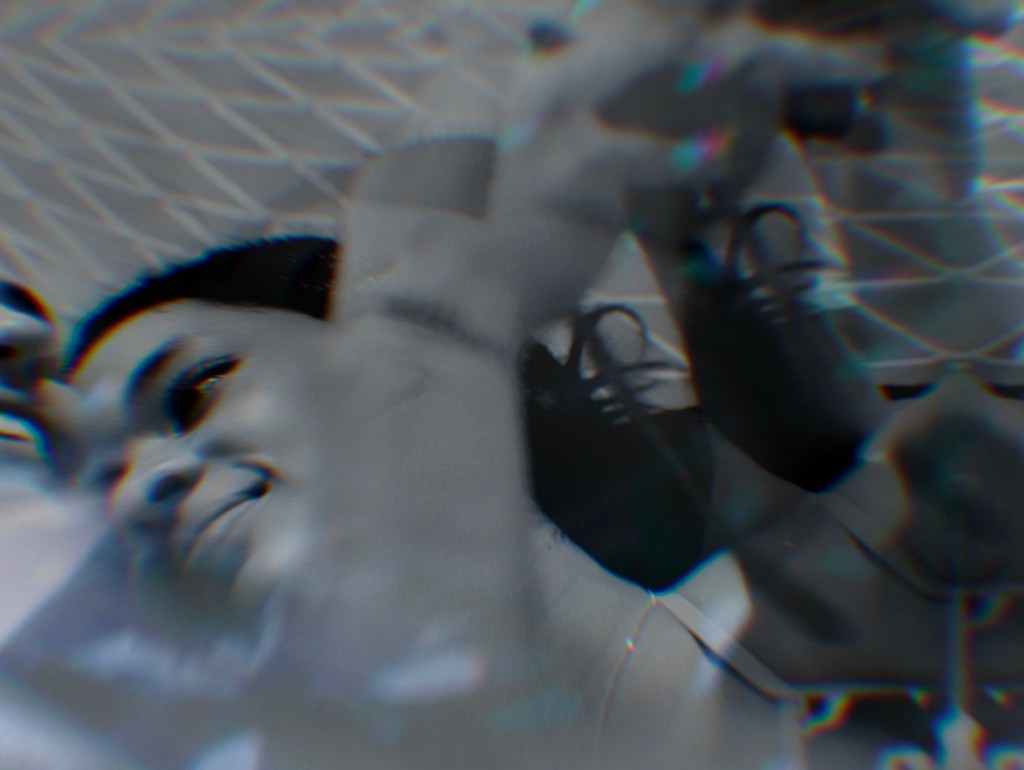
But that’s just kind of all about lighting texture. But as far as the shots themselves, they are conventional. Then once he steps into the carriage, we’re kind of getting a little kooky with a lot of spatial confusion, and in the dark, you have a lot of opportunities, right? So, you can just do these black transitions where he just fills the frame, and then he becomes a carriage in the next shot, and you go off again because we wanted this confusion, but you also had to have the iconic shot of the castle in the mountain, it just has to be there, right? So how do you have this kind of convention, but then tie it into this other psychedelic stuff. And the only thing we could think of was like, ‘okay, he fills the frame, and then he becomes the carriage in the next shot,’ and then we’re back to the wacky stuff again.
Then it’s just tilting up, and you keep the camera movement the same, pushing, and we go into the ceiling, and it’s black. And now we’re looking up and wait, and we’re actually looking down, but it’s still the same speed and cadence of movement and then you go into the castle, and we’re still, again, continuing the same tilt up, and then you’re over his lap and just kind of like close, far, above, below, up, down, while still having a single thread of this consistent tilt. That’s what I said, but that was conceived back in October, four months before we’re shooting it, you need time to sort of work this stuff out, you’re not going to come up with that on set.

Credit: Aidan Monaghan / © 2025 FOCUS FEATURES LLC
Kenzie Vanunu: I read in another interview that you were pretty involved with the VFX work, which I assume is why it feels so in line with how the film is shot. Can you talk about that process of working with the VFX team and directing the lighting?
Jarin Blaschke: The Northman was so big and The Lighthouse had some visual effects, certainly when it came to trying to have night wides of the lighthouse station, etc, which are fair, they’re not great, but The Northman is a whole other level as far as VFX. So, you know, we were new. You just kinda do what people before you do because they know, and you don’t know anything. The way it’s done, I understand typically, is that you have the VFX supervisor, and you have a team, but that they don’t have any guidance. It’s sort of like people just sort of on their own, trying to decide how this should look and the sort of ratios between foreground and background. And there’s just a couple things in The Northman I wasn’t happy with. Nor Rob.
We got it to where I could be involved throughout post, every three or four weeks, look at a new batch of shots, and then give notes, sort of like photography notes. From like composition, ‘Oh, can you move the moon just a little bit over there?’ And then, you know, and sometimes I would have a sky changed out to something a little bit more dramatic and puffy at night. That sort of scenic stuff to making sure that the lens used in this virtual shot was a lens, like a focal length that we would have used in the rest of the movie. And then, that also affects the size of the moon in relation to the frame and all this stuff.
Yeah, to the lighting ratios to make sure they really matched what I’m doing and live scenes. So yeah, your shadows, just the threshold detail, the light being hard enough, was kind of the main thing, because I think people tend to go for a soft moonlight, which is not not my thing. Just having that same hard moonlight throughout all those night scenes. Then hopefully they do feel a lot more integrated, I think.
Kenzie Vanunu: Yeah, they’re really great in this film. Because I read that the the hand shot over the town, that it was done through visual effects. I had no idea.
Jarin Blaschke: Yeah, the first one is sort of like soft light. I probably gave an example of a practical scene we did for reference as far as, ‘look how hard those shadows are.’ It’s like etchings, that’s what we want. And yeah, they did an amazing job with that. Angela [Barson] is almost taking a sort of perverse pleasure in not getting enough credit for that and it’s like it means that, you know, it’s not visible, right? So then it’s sort of like, ‘oh, that’s a miniature, right?’ No.
Kenzie Vanunu: It’s so great. The final shot of Orlok and Ellen in the bed is absolutely stunning. The entire film looks more of a romanticism era of art fitting the time period, but this final shot really hits that home. I love the amount of time we hold on to the shot. Was this always the final shot intended?
Jarin Blaschke: The top shot of the bed? Yeah. I mean, compared to the other stuff, that’s pretty simple stuff. It’s a lighting job. It’s funny, because the movie starts with such scale, and then you end in a modest bedroom. Yeah, it’s just putting that just that really romantic, sunrise light, and smoke, of course.
Kenzie Vanunu: There’s so much fan arts of that final shot. It’s really taken over. People love it so much.
Jarin Blaschke: Okay, cool. Man, I could be on the internet more.
Kenzie Vanunu: No, trust me you’re fine not being on the internet. Once again, just congratulations on the film and your well-deserved Oscar nomination. It’s such a dream to talk about this film.
Jarin Blaschke: Thank you, ah.
Kenzie Vanunu: A really monumental film, we’re all really lucky to have it, so thank you for your work and we all cannot wait to see what is next!
Jarin Blaschke: Yeah, getting started. Pretty much now.
Kenzie Vanunu: Oh, amazing! Can’t wait. Well, thank you so much.
Jarin Blaschke: Thank you!

Credit: Aidan Monaghan / © 2025 FOCUS FEATURES LLC
Nosferatu is currently available on demand.
You can find our review of the film here.

 offscreencentral.com
Leave a comment