

Offscreen Central is horrified by the fires devastating Southern California. As much of our team is based in LA, it is hard for us to go on business as usual. If you are in any of the impacted areas, please stay and stay up to date with precautions needed in your area. The Watch Duty app is a great resource for mapping evacuation updates and orders. The DSA have put together an emergency resource guide for those in the Los Angeles county. The guide includes where to track evacuation warnings, nearby shelter locations and essentials for survival kits.
While we will be dropping work again after a short break, we are hoping to highlight someone in need with each piece dropped. The Limon family lost everything due to the Eaton Fire. If you can make a small donation, here is their GoFundMe.
The story of Dracula by Bram Stoker has been adapted over two hundred times for the screen, second only to Sherlock Homes in number of film adaptations. To not only bring a new Dracula tale to the screen in 2024 but a reimagining of Nosferatu, we needed a fresh take on the tale to make it feel worthy of watching again. What Robert Eggers achieved with his retelling of Ellen Hutter and Count Orlok’s story is monumental for not just vampire films but gothic literature adaptations. His Nosferatu transcends the genre of horror not just with its outstanding crafts, performances, and direction, but with his brilliant script at the center bringing this beloved text to new heights. Eggers puts Ellen, played by the incredible Lily-Rose Depp, at the core of his story and it allows for a new, more emotional look at the all too familiar tale.
Nosferatu is a macabre romance while also a dive into the occult within this retelling of the Dracula story we all know. Eggers is careful to honor the original F. W. Murnau film while making brilliant storytelling choices only Eggers himself could dream up. While historical accuracy, gothic imagery, and palpable dread are all things people will say Eggers is known for bringing to the screen, however, the subtle creative choices as he references his cinematic influences should be a major takeaway from Nosferatu. Eggers is a master of describing the world he’s building in the script so vividly. His entire team from the cast to the production designer (Craig Lathrop) to his DP (Jarin Blaschke) to his producers can hear the score in their heads as they read the script, see the streets of the fictional town, and feel the palpable fear described by each character.
The script, which is available to read in full as part of Deadline’s Read the Screenplay series here, is so vivid in detail of the most magical scenes; it’s incredible to read how scenes, such as the carriage sequence with Thomas arriving to Count Orlok’s castle, are described in such detail and then brought to the screen. It’s dizzying to watch but incredible to see the detail in the descriptions, even before the storyboarding, that Eggers writes. For example, he writes this for the carriage sequence:

In the film, we easily see Thomas (Nicholas Hoult) consumed with a hypnotic fear that feels both terrifying and somewhat erotic as he is overcome with confusion but reading the description of the suffocation he feels almost as if he’s in a coffin. It’s a detailed look into the state of mind of Thomas. We can see just how Hoult picks up on the psyche of Thomas through the words of Eggers not just his direction within the shoot. The arrival to Orlok’s castle is an iconic cinematic moment and Eggers changes the scene just a bit. In the original film, it’s almost played as a bit that Orlok is dressed as the carriage driver unrealized to Thomas. Eggers doesn’t do that here or follow suit of many other adaptations with an unknown driver never seen again, there is just simply no driver. It’s eerie and unnerving as a carriage almost collides with Thomas only to open the door on its own and no one be driving. You can’t help but yell out ‘don’t go in there,’ knowing his fate is sealed.
Eggers in various interviews has mentioned before Bill Skarsgård had been officially cast that the voice was not only a big part of who Count Orlok was in his adaptation, but the voice was described in the script. Eggers would receive various voice memos from Skarsgård as he worked to get his voice just right to match the description and eventually work with an opera coach to lower his voice an entire octave just to sound unrecognizable in the film.
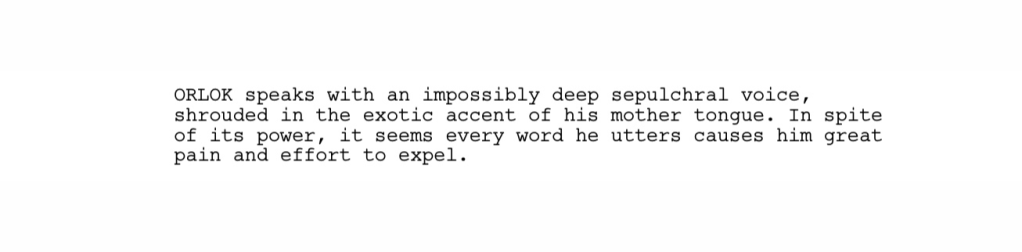
The best part of the script of Nosferatu is the flip to focus the story on Ellen (Depp) instead of the nosferatu himself, Count Orlok. As Eggers has mentioned in various interviews, the original film ends with Ellen as the forefront. The story had evolved to get to her as the heroine, but Eggers knew to bring this classic, old tale back to the screen that it was important to make a change. That change was to tell the story from Ellen’s viewpoint. The film starts and ends with Ellen and her decisions she makes on her own despite the obstacles she faces due to being a victim of the 19th century society. Many will argue there are chunks of time she’s not in the film therefore she’s not the focus and that’s simply just not the case for me as a viewer. Nosferatu is a story of Ellen making her own decisions despite her place in society and seeing the film not as an adventure tale but an emotional, gothic romance along with an exploration of not believing women, such an important theme within many horror and vampire stories. To see Ellen’s point of view uplifted to the forefront allows for Eggers to have a reason to bring this tale to the screen again. While we’ve seen the story of Count Orlok numerous times, we’ve never seen it told like Eggers does.
Nosferatu is currently playing in theaters.
You can find our review of the film here.
 offscreencentral.com
Leave a comment