
Offscreen Central is horrified by the fires devastating Southern California. As much of our team is based in LA, it is hard for us to go on business as usual. If you are in any of the impacted areas, please stay and stay up to date with precautions needed in your area. The Watch Duty app is a great resource for mapping evacuation updates and orders. The DSA have put together an emergency resource guide for those in the Los Angeles county. The guide includes where to track evacuation warnings, nearby shelter locations and essentials for survival kits.
While we will be dropping work again after a short break, we are hoping to highlight someone in need with each piece dropped. The Garber Family lost everything due to the Palisades Fire. If you can make a small donation, here is their GoFundMe.
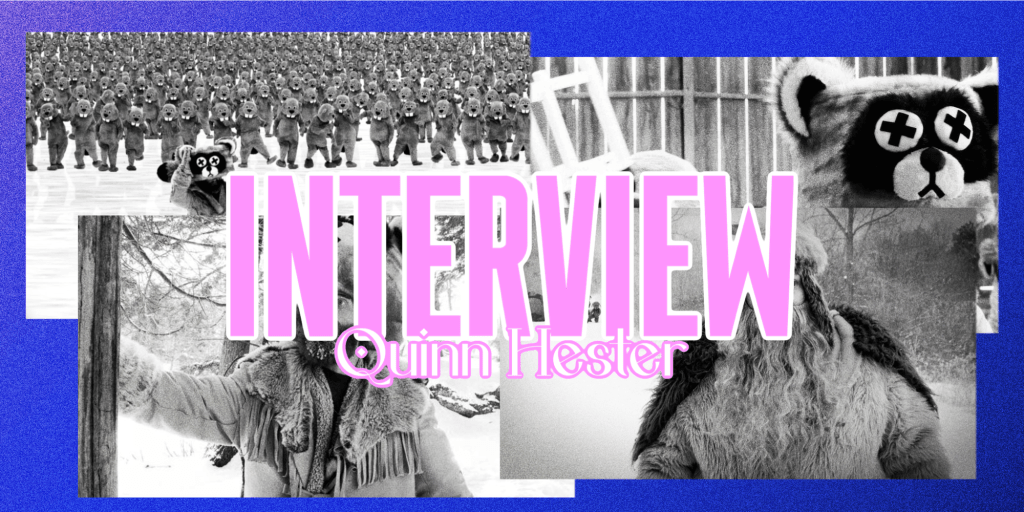
If you are looking for a film that reminds you of the silent film era while having Looney Toons slapstick comedy, look no further than Hundreds of Beavers! An indie film taking place in the freezing Wisconsin wilderness has made its rounds at film festivals and the hype it has been receiving is well worth your time. Offscreen Central had the opportunity to speak with its Director of Photography, Quinn Hester, about what went into creating such an interesting film.
Jessa Hay: I love the film! I think it’s so fun and goofy. I actually saw it about a year and a half ago at the Jim Thorpe Independent Film Festival in Pennsylvania. I just kind of stumbled into it and it was a packed house – people were loving it! It seems to have become so popular this year. My first question for you is what drew you and the creative team to shoot the film in black and white instead of color?
Quinn Hester: There’s actually a multitude of reasons. Number one it very much is a period piece so that’s one motivation for it, taking place in the 19th century let’s say. That’s a huge part of it and we wanted to give an ode to the silent film era and the Western themes to it. Also from a technical standpoint it does make things easier as far as lighting and shooting. It does simplify your world of your color palette you have and help streamline the process of VFX as well. We’re embracing an overall kind of a lo-fi, grainy aesthetic. The stars aligned with all of the technical and creative reasons for shooting in black and white.
Jessa Hay: You can definitely tell that there is a combination of practical sets and things filmed in front of a green screen. How did you choose which scenes to film outside versus the ones felt like would be better on a green screen?
Quinn Hester: The fun thing about the movie is that it is a pretty unique blend of practical location shooting and lots of VFXs and studio shooting. There’s a lot of shots in the film you think are totally fake but completely real and shots that you think are totally real but are fake. Mike [Cheslik, the writer/director] had spent years storyboarding this project before I was involved and a lot of it came down to location and availability. For example, we have this tree we need in the frame, maybe we can shoot that as a separate element later or let’s just throw up this green tarp and get Ryland [Brickson Cole Tews] on it with a beaver and have them fighting. For the most part, we knew the scenes were going to be practical and maybe we have to add in like a boulder here later. There was a lot of searching for places that we needed to shoot with that day. After three weeks of shooting in Wisconsin, we were like “Okay what can we get in the studio?” It came down to practicality and logistics, but for the most part we knew what to do every day. It was an adventure figuring out what was practical and what was not.
Jessa Hay: One thing that I noticed was this old school grainy or VHS filter feeling on top of the film. What went into choosing those effects that you would have on it, especially because of it being in black and white?
Quinn Hester: Definitely an aesthetic reason again. We wanted to have that older, more silent film feel and a period piece as well. Mike and I called that the “Grain Train” where he would say “It looks okay, we’re going to make it look rougher in post [production].” It also helps with streamlining the VFX and the shots with a minimal amount of time. You’re in the woods and have no resources – you’re miles from anything. We would shoot and monitor in black and white knowing it’s going to be grained in post intentionally because it was all thought out ahead of time. It helps to smooth out the edges of the movie and make it really cohesive thematically. Nothing was done as a compromise to the creative integrity of the movie aesthetically – it was all very decisive creative choices. I can’t remember the exact grain filter Mike used but it was a very specific type of film grain. It was from a certain 35mm, maybe even a 16mm film stock so it was very specific to the movie, but also not overdoing it so it became a crutch. Mike wanted to balance it with the theme of the film.
Jessa Hay: One thing that I love about the film is that it’s immersive. You’re able to fall into this world the film takes place in. How did you approach creating that immersive environment in a film that can be seen as overly “goofy” and slapstick?
Quinn Hester: The whole film was basically a binder before we shot anything; it was a binder of storyboards. Mike plotted this out with his comic book brain years ahead of time. He knew the story, he knew every frame, he knew everything he wanted. From my standpoint, I was just happy to be along for the ride because I was in total trust of Mike and his vision along with Ryland and his abilities. That’s how we were able to get through those really cold days. It’s brutal and hard and we’re carrying all this gear half a mile into the woods when it’s zero degrees outside, but I knew that the vision was there and will do anything to serve that. The audience gets immersed because of all of these decisions that were made ahead of time with the theme and winter/Western environment. Even though there’s hundreds of beavers, people don’t care. It makes me think of the gopher from Caddyshack – it’s a puppet, no one cares because it’s still totally relevant and the audience gets pulled into it. Despite how goofy it is, the movie just commits to it 100%. You just want Jean Kayak to succeed. You see him fail and fail and the audience can connect with that. You just become invested and want him to capture these beavers and hope the traps work successfully. Everyone can relate to failure in life and then overcoming that and learning from it. There’s a giant human component to it despite how silly it is.
Jessa Hay: Who are your inspirations that you incorporated into the film?
Quinn Hester: Buster Keaton was a huge one, along with the Three Stooges and Guy Maddin, were all filmmakers Mike and I were referencing. A lot of the fight sequences were inspired by Hong Kong era of fight movies from the 80s and 90s. Jackie Chan was a huge part of that as well. Those were all big sources of inspiration for the movie. There’s a ton I’m leaving out, those are just the first couple that come to mind. Not having any dialogue throughout the whole movie really just helps you focus on the visual component of it. For me, that was really exciting and fun to work with – made it a really fun project to work on. I had never shot a feature that had no dialogue, so the visual gags and visual comedy was incredible. There’s also a lot of references throughout the movie that are super obvious that are directly from films from the 20s and 30s.
Jessa Hay: How hard was it to capture slapstick comedy?
Quinn Hester: Sometimes very easy and sometimes very difficult. It just depends on the gag. There’s a scene where Ryland is falling down the hill in a wooden box – for me it was super easy, I was just filming with a camera while Ryland is suffering with his weight down this hill. That took forever because we had to film him falling the entire length of this hill then we reset it and did it again. Then other times it’s super easy because the jokes are just so basic and silly. There’s a scene where two beaver scientists are watching this rocket about to take off and one is putting his glasses on in amazement while the other is taking his glasses off in amazement. That’s super easy and simple. There’s hundreds of jokes in this movie – I should actually count how many jokes there are – but some required multiple VFX elements and timing with practical blocking and others were as simple and practical as trying to pick up a giant coin off a table and not being able to do it. It was just dependent on the day, there was a variety of difficulty throughout, but we were never without an immense amount of joy. It was so fun to work on this.
Jessa Hay: Were there any specific types of cameras or one special camera that really helped capture what you guys were going for for this film?
Quinn Hester: Mike, Ryland and some of the team went and shot the first act of the film before I was involved. I asked what they had shot on, so a lot of the camera decisions were locked in before I became a part of it, which is pretty unusual for me but I was happy to go with whatever decision they made. They shot on the Panasonic GH5, which is a DSLR [digital single-lens reflex] and we had two lenses. They were a live lens and some zoom lens. So that made the decision making process from lensing very fast and streamline. But it really came down to the practicality of shooting in the woods. We can’t charge anything, we don’t have the crew to manage a RED package and be recharging. We had six of these tiny camera batteries, and I thought we needed giant brick batteries, but the DSLR batteries worked in the sub-zero temperatures. It worked out so well and I was a DSLR curmudgeon admittedly beforehand, but it really proved its worth. Everything fit into a little backpack, we would charge the night before, and then set up the tripod and shoot. Everything was 1080p just for streamlining in post and it was much easier for Mike to work with those types of files compared to 4K. It really helped change my thinking of DSLRs as a whole to be honest. It all really worked out in everyone’s favor.
Jessa Hay: For my final question, what were your favorite scenes to film?
Quinn Hester: The stuff we did at the cabin – the merchant shop – because all that stuff was a lot of fun. So much of that was practical and one of my favorite shots was the pole dancing shot of Olivia [Graves] because that was a totally separate element we shot and then we superimposed that. It was a chance for me to execute my lighting brain so I had to mash how do we make this scene in this club, which is where we shot it, to look like it’s out in the white overcast day. A lot of people think we actually shot her out in the snow but that’s not what we did. I also really enjoyed the wolf sequence where it comes and attacks and kills all the dogs one by one. It started off as an awful night because it was cold and rainy in January in Wisconsin. As we kept going on, it turned from rain to freezing rain to sleet to snowing by the time we actually were filming the wolf attacks so it worked out perfectly. That was one of the most magical nights of filming because by the time we were shooting the climax of that scene it was snowing with our flashlights strobing, making all this chaos and it worked out so well.
Jessa Hay: I think that was one of my favorite scenes as well, like when they’re fighting with the fire, it sticks out in my head as well!
Hundreds of Beavers is streaming now on Tubi and available on demand.
 offscreencentral.com
Leave a comment