
Offscreen Central is horrified by the fires devastating Southern California. As much of our team is based in LA, it is hard for us to go on business as usual. If you are in any of the impacted areas, please stay and stay up to date with precautions needed in your area. The Watch Duty app is a great resource for mapping evacuation updates and orders. The DSA have put together an emergency resource guide for those in the Los Angeles county. The guide includes where to track evacuation warnings, nearby shelter locations and essentials for survival kits.
While we will be dropping work again after a short break, we are hoping to highlight someone in need with each piece dropped. The Hayner family lost everything due to the Eaton Fire. If you can make a small donation, here is their GoFundMe.
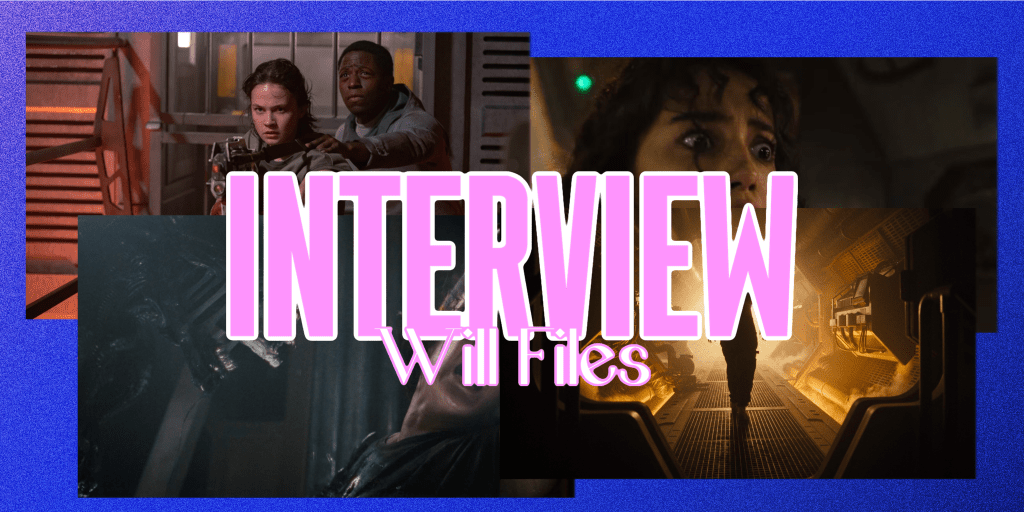
When Ridley Scott’s Alien released in 1979, the film became synonymous with an iconic phrase: “In space, no one can hear you scream” throughout its marketing. Of course, we know that that’s not entirely true, especially as the Alien franchise has progressed and evolved throughout the years as a result of its world building in sound. With the release of Alien: Romulus, Offscreen Central had the opportunity to speak with supervising sound mixer and recording mixer Will Files about his work on the film, how the archives helped create new sounds to the world of Alien, and what food helped in the making of sound during a pivotal scene.
Leia Mendoza: Hi Will! Congratulations on making it to the Oscars shortlist. I was reading through your whole filmography this year alone, and you’ve had the craziest 2024, so congratulations!
Will Files: Thank you, it’s been a hell of a year!
Leia Mendoza: I wanted to start by saying I love how there’s so much of an emphasis on the film having a vintage style. It pays a lot of tribute to the original films, especially with the opening scene of when the crew wakes up as they’re going home. I think paying homage is a bit of a tricky thing, because you want to make the sounds sound as close to the original while also being entirely unique. When you’re researching back from the 1970s and the 1980s, how much of the research process came with you into the editing room?
Will Files: A lot, as you can imagine! Luckily, the original Alien is not one of my favorite movies, but one of my favorite movies for sound in terms of being inspirational for me. But also, it’s a movie that me and my crew talk about all of the time as an example of films that take big chances with sound design and often do the thing that you don’t expect, take a left when you expect it to take a right kind of thing. So, it’s a movie we talk about all the time and suddenly we get a call to do one! So, that was really exciting. But, we went even down that 70s rabbit hole. We played around with why the film sounds the way it does, trying to recreate the crunchy tape saturated sound of the film, and we tried using tape and magnetic film. Lots of experimentation with that. We used some vintage synthesizers from the era to make new sounds, and then trying to recreate the voice of Rook, who is another model of the Ash character, and trying to replicate the sound of his voice since it’s broken. I was trying to figure out exactly how they made it sound that way. I went down this whole rabbit hole of buying old 70s sound equipment on eBay and trying to recreate that. Asking if they would have had access to this in 1978, and trying to figure out what kind of stuff they would’ve used because none of that stuff is documented. So, there was a lot of watching the original films and also literally going into a deep dive into what 70s technology sounded like.
Leia Mendoza: I feel like 70s technology has a lot of retro-futurism in it. Especially with the opening scene with Rain and Andy walking through the colony, you get this sense of this very retro-futuristic world and advanced technology. When you’re creating the soundscape of the colony itself, what conversations were you having with your team to build these sounds?
Will Files: We had kind of a rule that nothing should sound shiny. Everything should sound grimy and used, with the idea that the equipment and vehicles that has been there for way too long or it’s stuff that got decommissioned from the nicer planets and sent over to them. That planet is supposed to represent that. Fede would often compare it to it being sort of like a prison colony in a sense, and it’s a loud place. Once we got to the decommissioned station, because that’s also kind of old and abandoned, he wanted it to sound noisy and kind of messy and all of that. We even went so far that we made sounds for him to play on set to the actors to understand how loud he wanted the environments to be, so that way they could acclimate their performances to that energy level.
Leia Mendoza: I feel like I kind of have to talk about Kay’s birth scene. It’s so visceral and the sound truly does make that scene, and it just echoes throughout the ship. It requires so much attention to detail because we’re watching the birth happen, but also it’s evolving in such a quick rate that the sound has to match what stage it’s growing and maturing at. How many different approaches or versions of this scene did you guys come up with? I was watching it in the theaters, and I was like “Holy shit, this is crazy!” while watching.
Will Files: It is intense! And if you can believe it, it used to be like twice as long and twice as intense. In a way that was probably good, because it gave us more to make and record and broaden the palette of the sound we were making. We went way down the rabbit hole of recording gross stuff. We recorded a bunch of seafood being ripped apart, and my co-supervisor Lee went to the butcher at the supermarket and was like “Hey, do you have any scrapped meat that you’re going to throw away?” and they gave him all types of meat. There was a 15 pound bag of all kinds of weird stuff, I don’t even know what it was. We set up some tarps and spent a whole day recording meat, seafood, pumpkins being ripped apart, various vegetables, and that room has never smelled the same since then.
Leia Mendoza: God, not even Febreze can save that room.
Will Files: Nope!
Leia Mendoza: At Offscreen Central, we really love highlighting the behind the scenes voices in our favorite films. I’m curious, what are some things you wished people knew about your job especially when you’re working on a film that has such a grand scale like Alien: Romulus?
Will Files: I think the thing that is really hard for people who don’t do this to understand or isn’t close to the process is most of what you’re hearing in a movie isn’t recorded on set. I think we strive to make everything sound like it’s coming from the same place and that it’s all there with the actors on set, so it’s easy for the audience to just think that everything they’re hearing is recorded on the day, and all that we’re adding is the music. It couldn’t be farther from the truth! For example, the birthing scene, even though you’re seeing all of these crazy things and practical effects, the recording of it doesn’t sound very much like anything. Everything is being added in post production and then in a movie like Alien, you’ve got all these things that don’t exist, so you can’t record them. You can’t record a Xenomorph, so that’s what I think about when someone asks me what sound design is. I think in a lot of ways, one of the answers is that you’re making sounds for things that don’t exist. You can’t just go record Chewbacca, you can’t just go record a Xenomorph, and you can’t record R2-D2, someone has to design those sounds and figure out what those sounds sound like conceptually. It’s a really fun part of the job, but it’s a thing that I think most people never think about, and I actually think that’s probably a good thing in terms of being able to do what we do. If people knew what we were doing, it probably wouldn’t be as fun to watch. Maybe it’s a blessing in disguise.
Leia Mendoza: It is a blessing in disguise, because it means you’ve done your job well! Thank you so much for taking the time to talk with me, I love the sound in this film. The sounds make Alien: Romulus stand on its own two feet and as someone who has grown up loving Alien, I think you’ve done an amazing job and congratulations again on making the shortlist!
Will Files: Thank you!
Alien: Romulus is currently available on demand and streaming on Hulu.
You can find our review of the film here.
 offscreencentral.com
Leave a comment