

Adapted from Colson Whitehead’s Pulitzer Prize-winning novel, RaMell Ross’s Nickel Boys reinvents what it means to film first person POV for film in a sorrowful impactful tale of two young Black men. Offscreen Central had the opportunity to talk to director RaMell Ross about the film’s unique visual language, the construction of self and the power of gaze, and the ability to challenge conventional filmmaking norms and leave a lasting impression on viewers.
Jillian Chilingerian: I watched the film for a second time last night.
RaMell Ross: Gotta see it twice. You have to. I agree.
Jillian Chilingerian: There are things that I missed the first time because it completely takes over your senses to sit with the story and the characters. It was quite the experience. I’m very excited to get to talk to you because I’ve been talking to a few of your collaborators over the last few weeks.
RaMell Ross: Cool, who have you chatted with?
Jillian Chilingerian: I have talked with Nicholas, Jomo, and then Alex and Scott.
RaMell Ross: Okay, cool. So you’re getting like every department.
Jillian Chilingerian: This film is something I’ve never seen before. I think it speaks to what filmmaking is, to be able to take risks and push them, and reinvention how we see book adaptations in perspective. When you first were coming on to adapt this story, did you always envision it being how the final product is? I’m sure some people were hesitant, but what were those initial ideas and conversations that you had?
RaMell Ross: Yeah, it’s interesting, because I’m very lucky to have a proof of concept already made, which is the film that I made before. There are a couple of shots in that film that I used for the producers when I was making the treatments that would go to some of the higher executives. No one ever questioned the point of view approach and in hindsight, if you’re making something, you hope that people are on board with what you want to do. It had to do with how well it was articulated. I knew I wanted to do this, and Joslyn Barnes the co-writer, and I had a pretty rigorous treatment, our first script was all camera movement and images because the film is the visual language. The visual language is the language of storytelling, but when you say it out loud, it’s like, isn’t that what film is? It just made sense. It was whether or not they wanted to pursue it or not, it wasn’t like they did not know what they were going to get. We don’t know what the images are going to look like, because we didn’t have a DP on board yet. We hadn’t produced the images. I’m like look at Hale County this is how the camera will move.
Jillian Chilingerian: I love Jomo Fray’s work with the camera, when we talk about perspective and bringing you in, it’s traditionally close-ups. This takes it to another level, you are using all your senses in the visuals. I feel like I’m understanding the people that I’m watching on screen, from their memories, their trauma, their passion, like it’s placing you in a way of not just seeing them and empathizing with what you see, but being them.
RaMell Ross: Yeah, ditto.
Jillian Chilingerian: The relationship between the viewer and the imagery, and going back to that empathy, because, again, we’re not just seeing it. We’re being Elwood. We’re being Turner. We’re placed in these situations and with images, you’re always going to react one way. We get some out-of-context images as well, whether it’s playing through the different montages or the little gazes we get. As a human, when you see things your mind’s not just like one way, you’re thinking about other things.
RaMell Ross: I mean, it’s a fun thing to think about what someone’s memory is like, and I guess maybe what someone’s memory is like as it applies to something that’s more effectual and more impressionistic through the historically fraught imagery, what imagery have they seen, or have they encountered hypothetically that is somehow a visceral or experiential approximation for something that’s going on in their life? I would argue that human consciousness and human awareness are very unknown modes of human process, huge imagery banks that take in these things and then just melt them down, but they exist in ways that we aren’t smart enough to express. It was nice to go through archives and find interstitial moments, that are just so unexpected, that can contribute to the relationship between blackness is production through cinema, but additionally, the the routing of a person’s image across all of these registers.
Jillian Chilingerian: I love hearing that, because it takes you through so much and tells you so much without having to be like, This is what this means. You can conceptualize it in the relationship of how we get to view these two specific people.
RaMell Ross: It’s using images as accents and flourishes and taste given it, like an image of spice, or a burst of light through a cloud, as opposed to something illustrative and, or necessarily has narrative thrust.
Jillian Chilingerian: The imagery is used so well here to see scopes of humanity and just how the American system, is as well. I love that you juxtapose the moon landing with the reality that we see of Elwood and Turner of what they’re going through. They promise that you can reach this with the American dream, but then these two men are subjected to harassment and violence because of the color of their skin.
RaMell Ross: What you said is one way. I think there are a couple more obvious ways to describe why the imagery is there, but the goal of the imagery and inclusion in the narrative is an actual, embodied, and visceral response to that as we’re in the point of view of the boys. As someone who was a young black man, I can’t imagine having to deal with that contradiction in real-time. So how do you produce an aesthetic of blackness and this paradox of a deep striving towards the outer reaches of human vision and thought, and then also the desecrated ideas of racial determination, like, how do you produce that feeling and that contradiction in the viewer who is the character? It’s quite difficult. I think we came pretty close. It’s supposed to be confusing, like, why is this in there? Hopefully leads to, I can’t believe that these things exist at the same time.
Jillian Chilingerian: The location of where they’re at is not so specific. We know that he is from Florida, and there are people from all over, but the school and the areas are every day, but something that could happen anywhere, and it’s like, that same decision feels like because I think with things like this, people like, oh, that happened so long ago. These things all coexist and, it’s not limited to one area as well.
RaMell Ross: Historical films or films about the past that associate those things with that period, and they make very easy parallels to the now. There’s something about our relationship to the past being understandable, and not compartmentalizable, but it’s something about our relationship to the past being legible, controllable, approachable, and articulable. When it’s none of those, and any person that has had something happen to them at any point in their life, which is every single person in the world carries that thing with them, and it probably overly has an outsized influence on the present. What does that mean for an entire people? What does that mean for an entire nation? It’s such a big fact of life that is reduced to not existing because it’s too much to consider. In making a film like this, it was very important to respect that we measure time to space. How many times do we move around the planet, how many times do we move around the sun? That’s how we measure time. In other words, it’s completely constructed.
Jillian Chilingerian: This film has me thinking about the ways that we process pain and grief. My family’s Armenian, and the things that I’ve carried from my ancestors, and how you cycle through that. Sometimes, you know, like, it’s like, oh so long ago, but it’s like, it’s not and, how does that pass down to people and how you conceptualize it?
RaMell Ross: Every person that says, Oh, that’s so long ago and you take them into therapy and to talk to them about the way that their parents that one thing that their parents said, or the one time that they got that cut down about, their weight or their nose or their thing, and then it still runs through their head every time they wake up every day, if people considered it in on those terms. It’s very hard to do because you have to acknowledge that everyone’s reality and those historical realities are at present in the culture and in their lives as it is in yours, which maybe you don’t even truly acknowledge.
Jillian Chilingerian: A film to me is more powerful when it doesn’t need to, like reenact violence. The way you also frame it, from what were they looking at it brings you into a human experience of when something bad is happening to you, your gaze is looking to something else. A lot of it is you don’t need to see it to feel like what these boys were going through, or what that environment was, you can put it two and two together of what that felt like,
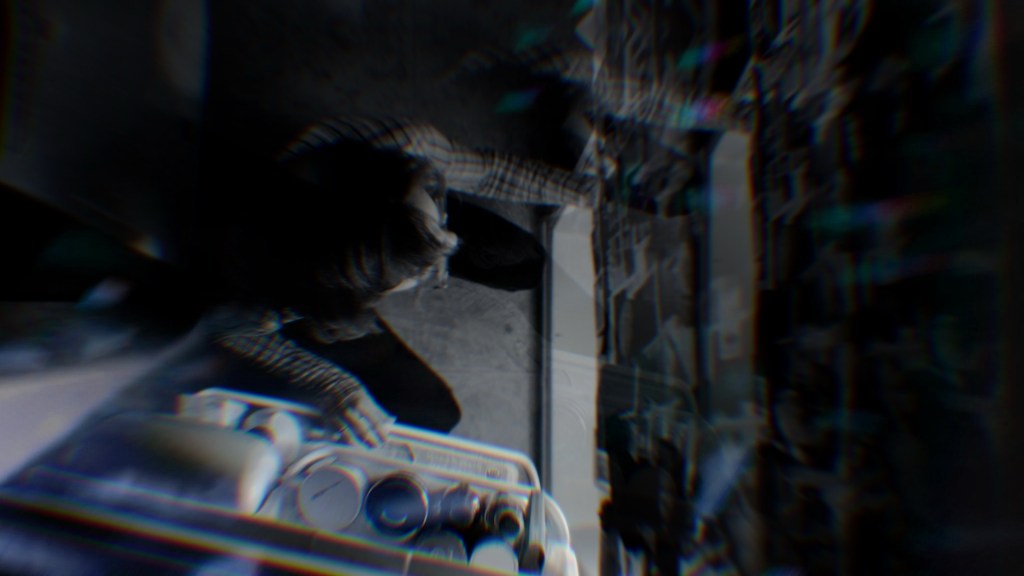
RaMell Ross: They were the earliest decisions. The first idea that came to mind was to make it in point of view then what does that mean? In the writing processes, how do we articulate each point of view from where they look and build images for each of them that have a plurality to them, that have an experiential element to them? That’s then seeing the world, then you write the camera movement down for those things. You make the decision not to show violence early on for all of the reasons we know that. It either desensitizes one person to it, it has a voyeuristic element to it. Maybe the time culturally is now in which we need to explore the other ways that the medium can deal with trauma and violence, but if you take the pursuit of giving someone subjectivity seriously, then all of those things come naturally. If you don’t think deeply about the camera’s historical relation to it, or you’re interested in a type of filmmaking that revels in that for its emotional power, or because you think that that’s your way of honoring the thing, or it’s just part of the entertainment thing you’re trying to do then, like, that’s why you do it. We are thinking about our source material Colson’s narrative as the architecture to the mythology that can abstract it in a way that’s clear aelatable and digestible, and then we imagine obviously within those bounds. We don’t need to see the Dozier school boys whose public life is only the public life of the archive as it’s been as their death has been documented. We don’t need to see these guys abstractly. When we see them as characters and then have violence on their bodies? If you’re if your goal is to honor them, that’s not the way you do it, if your goal is to make a film that has a deep, emotional connection to an audience about their stories and make people feel empathy for that violence, maybe that’s the way you do it. That’s not the goal of our film. The goal of our film is to give these guys life to build, to give them an avenue to look at the world, to give them a camera so that we can give them subjectivity. Their world doesn’t begin in this film world and ends with them marching towards their death for emotional purposes. That’s crazy.
Jillian Chilingerian: When people are adapting things like this, it would be so specific that this is the character, and it’s like much more of an imitation without what you’re mentioning of, what is that relationship to the camera, and how do you make it feel so lived in. We walk away from this movie and we’re still thinking about Elwood and Turner in that relationship because it left so much of an impact. It didn’t need to be violent imagery. I love it when we’re just pushing limits on how we think of adaptations.
RaMell Ross: I just love it when we push limits on how we think about representation. That’s the core of it. It’s tough when the industry rewards and audiences aren’t given anything else so then people think that that’s the way to do it, because that gets the audiences, and then that means you can make another film, and that’s emotional, and that’s so horrific, and showing the horror that happens to them seems to be a mainstay way of honoring the horror, because you don’t see it as to know it and to believe it. It is almost a cycle that feeds itself.
Jillian Chilingerian: So many films, exactly what you’re saying, start to pick up on these formulas. Oh this works, how do we do it again? I love as an audience member when I’m challenged and watching this, I was also like, how did we even make this? We’re so conditioned to the same type of story points. Talking to your composers on not making a traditional film score, once you hear someone talking about this, you’re like, Wait, that works so well in this context of making us as the viewer rethink our relationship to film.
RaMell Ross: Thanks. That means a lot. It’s sick. Everyone’s like how did you make this decision and you had to, and I’m like, well, I didn’t have to do any unlearning.
Jillian Chilingerian: This is what film should do, you’re doing the job of a director. You’re staying true to yourself with your vision.
RaMell Ross: Maybe the psychology of the film is as much interested in the production of the reality of a person through the sociological theories of seeing oneself through the eyes of others, as much as it is the production of the reality of a person. Through the image, through image production as a whole, we have almost every way that black folks have interacted with the camera and culture. We know blackness is fiction, but we know it’s real fiction that has real consequences. You see Elwood only be seen by a certain person, all of the eye contact that happens in it, which with how people’s psychological landscapes begin to take the way that their behavior is either accepted and not not accepted. Once you take an actual either psychoanalytic lens or a psychiatric lens to it, let alone like a sort of sociological lens. The film is just as much about the construction of self and the reifying nature of being in a culture with one’s image of oneself.
Jillian Chilingerian: It’s interesting how you see someone, and I think in that relationship between Turner and Elwood because they’re so different and their approaches to life. To see them gravitate towards one another, Turner’s been there for a while, and this is the person with whom he suddenly develops a bond. They’re so different the entire time that they’re together. The thing that will make someone magnetic to you. When Elwood is eating the oatmeal, he’s excited about it with the cinnamon. The small things we see from his perspective of life, and then compared to Turner, it’s like, how did these two people suddenly be the ones that they needed to get through this experience?
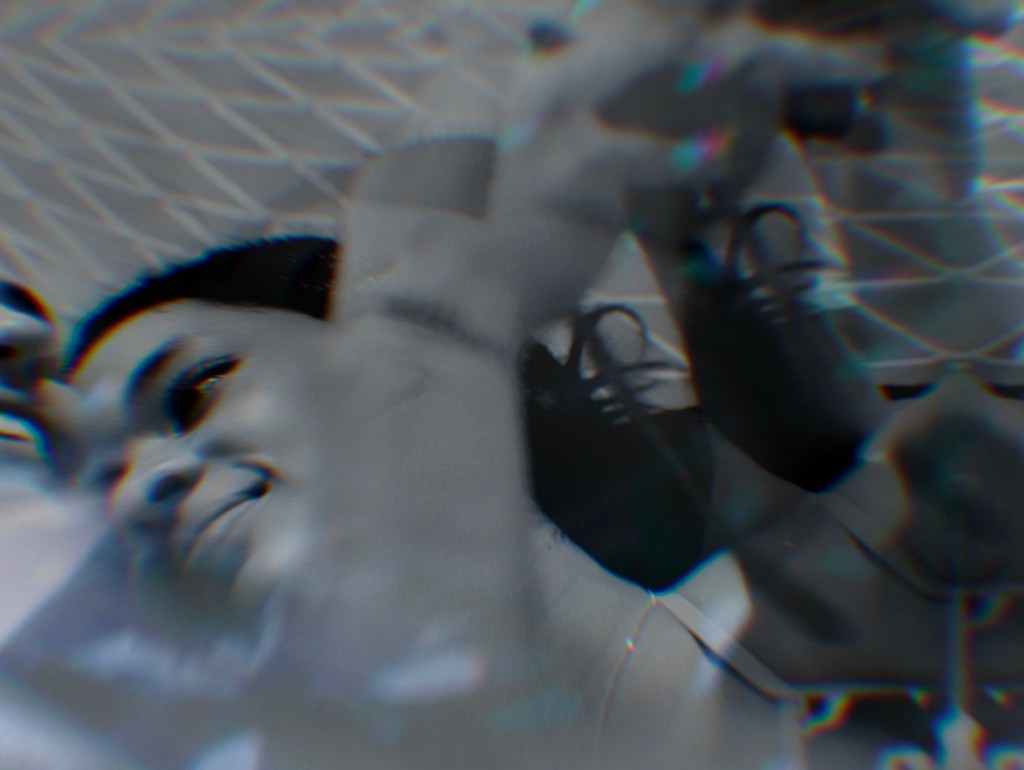
RaMell Ross: Yeah, that last one exactly. It was you who was saying the way that you see someone only being seen and how the power of the gaze, each one of them seen back at us as the audience member. Normally in cinema, you see two people interact, but in this situation, because we get to sort of live vicariously with them or through them we get to see what each one saw in the other Yeah, we get to look. We get to know, we get to be looked at in the way, in the ways that build the other person’s trust, and to have that gaze directed at us, is just normally an impossibility because we’re always on the outside. That process is almost the most haunting and familiar because we get to, we get to connect through eye contact with the other character as the character, as opposed to assuming that it had a powerful effect from watching it happen outside.
Jillian Chilingerian: The eye contact transforms the story. When you recognize that, while you watch it, of what that means to people, of this relationship compared to the other relationships and the people they interact with. When they locked eyes across the room, he was just noticing the oatmeal and even the Pride and Prejudice book that popped up again. It’s interesting to see what he holds on to in the memory of his friend while they’re together. He’s still grappling with wanting to honor him, but they never need to say it. If you have a connection with someone, what you take from them,
RaMell Ross: Facts.
Jillian Chilingerian: Well, thank you so much. This was such a lovely conversation.
RaMell Ross: I love you that you’ve watched it twice. Giving more time for it to unlock in your brain.
Jillian Chilingerian: I love doing that with films that I admire to spend some time on this, thinking it through.
RaMell Ross: Keep fighting. It’s a film that keeps giving.
Nickel Boys is playing in select theaters in Los Angeles and New York.
The film will expand in January.
 offscreencentral.com
Leave a comment