

Adapted from Colson Whitehead’s Pulitzer Prize-winning novel, RaMell Ross’s Nickel Boys reinvents what it means to film first person POV for film in a sorrowful impactful tale of two young Black men. Offscreen Central had the opportunity to talk to composers Scott Alario and Alex Somers about the unique approach of not following traditional film music rules, the importance of capturing small details, and the emotional resonance of the film’s soundtrack.
Jillian Chilingerian: Hey, how’s it going?
Scott Alario: Great!
Alex Somers: Good!
Jillian Chilingerian: This film is up in my favorites of this year. There’s so much that I want to learn about it because it takes you on so many levels.
Scott Alario: Cool. Thanks.
Jillian Chilingerian: I want to get started off on how you both came onto the project because I think every aspect of this film is so important to get into the headspace of our main characters, from sight to sound to touch to all of it.
Alex Somers: We came on earlier than any project we’ve ever been on before, which was a rare, fun treat. Scott and I made the music for RaMell’s last film Hale County. He hit us up and was like, Hey, I’m doing this new thing, and I want to get the team back together. We were so flattered and excited so we read the script, and they brought us out to New Orleans where they were filming, and we got to hang out there for the last four days of filming. We took field recordings, we talked to RaMell, and we prepared a small batch of music before we even went there. We had a long lunch with him and played him some ideas in a trailer, and talked about music and sound like you’re saying. That was the compass for then when we went our separate ways and made the music for the film. We got to be involved on a more story-narrative level. I can let Scott speak more about the creative direction, because there wasn’t a lot, which is rare and interesting, but it was based on, there wasn’t a lot of instruction, but there was a lot of faith and trust that we knew instinctively. Anytime we would veer off from that RaMell has a way of, reining you back in by almost ignoring the thing. If it ever sounded too much like film music, he would ignore it and focus on the stuff that sounded weird and tactile so that led us to be like, Oh, we can be ourselves here and and lean into our musical instincts and never try to get prescriptive and make it sound like film music.
Jillian Chilingerian: Now that you’re saying that, I think that rings true for a lot of what we experience through the sounds of it, not feeling like film music, but this deals with themes of trauma and past and present and resilience and so much and it’s and I always amazed by how people conceptualize, what does that sound like, and how do you tap into that. There are many musical cues as well. One of my favorite scenes is the train car sequence tapping into your brain waves in a way that I have not experienced with a lot of films that I’ve seen.
Scott Alario: One cool thing about RaMell, is that I have the pleasure of having been friends with him, and I don’t have a background in film music or even music. I was a special artist, and I know him from our school but I had made music with Alex for years before that. We showed RaMell some of our music, and he wanted to use it. The reason why I’m talking about this is because RaMell is an interesting art maker, and the people he collaborates with, he trusts fully to do our thing, and he wanted to not show us a lot or tell us a lot. I read the book and we read the script and everything but I think as far as creative ideas, he didn’t give us that many, but as far as connecting to the viewer’s emotions. RaMell talks about chance a lot in his art, I think that it was just a great, great fit, and a lot of the sound pieces that Alex and I make are collages, in a way, too. So it works well with these sorts of visual collages that RaMell.
Alex Somers: The archival footage naturally speaks well to that. We’re lucky to have found RaMell as a collaborator because we love pairing something harsh next to something fragile and beautiful. Scott and I’ve been making music for more than 20 years now, and that’s something we never premeditated and talked about. We like having some pretty, beautiful imagery and then we’ll dub something to a microcassette, and it sounds like it’s been trampled on for decades, and we put it right next to the other sound, and both of us just look at each other and we’re like, oh yeah, that’s the thing. The picture works so well to that philosophy because the subject matter we’re dealing with is so upsetting. It’s a really hard movie to watch if you think about it for a minute, but why does he tell this story so beautifully? Why is it so beautiful to look at? It doesn’t make rational sense, but instinctively, as artists, it makes a lot of sense to us. He leaves a lot to chance, and we just put these extremes next to one another and it might be a very pretty, in a cliche way, piece of music happening with something dark on screen, but, like, it’s satisfying somehow.
Jillian Chilingerian: There’s so much beauty in this film, but as you’re saying it’s so deep, and it hits you on so many levels. The point of view from Black eyes for the audience who are not in that community can walk mainly through it’s POV. Then there’s the themes we discover through Elwood’s journey is so emotional, but it’s the music kind of offsets that, in a way, but it makes perfect sense of the pairings.
Alex Somers: RaMell is cool to think like that. Most filmmakers would not. They would have wanted a serious and stern and like, austere film score. What we’ve done, on some level, it’s playful. We are speaking to chance and playfulness within Sonic realms, which is not an obvious choice,
Scott Alario: The more chances I’ve gotten to see the film, the more I understand the pairing and get it in terms of, like, how immersive it becomes, because you are in a wedge, and in a way you hear these sounds, and it could be imagined, or it could be a noise made by something else. We recorded on set in New Orleans a fan in a bathroom because we liked the sound of it. Those sounds are in the world too, that you’re experiencing through Elwood’s eyes.
Jillian Chilingerian: A lot of it is memory. We get to see him through childhood, young adulthood, and older. What are these sounds that bring you back to a different time or a different place?
Alex Somers: I’m happy we were able to do that. When we were recording a ceiling fan on the set, and Scott made field recordings of nature and frogs and a tap dancer somewhere I was like this is cool, but it definitely won’t make the final cut. All of those things I just mentioned are in the film, living side by side, a scene where it doesn’t make sense. There are no frogs on the screen, but you have a field recording of frogs. There’s no broken ceiling fan on screen, but you’re hearing that, and we built a reality that’s informed by how upsetting the picture is. You can stretch it like that, because of imagination. If you’re going through something wonderful or horrible, there’s a whole colorful world inside that doesn’t maybe match exactly what’s happening outside, but that exists in all of us. So the music kind of was able to pull it off. It’s so cool. Very happy about that.
Scott Alario: As far as going back and forth through time, we didn’t make motifs or themes that fit characters or periods. There is some revisiting of sounds. A choir group that Alex recorded and their young children, and he had them moving around the microphone in a swirly pattern. We called the piece bees buzzing and it sounds like buzzing bees, essentially and they’re breaking apart and textural. The picture editor Nick was able to bring a melody from that piece up a few times too.
Alex Somers: We wanted to take a more formal approach and do themes in the beginning, because that’s the school I’ve come from, but RaMell was allergic to that. Again, too prescriptive, too normal. That’s how movies unfold, they have the theme, and they state it, and it changes, and at the end, you have the main theme again. RaMell is not trying to make something that has anything to do with cinema. He wants to follow his instincts and build his own thing. As Scott said, we’re trying to do it on maybe a more subtle level.
Jillian Chilingerian: This film takes bold swings in how we think of filmmaking and adaptations in general. I hope to see more people take note of this film of how you can reinvent that specific genre. Mentioning that, we’re so used and conditioned to, okay, this would be the theme for Elwood, and then this would pop up at different places, and then it all comes full circle. I think because it doesn’t do that, it keeps you more on your toes and leaning forward to hear and capture additional sounds that have been implemented. The no rules speak to this overall vision in this film. For both of you, because that POV is so unique, knowing that, or maybe not knowing that’s what the final product was going to look like how did that inform a lot of your work on this film?
Scott Alario:For me, when we went on set and saw how RaMell was working, and we got to sit by the screens and get a view it was chilly. It was winter in New Orleans and I remember huddling in a tent with people and watching. You didn’t feel like you had to be patient, but there was something very slow about it, and very beautiful to watch how he was working with the actors. I imagine it’s a slow process, but there was something so nice and comfortable about it. It pushed me and Alex to make the things that we do, do the best we could with it, and lean into our art and our craft and what we love. That was being inspired by RaMell and the people who worked on the film. That was more instrumental than knowing that it was a POV shot because I think we didn’t have that much understanding of what it was going to look like. There was a moment where we did, and maybe Alex can talk about this more, but we did get to go and work on the soundstage with the editor Nick and the sound designer, and the mixing guy, and they just like, it was really beautiful to then see that and to see like, oh yeah, this makes sense. At that moment I was starting to get it.
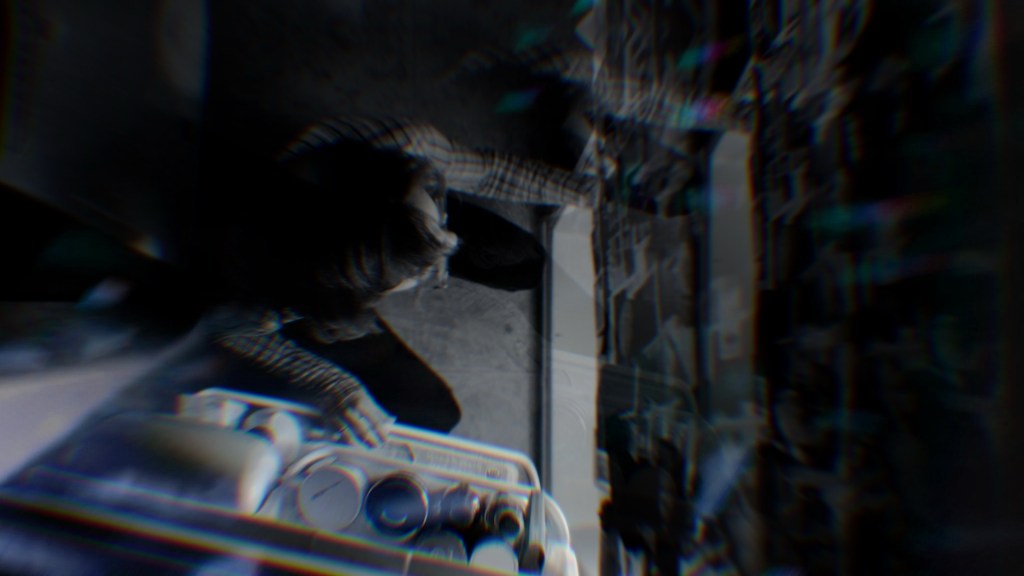
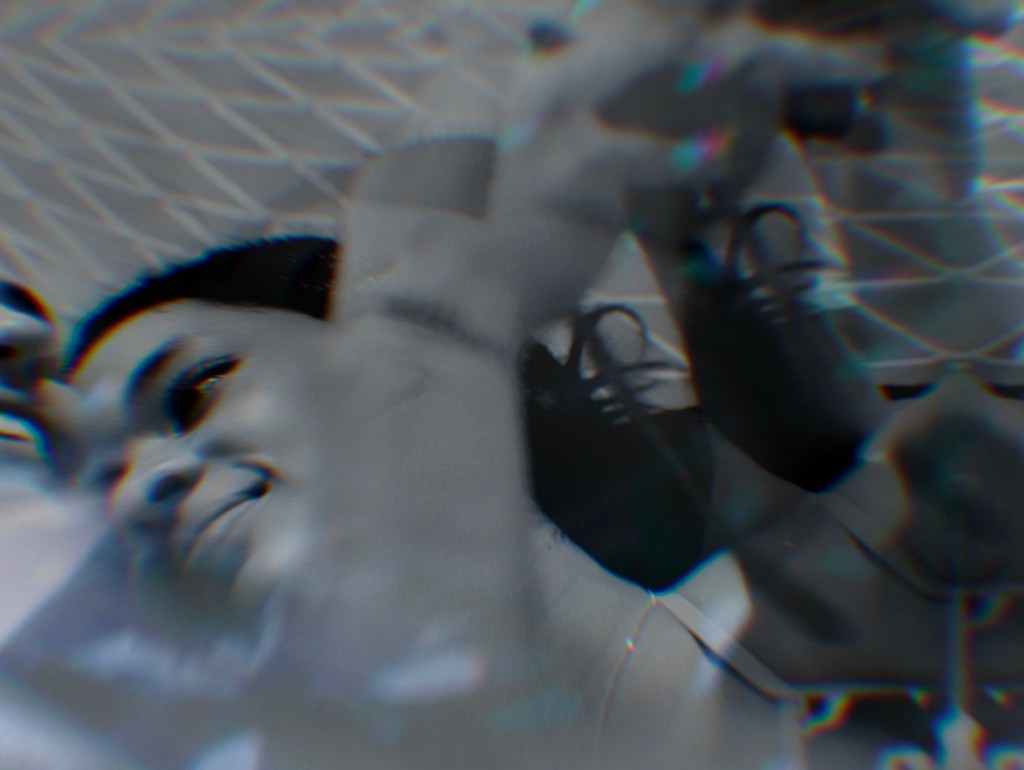
Alex Somers: The POV thing lent itself well to our music, because it’s so much about the small details. For us, sound is equally as important as the notes, maybe more important. I’m pretty fulfilled with one or two notes if it sounds right. The first five minutes in the movie, are just beautiful small details, and I’m moved always in the first few minutes in the movie.
Scott Alario:I met Alex when we were both freshmen in college, and I was at art school. One of the first things I saw that he had made was a video piece where he had filmed this guy just walking very slowly and put music to it, and maybe even slowed it down, but he called it the slow walker, and it was this elderly person walking very, very slowly. It was so beautiful to see the world through Alex’s eyes. When I first saw RaMell’s work, I thought of Alex immediately and wanted them to connect.
Jillian Chilingerian: Whether it’s Elwood’s childhood or what he focuses on, like at the school, it’s singular, and how do you back that up emotionally through the sound? Those little connections require a specific skill set to be able to bring that to life.
Alex Somer: Thanks. Yeah, we loved it. It was so much fun.
Jillian Chilingerian: We are going through different perspectives in this movie and what we’ve talked about does not have a lot of the traditional themes of how the story kind of unravels. How did you want to capture those differently through the music?
Scott Alario: The closest thing I can imagine that we came to it was the boxcar scene, which is like an outlier for me. Turner’s point of view, as he’s leaving, but he’s on the train, and it’s in the future. It does sit right when their perspective switch for the first time. RaMell had put in a piece of music that he was hoping for that boxcar scene, but I was obsessed with it. I just like, Oh my god. How are we going to get that feeling? Alex would just be like you don’t need the feeling. I won’t say what song it was, but it’s a very cool song with a drum beat and a cool, groovy bass line from the 70s. It’s a beautiful piece of music, but I kept wanting to hit all those notes, and it’s just not us. So I think we made our version of that.
Alex Somers: It was going to be a needle drop, like a song moment, and then through, like, us making l10 versions of the boxcar music everyone’s like, No, we like this better than the needle drop. That was a little bit of a weird one, but he did say that that piece of music was never meant to appear anywhere else in the film. He wanted that moment to just be particular.
Scott Alario:I remember combing through LPs and vinyls from the 70s listening for cool drum beats I could sample. There isn’t a drum beat in that piece, but yeah, it was a fun process.
Jillian Chilingerian: It’s like you’re learning and unlearning at the same time. This film is so much about the feeling and capturing that. I really appreciate that this took so many risks, and it definitely pays off from a viewer’s perspective.
Alex Somers: Thank you so much. I mean, it’s got to be the most beautiful movie I’ve ever had to work on, and it’s I had the most freedom. It is a testament to RaMell’s belief in chance taking risks and just letting Scott and I do what we do. He didn’t need it to do anything special, which all film scores have to hit certain boxes, and this was the only time I was fully unhinged just like nothing matters, just if it feels right, it’s right.
Scott Alario: Thanks for the kind words and the thoughtful questions. We appreciate it.
Nickel Boys is playing in select theaters in Los Angeles and New York.
The film will expand in January.
 offscreencentral.com
Leave a comment