

Have you ever heard of Mavis Beacon? In Seeking Mavis Beacon, Jazmin Jones and Olivia Mckayla Ross put their internet expertise to the test by tracking down the most iconic figure of educational history, Mavis Beacon from the titular Mavis Beacon Teaches Typing. The 1987 typing program has unlocked core memories in many people online remembering the game setting the duo on a journey to identify who Haitian model Renée L’esperance is outside of Mavis. We had the opportunity to talk with Jazmin and Olivia about the unique editing structure of the film, mystery versus mastery, and Black women’s role in the technology industry.
Jillian Chilingerian: Hi. I’m so excited to be talking to both of you. I was at the Sundance premiere of this film and it hasn’t left my mind since January. As someone who is very chronically online, this film encapsulates what that experience is from a lot of the editing techniques that I love, the desktop footage of the different windows. What was that creative process to capture that in a very kaleidoscopic fashion that we haven’t seen before when we think of the digital age?
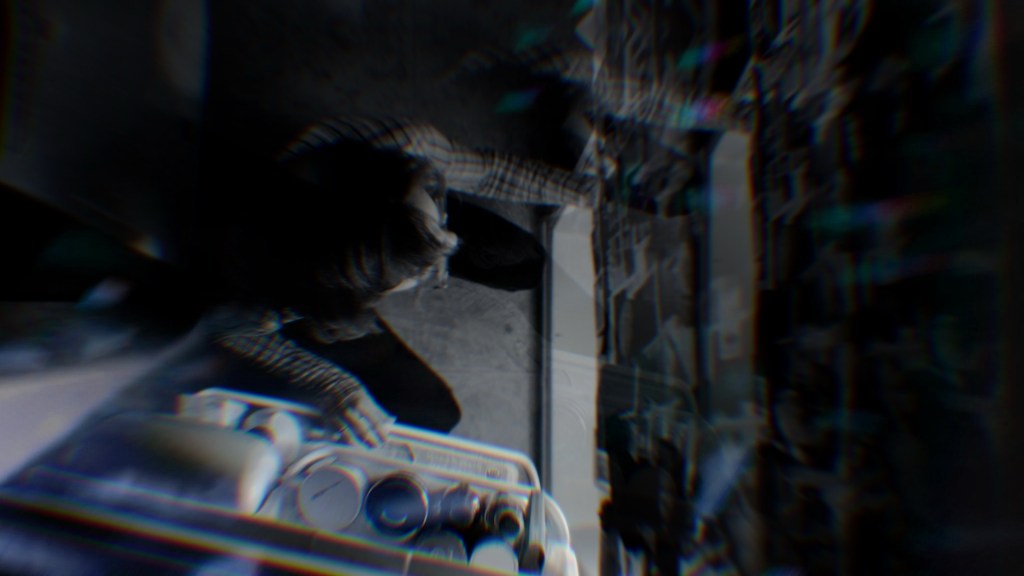
Jazmin Jones: Yeah, I identify with this term, chronically online and I’ve also looked into some theories that are complicating it around, like, we use chronic to usually about like chronic illness, or these things that are like, very serious and perpetual, and it’s like, but also our relationship to the internet is very serious and perpetual and does have damaging, like that negative effects on our bodies and our psychics. So I’m like, maybe chronically online is the right phrase. I’m still wrestling with that personally. A lot of the reason we were able to include all of the memes and cite all of these sources is because they’re contained to the period from which we were making the movie. Olivia and I, our bookmarks were like crazy, and we knew we were collecting all of these things knowing this will one day come back. We don’t know how it relates, but put it in your folder. I also knew while we were shooting, I created some rules while we were editing. One of those is that, unlike other True Crime documentaries, I don’t want to do the traditional someone mentions an article, then you see the cutaway of the article, and the depth of field and the highlighter go on it like, we know the aesthetic of a true crime film. I wanted to stay away from that just device so we created our device. We know we’re going to have these desktop spaces that are kind of like a reflection of what is happening on Olivia and my computer, perhaps from the vantage point of a hacker, perhaps from the vantage point of spirit.
But you can’t just go to a desktop any old time someone says something and so there’s kind of a rule that at first, I’m not sure the other editors loved, but we came to appreciate, which is you have to see a piece of technology to go into this portal of the desktop space. I like intentionality. I think that’s coming from my video art background too, where it has to have a reason. I became familiar with the term desktop documentary while making the film, and was seeing other works that were using this, like space on your laptop computer for a film to unfold and that also just felt very naturalistic to our relationship, if we’re making a movie about the internet, how do we make a movie that truly feels like it is of the internet? I don’t watch as many movies as I should because I’m scrolling on Tiktok part of it is also like doing that Roblox split screen effect to where it’s on one hand, we’re giving you information and then look at something pretty flashy, like we were keeping your eyes. There’s always something happening to keep you engaged because we want you to get to the end of this story. But yeah, I describe it as a dense film. It’s very maximalist. I did reference slow cinema, but that was one of the references that fell by the wayside by the time I looked at all the footage.
Jillian Chilingerian: Sometimes we see technology and films, and weirdly it disconnects us. In this film, I thought Oh, yeah. Like, that’s how someone would use a laptop, or engage with the technology. Something that stuck out with me was this idea of parasocial relationships, and it’s something that even like with this like, investigative How did you balance it? Between being led by an intuition of you want to figure out this person that had such a meaningful impact in your life without ever teetering to that obsessive nature that we can become addicted to.
Olivia McKayla Ross: One of the phrases that I feel like I’ve been saying a lot as we talk about the film that first appears in a diary is this idea of prioritizing mystery over mastery, and that the act of thinking that it’s becoming content very early on with the idea of like, not knowing everything. Jaz introduced the concept of devotional cinema. This idea of having the space to think about something very deeply, and to sit in the mystery and confusion is something that can be quite profound and lead to way more transformation than just the pure act of finding out everything there is to know about a thing, which, on the flip side, can be quite consumptive and extractive.
Things are not the sum of their parts, you know. We embrace a more inferential logic, that gives Renee the space to be whoever she is and also gives neighbors the space to be whoever we as a culture have created her to be. There’s a level of we are already at the mercy of these predictive models that force us to be who we were. An app might like, be like, Oh, you were really into tacos last week we’re gonna spam you with ads on tacos now. Maybe I was PMSing and I wanted tacos then, can you not hold me to that story? I think it’s really important to be able to sit in fluidity and with the fact that truth isn’t fluid and the documentary space, because it is film and cameras like, it’s really easy to align yourself with a carceral logic of truth, or this idea that because cameras capture this still image that looks so scientific that, because there’s a photo of it, that is how it appears. But photos are always taken from a perspective. They’re always taken from an angle, you don’t even know what’s hiding behind the profile of another person or you don’t know how far an image was cropped. There’s kind of this understanding between Jazz and me from the very beginning that if we mimicked the kind of knowledge infrastructures that were handed down to us, through traditional documentary, through traditional investigative work, we could do something very harmful. When things get too overwhelming, instead of doing what we’re often encouraged to do, which is like sticking harder to the facts and going even harder. Those were the moments where we chose to lean back, seek out spiritual guides, talk to each other, talk to our girlfriends, and choose to go back to the community and hone our intuitions. In a way that I think made it very easy to also distinguish what was intuition and what was anxiety. I don’t think that would have been the case if we, like, decided to go full-on detective.
Jillian Chilingerian: I always have those thoughts with still images, because you have that realization that we don’t know these people when we associate it through images. I love the shot in the film when you are both going through that image of her walking and it’s kind of like, what is the story with this image? We don’t know. It’s whatever we want to perceive, and it’s always a question I have with myself. So it’s fascinating to see that articulated in a documentary.
Jazmin Jones: I love that. We spent so long staring at the same images of Renee trying to think of it through every possible angle. At a certain point, we were talking about today this film is really about hitting the limit of what representation can do. Right? Like, representation matters, but it can only do so much before you have to step in and become the protagonist of your own story. You can’t look to your role models and representation to do everything for you. Sometimes you have to become the person that you need.
Jillian Chilingerian: I want to leave it off with my last question. I love it when documentaries bring in experts. I always think about how they know who they want to get. With this film, one of the ways how I’ve been pitching this to people to watch has been it’s just this story of this Black woman who was a pioneer of the tech industry that we never knew about. When we have conversations about tech, it’s like the same white men and I love that this brings in so many more ideologies and perspectives from the Black and queer side of it. So how did it come together, figuring out what voices you wanted to have, whether it’s this seems like it contributes to what we believe, or maybe this challenges?
Jazmin Jones: It’s interesting. There’s this understanding we refer to the four black femmes that we interview in the film as specialists, right? We also are operating under this awareness that you are a specialist and an expert in your own experience. Something is happening here where it’s like, who are the real experts of the internet? The foundation of the internet is black people make the culture, and more specifically, black queer and trans people make the culture they are the ones who are oftentimes, creating the slang that goes on to represent Gen Z slang as just black queer slang. To me, if you’re going to make a film about the internet, naturally, you would go to Black, queer, and trans people, because they are the ones who create the culture, the memes. I saw this firsthand before this film, in a past life I worked at a women’s magazine. I was a one-woman video department and the only Black person who worked at this woman’s magazine at a large media conglomerate. I have a quote in the New York Times about what it was like working there as the only Black person. But I saw this in real-time on Slack where I’m on the internet at night, I’m seeing things, and the trickle of like things that would break on my feed, it would take a full week for the like social media editors at this woman’s magazine that were catering to mostly white women to catch the same story. I have seen the production of news in real-time, and wow, my coworkers are like, Oh my god, the black and gold, black and blue dress versus white and gold. It’s like, we concluded the color of the dress before it even dropped on Tiktok. The leaderboards for how news gets determined is there are these websites that are kind of tracking what the top stories are of the day. I don’t think people realize that like Soulja Boy is constantly, or at least the time I was working there he is breaking more news than CNN. CNN is choosing what to cover based on what Soulja Boy posting on Twitter and Facebook. I don’t think people fully understand when we talk about Black people are the blueprint, and we make the culture. It’s like, No, literally, like news companies are studying Soulja Boys metrics and we act like he’s just a guy from a meme that is kind of irrelevant now. So to me obviously while some people would say I would expect more talking heads and you to be talking to the white guys in Silicon Valley who build the technology. No, before the white guys even get to the building, these communities are where these ideas are being generated from. Naturally, we would talk to these people, but also it’s very much like the feeling that the people we interview are our friends and our peers, and we are letting the audience into kitchen table conversations between Black femmes who we admire. Part of that is because I had a budget for a feature film and I was like, if I’m going to do anything for a few years, it’s going to be hanging out with my friends and listening to how smart they are, and that is an offering to the world.
Jillian Chilingerian: Well, thank you both so much as I said, I loved this film at Sundance and I walked out in a rush and emotional. It has stayed in my mind, and I just had all of these questions so I’m really happy that I got to ask both of you, and congratulations on the film. I’m honestly so excited for more people to discover it because I think it’s going to spark a lot of really interesting conversations on the internet and how we perceive things.
Jazmin Jones: Thank you it’s been so fun. I’ve enjoyed following you since Sundance and I just want to say, yeah, thank you. Like, as much as we’re chronically online, we have not yet gone viral with the film. I see you have been putting out the good word on behalf of this movie, and it means a lot to me, it’s embarrassing to admit, as a director, that I see those things and Google myself. But I do, and I appreciate it.
Jillian Chilingerian: If I love a film and I think it’s good, I’m like, I want everyone to know. And this was certainly one where I was like, everyone needs to know so that I’m glad that it’s working.
Jazmin Jones: No, thank you people like you. Keep the film industry alive.
Olivia McKayla Ross: I was screenshotting your tweets. I was like, Oh my God, look at this!
Jillian Chilingerian: Thank you both so much!
Seeking Mavis Beacon is now playing in select theaters.
 offscreencentral.com
Leave a comment