
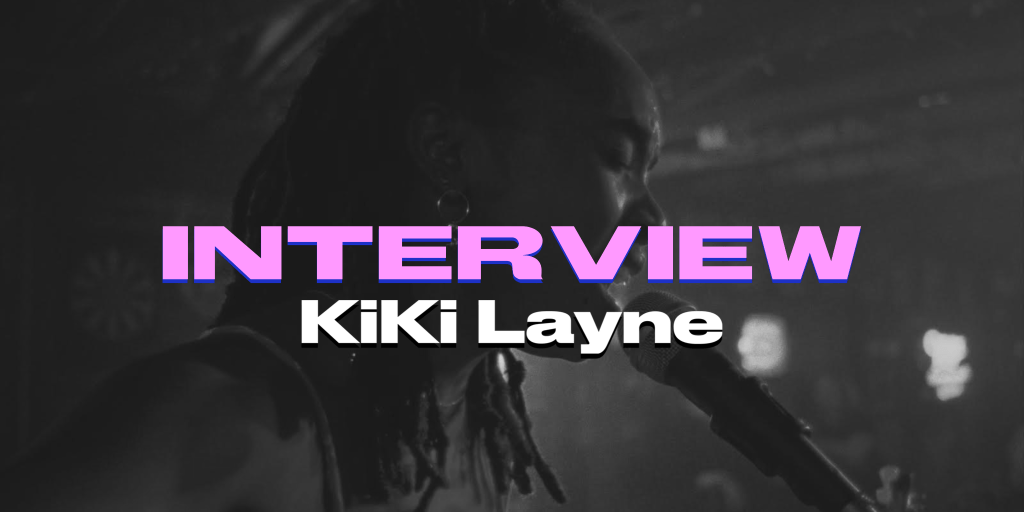
Nicole Riegel’s Dandelion is the story of a young singer-songwriter who’s stuck singing in restaurants to customers scrolling their phones until she decides to take a leap into her artistic journey and finding her voice through an arresting nature. Offscreen Central was lucky to speak with lead actress KiKi Layne who plays the titular Dandelion about how one measures success, finding her voice in the music of Dandelion, and how the film is a commentary on the treatment of women in music.
Jillian Chilingerian: Hi, so watching this film brought up questions I have in my day-to-day life mainly with success and how we measure it with finding our voice and the creative process. In the social media age, success is based on metrics, but here, I love that it’s the story about finding your voice and your agency. How was it to step into that role and approach success from that angle?
KiKi Layne: Well, that’s one of the things that resonated with me is that this film does ask that question. We see around the campfire, all of these artists wrestling with what is success. Are you only a successful musician, if you are selling out arenas, if that’s the case, and most of us are not very successful, because there’s only a handful of people that actually can sell out arenas, and stadiums. It is a very real thing that the film explores, and certainly, as an artist, as someone who has wanted to be in the performing arts, since I was a little girl that is something that I have wrestled with as well. When I first started dreaming about this, social media wasn’t a thing and so now to have my career, taking off at a time where social media, and the number of followers and how much influence you have, take up a lot of space in the business that’s truthfully something as an artist, that I do wrestle with that, because I didn’t grow up thinking, oh, I want to have 200 million followers, that wasn’t a thing. I want to act in movies and be on stage and just trying to like, hold on to that perspective of what I set out to do. Because if I look at it that way, then I am a success story.
Jillian Chilingerian: We get clouded by those types of metrics that we lose our authenticity, or like, the things that we actually stand for. I usually think of musicians as themselves and actors disappear into their roles. Here you’re Dandelion, but she’s also herself. How was it to step into this role, where you’re being very vulnerable, and someone that’s like putting themselves on the line to follow their passion?
KiKi Layne: Well, any role that I play, I have to dig deep into myself and ask myself, Where do I really connect with this character? Where are some disconnects and things that I need to either do more research about or talk to people about. So like, for instance, If Beale Street Could Talk, a big portion of that film Tish is pregnant, I’ve never been pregnant. So I knew that I had to dig deeper into researching and asking questions about that. For this film, there are so many similarities so it almost became more important for me to be mindful, especially with the music, I knew that there are certain types of music that KiKi will listen to and engage with. and I’m like, that doesn’t make sense for Dandelion. Clocking that I’m not playing myself, even though there’s so much that is very similar between me and this character.
Jillian Chilingerian: The music with The Nationals and your voice is so heavenly. With the aspect of stepping into this person that’s writing their music, what was that collaboration process of your involvement with the songs and making sure it felt you’re singing it as the character versus like, Okay, here’s the lyrics, go ahead, we’ll film the scene because it feels so genuine.
KiKi Layne: That was a big part of the early conversations that I had, especially with Nicole, but also with the Dessners, we all had to acknowledge the fact that obviously, the Dessners are amazing at what they do, but they’re two white men in their mid-40s and Dandelion is being played by a 30-year-old Black woman. This music is supposed to be her music, and be music that she wrote, and that she created herself, we all had to talk about how different the music might be, what I might write, versus what the Dessners might write. That was really interesting to go on that journey and explore what types of music Dandelion might bring to the table, who did she grow up listening to? Who did her mom, listen to? I said to the Dessners and Nicole, she exists in the indie folk world, but our folk is a little different. Thankfully, they were all very supportive of me going on that journey and nurtured me to pour more of myself into the music. I’m super, super grateful for that collaboration. Our collaborator, Noah Harmon, who was our guitar teacher ended up helping me to write these songs, in addition to making me look like I actually know how to play guitar. So it was just all around a beautiful, collaborative journey with the music.
Jillian Chilingerian: This feels like a commentary on the music industry, but we see it in a different sense of it’s not in LA and we’re not a recording studio, it’s just very much like, on this expedition of her in a very natural setting and we see often so much with like women in the music industry of not getting their voices heard and just dealing with misogyny. Was that something you thought about with Nicole, as you were filming.
KiKi Layne: Oh, absolutely. I mean, the film in these very subtle ways hints at Dandelion finding herself in these spaces where she doesn’t really see herself and it’s almost like, does she belong here, it’s either very white or it’s a lot of men, even the genre that she’s pursuing, most times if you see a black artist, your assumption is going to be Oh, r&b, hip hop, maybe jazz soul, somewhere in that vein, so when you exist outside of it, we see her wrestling with that of what she actually loves to create and the way that she wants to be seen and express herself as an artist and in the world. She doesn’t really see that much of herself and I think that still is very real. So many women’s voices continue to be silenced, even recently of everything with Tracy Chapman and people having no clue a Black woman wrote that song. The film speaks to that and Nicole brought a lot of her own experiences of being a woman in a male dominated industry. Katherine Bigelow, Chloe Zhao, and Jane Campion are the only women to win Oscars for directing.
Jillian Chilingerian: The academy was like we already gave it to three women like we can go back to our all male lineup
KiKi Layne: Exactly. So very much. So that is still happening and definitely, that was something that Nicole and I talked about and wanting to acknowledge in the film.
Jillian Chilingerian: I’m in my early 20s and just seeing that representation with those conversations, it just made me feel a lot better about it, because it’s like navigating these industries as young women, sometimes you lose opportunities to like men, and you’re like, what is it me, like, and you have to have that perseverance to keep going and trust in yourself, which I feel like Dandelion here definitely is able to find her space and find where she connects.
Jillian Chilingerian: We have this little romance, which, I was like, Oh, this is such a cute, like a romance film and then something happens and my heart dropped. I think that goes back to when you find people that you trust, and you’re like, oh, my gosh, I feel seen, and then something like that happens. Does that cause you to question yourself this character is dealing with this coming of age, almost identity story, and then this relationship but she never loses herself.
KiKi Layne: Well, I think that that was important in the film how it comes together and everything even though there is this lovely romance between Dandelion and Casey, it still is about her journey of finding her voice and who she is as an artist. That is just a piece of that story and of course, it’s a beautiful and significant piece, but I think that what’s lovely about the film is it never becomes about her relationship to this man. It’s always about her relationship with her music and her artistry and the things that she learns from Casey and the band, as she moves on in this artistic journey. Dandelion gets to have this relationship and have this romance, but her story doesn’t get lost in it, it doesn’t become about that, because it’s not about that. That is what we go through in life as artists, you connect with certain people, and you learn certain things to take with you until the end of time, and some things you’re going to let go of pretty quickly, and we get to see that in that last song, it’s like, Huh, what would that song sound like if she hadn’t met Casey because sometimes the best art comes out of the crappiest situations.
Jillian Chilingerian: This is such a representation of there are things that you might be scared to tell someone, but music is just this vehicle to be, this is how I’m feeling and watching them act through their songs on things like that they didn’t feel comfortable saying about I really admired that.
KiKi Layne: And through the actual songwriting, which is, you know, another thing that I love about this film, in particular, is focused on the songwriting process, and how some songs just come together like that. In some songs, it’s like, you’re on the edge of ripping your hair out of your scalp because two lines of the song are just not working, and kind of seeing the moments of Dandelion writing her music. The first that Casey and Dandelion write how that goes versus the second one that they write together based on where they’re at in their romance. I also think that’s a special thing about this, this film’s exploration of musicianship.
Jillian Chilingerian: I always love when my favorite artists, they’ll post something of them writing a song and then they’ll say a word. I’m like, I would just never think of that but it’s just so crazy how the words come and so I love just like the intricacies of that creative process.
Jillian Chilingerian: Well thank you so much for this time. I’m so glad we got to connect to talk about this film’s themes of womanhood, artistry, and success.
KiKi Layne: Wow, thank you so much, and I really love talking to you.
Dandelion is in theaters July 12.
 offscreencentral.com
Leave a comment