
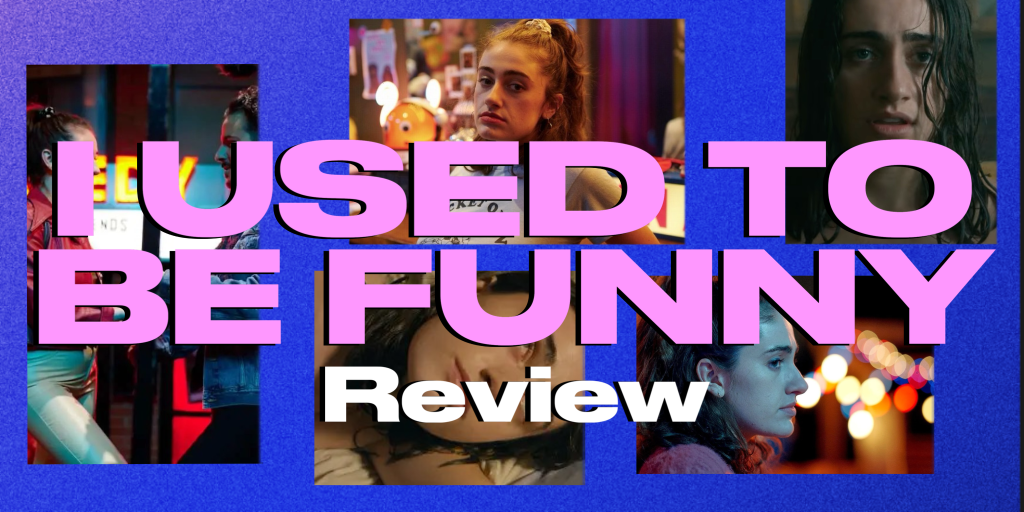
I Used to Be Funny is not trying to make grand, sweeping assumptions about trauma or mental health. Rather, it aims to look at an element of both not represented in film, giving voice to a hue of experience not regularly reflected in cinema. For a feature directorial debut, Ally Pankiw’s voice and vision is clear: humanity. Humanity in all of its complexity, messiness, and resilience.
When we think of trauma, we think of the fight or flight response. Flight: running away, trying to remove oneself from that situation. Or fight, attacking the trauma head on. We see it played out in films and more often than not, it’s that fight response. In Alien, it is Ripley taking on the alien. It is Cassie in Promising Young Woman flipping the tables on the self-proclaimed ‘nice guy.’ It is Grace drenched in blood, having annihilated her new husband and in-laws at the end of Ready or Not. Time and again, our heroine is a phoenix rising from the ashes and fighting for her rebirth. Yet, there is a third response to trauma that goes unnoticed: freeze. And that is where writer and director Ally Pankiw takes her audience in her feature film debut, I Used to Be Funny.
Sam (Rachel Sennott) is a comedienne who pays her bills by nannying. But all of that is upended following an assault. To exacerbate the matter, the teenager she used to nanny, Brooke (Olga Petsa) ran away from home and remains missing. Following a non-linear timeline, we begin to unravel Sam’s life before and after trauma. Oscillating between Sam’s past and her present, the audience truly begins to understand her motivations, and more importantly, the ripple effects from her assault.
The technique to use a non-linear timeline is crucial for this film. It chips away at many preconceived notions and helps the audience truly conceptualize everything Sam has lost. When films attempt to explore trauma, they usually frame it in a way that can be overwhelming or diminishing. What Pankiw does is ensure you slowly see every part of Sam’s life that has been affected: her job, her love life, her friendships, her comedy, her sense of security, her voice. More importantly, as we watch after the assault, we see what many would consider to be closure for Sam. And yet, even with resolution, we see the true impacts of trauma; everything seemingly correcting itself does not constitute the wholeness of a person. Their journey of healing is on their own time table, processed in numerous ways. Healing is not linear nor does it look identical for everyone.
At the core of the film is a stunning performance by Sennott. Coming from a comedic background from breakout roles in such films as Shiva Baby, Bottoms, and Bodies, Bodies, Bodies, Sennott has always managed to show range in her comedic timing and sensibilities. In I Used to Be Funny, we get moments where we see her comedy shine through; and with the dramatic turns, Sennott brilliantly balances the paralyzing fear, hurt, and anger with Sam’s resilience. At a recent talkback for the film, Pankiw noted that Sam is not necessarily a likable character at all times. For women in film, it can be exponentially more difficult to garner sympathy if the character is not a damsel in distress who does everything right. Sennott shouldered the responsibility of honesty, never sacrificing the complexity of her character for audience comfort. What her performance does is provide an authentic and deeply human portrayal of survival.
Rounding out the world are roommates and fellow comedians Paige (Sabrina Jalees) and Philip (Caleb Hearon) along with ex-boyfriend Noah (Ennis Esmer). This trio add so much to the story. Jalees and Hearon have incredible chemistry with Sennott and the three are able to move through jokes to heavier topics seamlessly, making it feel like a real friendship. Paige and Philip are clearly significant people in Sam’s life, so having actors who can all match one another’s energies while taking the tonal shifts together ensures those friendships are believable. Moreover, Esmer has the task of not only being an ex-boyfriend, but a deeply empathetic character. Many times, when a relationship ends in cinema, there are clear sides the audience is expected to take. However, much like same, Noah is imperfect; yet his imperfections do not make him a villain. His missteps, while causing pain, are not unrealistic.
Trauma is a particularly topical subject matter to explore. However, it can be tricky. Pop psychology is a very real thing, and many times, it misrepresents the experience of someone living with a mental health condition. Pankiw expertly avoids these pitfalls by taking the buzz words out and grounding the film in the human (and universal) experience of trauma. I Used to Be Funny is not trying to make grand, sweeping assumptions about trauma or mental health. Rather, it aims to look at an element of both not represented in film, giving voice to a hue of experience not regularly reflected in cinema. There are elements of the film that seem to follow a logical and maybe obvious trajectory, but that is the point of the film. It is not trying to re-invent the wheel, but examine trauma from another point of view. It succeeds in doing so. For a feature directorial debut, Pankiw’s voice and vision is clear: humanity. Humanity in all of its complexity, messiness, and resilience.
Grade: A
Oscar Prospects:
Likely: None
Should Be Considered: Best Actress (Rachel Sennott), Best Original Screenplay
Where to Watch: In Select Theaters

Morgan Roberts
she/her @msmlroberts
Lives on the East Coast aka Where Writers Live in the Woods
Favorite Director: Lynn Shelton
Favorite Moment in Pop Culture History: On The Hills, someone tried explaining what the Large Hadron Collider does to Audrina Patridge and her response was, “This is crazy how all this is happening while Lauren is gone.”
Sign: Leo


 offscreencentral.com
Leave a comment