
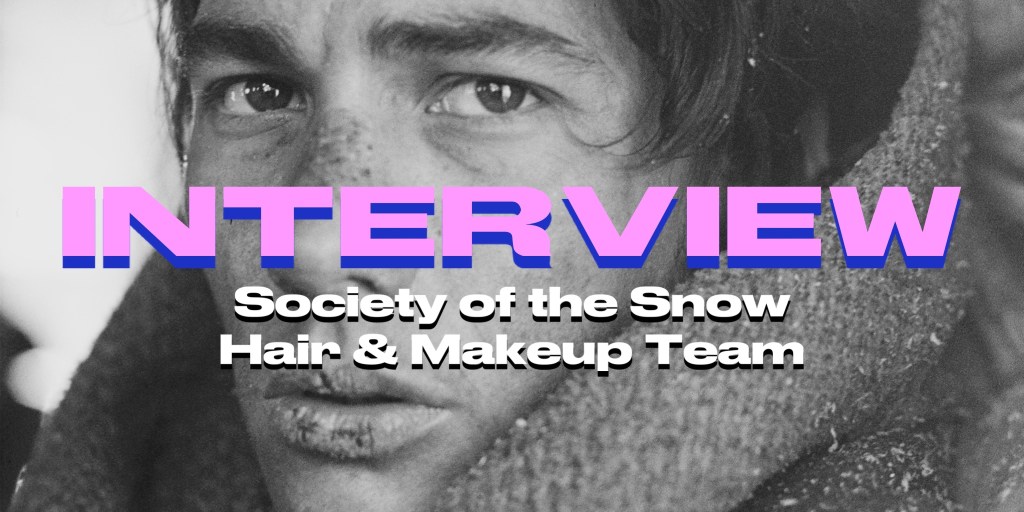
Throughout J.A. Bayona’s Society of The Snow, we get an up close look into the science behind becoming accustomed to the mountains. Set in 1972, Society of The Snow follows an intimate look into the Andes flight disaster, providing a proper adaptation to Pablo Vierci’s book of the crash itself. As the film progresses and the main cast begin to succumb to different aspects of the snow, the biggest challenge was being able to portray the gut wrenching physical changes as the survivors go through different stages. We spoke to Society of The Snow’s SFX Hair & Makeup artists David Marti and Montse Ribe, as well as makeup artist Ana Lopez Puigcerver about their work on the film, how the makeup department went to great lengths in the mountains, and their Oscar nominations.
Leia Mendoza: Hi! It’s so lovely to be here and talk to you. I’m so excited to talk about your work on Society of The Snow, so first of all, I want to talk about the hair and makeup of the boys before the plane crash happens. One thing that I think is really emphasized in the beginning is their boyish looks and how young they are. In terms of the film’s makeup and special effects, how did boyhood play a part in each of the character’s looks?
Ana Lopez Puigcerver: The preparation of the characters was crucial, we had to bring them as close as possible to the real characters, there was great hairdressing work by Belen López-Puigcerver, who was hair designer of the film, with straightening treatments in some cases, color, textures and cuts, also replicating the era of the 70s. Regarding makeup, I enhanced all healthy features, skin tones, minimizing dark circles, lip care. I wanted to get the highest contrast as the days went by. The important thing was to say that these kids lived well, affluent class, they were young and happy, enjoying their trip.
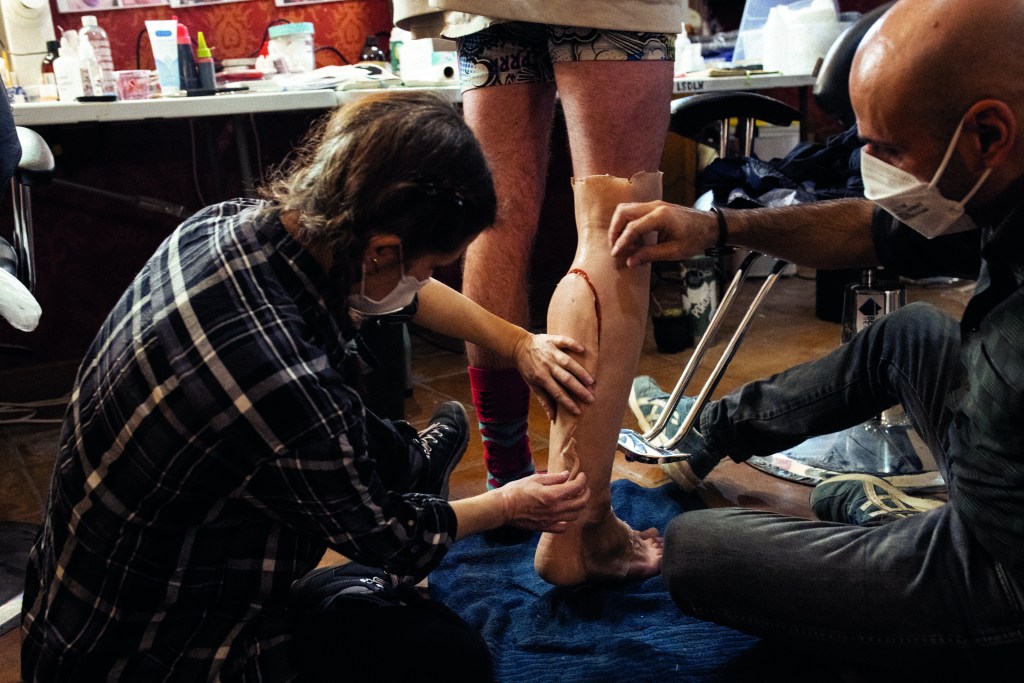
Leia Mendoza: We can talk about the evolution of the characters during their time in the mountains. Since we’re following them for such an extended amount of time, even though it’s for a number of days, the makeup and the way that their hair falls shows that everything starts to change as they become accustomed to the snow. When you guys first began focusing on this aspect of the film with special effects, what were some of the techniques that you both used in the hair and the makeup that the audiences may have not picked up on, or maybe that we haven’t seen?
Montse Ribe: At the beginning of the movie, when they are healthy, Ana and Belén Puigcerver should talk about this. We know that they take references from the real pictures and tried to be close to the looks of the real characters. They had a big responsibility with the casting.
David Marti: They made them look even younger and healthier to have a bigger contrast when they are starting to be in that situation where they’re in the crash.
Montse Ribe: Exactly. When they’re healthy, they made their makeup look healthier.
David Marti: They looked as well as they did in the movie!
Montse Ribe: And then, the deterioration starts. Belén Puigcerver worked on the hair to look more dry, because they talk about when you are in the snow and cold, the hair gets super dry, with no volume, and it becomes very dirty. And Ana did all the textures of the frozen faces, like the lips and the different stages of freezing. There were sometimes where they were really cold, but then they were outside with the sun, so their skin changed. The skin became more dry, so there were a lot.
David Marti: There’s a lot of things you have to take into consideration because there’s some of the characters that don’t go out. They keep being pale and they get sicker and thinner. So, everyone had to look and say “What kind of fake snow do we have?” and we shared all of the information. We stole things from the special effects team that was making the snow, and obviously, there was a lot of snow in the hair that was actually real. When you shoot up there, it’s not going to melt, it just stays there. It gets hard to take it out.
Montse Ribe: It was a mix.
David Marti: It was a mix of gels that we used to make things shine, that mixed with fake snow. We share a lot of things, and we have to talk about that this is not the work of one person or two people or three people, because normally we are three people right now. It was the work of more than sometimes 40 makeup artists, and makeup and hair people. So, you know, you can not do everybody. You have to choose certain characters and have to supervise the other ones. That was one of the things that makes this work so special, so different from the other work we have done. It’s a very clear line where you take over this character, and then the other one to whatever they do.
Montse Ribe: I also must say that there were a lot of makeup artists on the chair, but also when they were up there on the mountains because there was only a few people. We couldn’t have the whole team up in the mountains, so maybe just 3 or 4 artists and it was a big challenge for them. They had to take care of all the actors, I don’t know how many, but maybe 20 actors who were there and it was very few people to take care and do the touch ups.
David Marti: J.A. doesn’t like when you go to do touch ups. So, if you have to do something, for instance, like Gustavo which all the time, he was wearing ears because J.A. was very into having this character have their ears like the real survivor. Gustavo Zerbino is still alive, and he was like “No, I want Gustavo to see himself in the movie and he needs bigger ears,” which everyone was against that idea. That means that every day, you have to get new prosthetics and you have to get that guy sitting for fifteen minutes just for the ears, not the full makeup. So finally, we got it, but that’s the thing. Sometimes you can see Tomas, who is playing Gustavo, doing things and you’re like “Those aren’t your real ears!” and we have to not do touch ups. Instead of going there and touching up, J.A. really was really into making everyone look believable but at the same time, it was really hard to get everyone perfect. But at the end, everybody looked very nice.
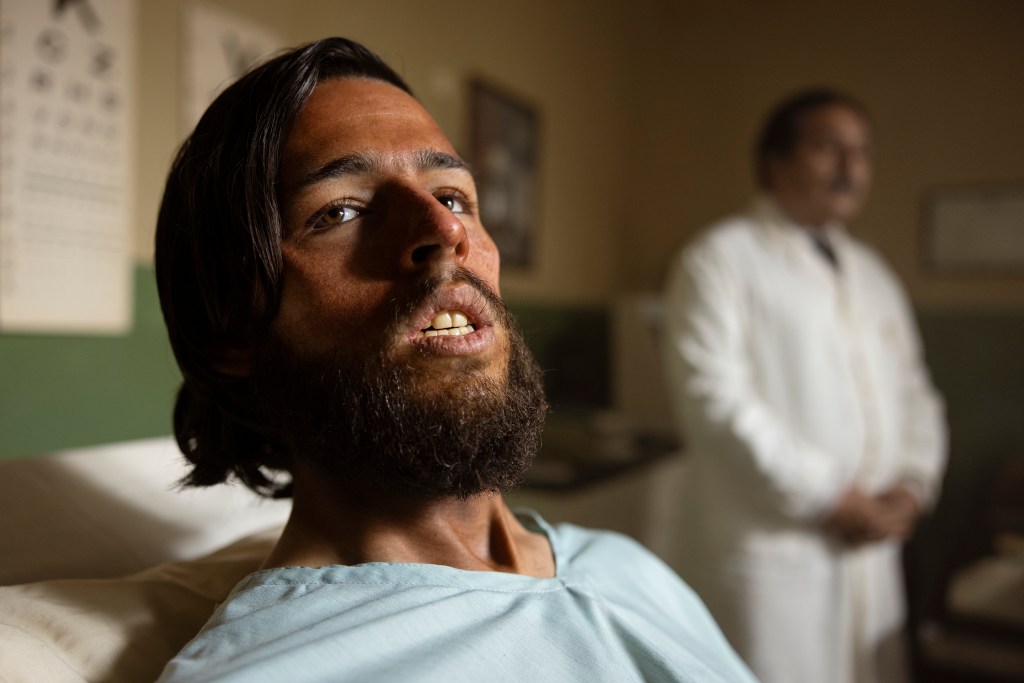
Ana Lopez Puigcerver: The environment where the plane crashed is tremendously harsh, the temperatures at night dropped to minus 30. During the first month or so during the day it snowed, and it was almost always cloudy. Later when the temperatures start to rise they have more hours of sunshine This has to be reflected in their physique, in this first part their faces reflect the cold, hunger, tiredness, using colder tones, we also used different types of snow, both on the face and in the hair, dry snow, shiny or matte, depending on whether it was inside or outside, snow, frost, and ice, made from hydrated polymer with gel, in a mixture that we made ourselves. Little by little we began to sunken the eye sockets, some of them red, to raise the skin tones with airbrush self-tanner, to tan the skin, with different materials, and to dehydrate the lips. After the Avalanche, their abandonment of themselves begins to be very notable, there is almost a before and after, they spend 4 days locked in the fuselage, with what that entails, in terms of hygiene, they feed on the bodies they have right there. When they leave there, everyone has changed in some way, and the deterioration is stronger.
Leia Mendoza: You touched on Tomas, and also, I had no idea about the ears story!
David Marti: That’s a good thing!
Leia Mendoza: The ensemble cast and even the main cast do such an incredible job of being able to help tell the story and also as an audience member who vaguely knew of the story but this was my first time ever seeing an adaption of the book. It really helps everyone root for them throughout the entire runtime of the film. For a lot of them, it’s their first big performances or their debut roles. What was the most exciting aspect of the collaboration process with the actors throughout filming and the most rewarding thing about working with first time actors?
Ana Lopez Puigcever: In any project, but in this one especially, the relationship with the actors is essential, they have to feel comfortable with the makeup and hairstyling work. Makeup and hairdressing in extreme conditions must be removed continuously, so that the spectator can feel how the passing of the days is deteriorating them, the cold, the fatigue, the pain in the sick, we were changing and adding small makeup effects. The design was with 9 phases, the challenge is that you do not perceive sudden changes. They felt comfortable, they thanked us, because they considered it was essential for them to see the transformation. In this case it was unquestionable that the result was totally realistic. In one scene, one of the actors picks a scab off his leg and eats it! I made the crust and it was really good, it was a kind of caramel, and he was very grateful. It had a mixture of cereals, liquid caramel and powdered milk. Who wouldn’t want to eat it?
David Marti: I think the most important thing is that they were super nice.
Montse Ribe: They are all super cute and they were so excited! Even if they even went through a difficult time because they were on a diet, they were also super cold on the mountains and even if they had a warm suit, they were really cold, so they were in a really hard situation. But even that, they were so excited to do the movie and they were so passionate about it. They were so happy that we enjoyed their happiness and the adventure, and they were also super happy that we put prosthetics on them. Some of them didn’t wear any prosthetics, but they came in and were like “Put me in something, I want some prosthetics!” to us!
David Marti: I think that the ones that go with the cheekbones, and we did prosthetics for the cheekbones, they also had to look more thin. They got thin, but not to the point where they look like skeletons. So, some of them were like, “Can you put me in some of the cheeks?” and we were like “No, you’re okay!” to them. I think one of the best things in this movie is that there were no egos. I mean, everybody was so sweet and so humble that it was an amazing experience.
Montse Ribe: Yeah, it was a lot of teamwork. We could feel it through all the departments and through all of the actors, it felt like the same family.
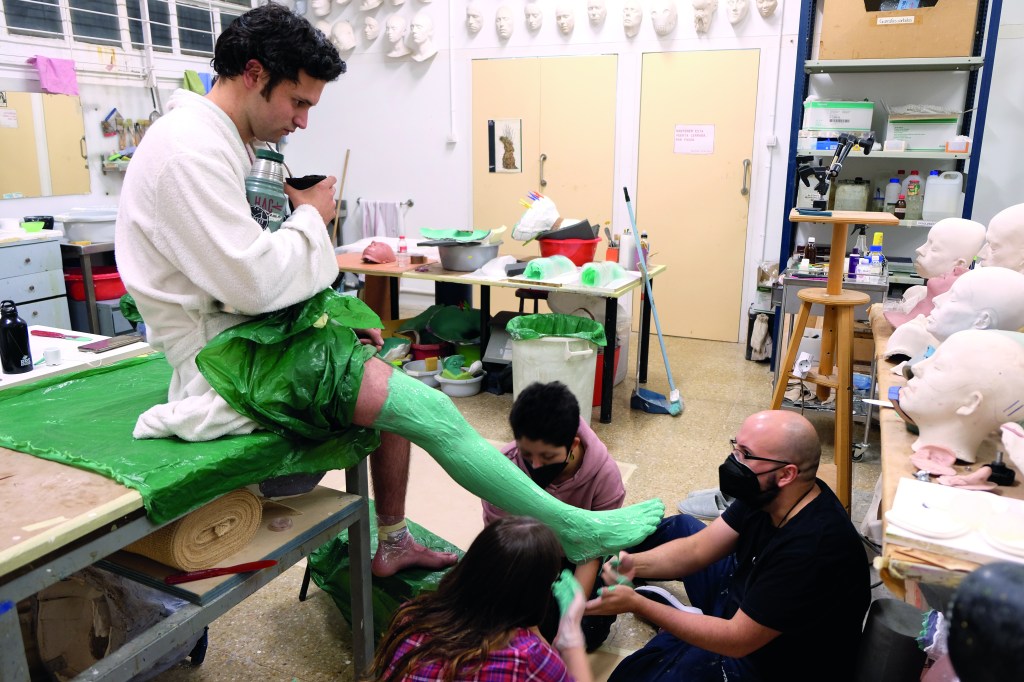
Leia Mendoza: I love that so much. I love being able to hear stories about the behind the scenes, especially with this film. Since this is such a personal story for so many people, and the subject matter for the survivors who are still with us. I’m curious on for the SFX side, what aspects of the story or certain scenes or moments did you feel were a struggle and how did you overcome them as a whole department?
David Marti: We were creating all the prosthetics, but we were also doing all the dead bodies that actually you can’t see in the movie.
Montse Ribe: You see some of them.
David Marti: You see some of them, and we did 24 dead bodies that you can barely see there. It’s for a good reason. J.A. at the beginning was like “We want to show everything. I want everything on the screen. I want cut heads, and I want everything on the screen,” and when you’re stepping on all that stuff in the snow, maybe this is a little bit too much. We are happy that a lot of our work you can not see on the screen, but happy because it was a good idea. I mean, to work with everything there, and the guys can not only read it in the book or on the script, but you can see the skin and the bones, this or that, you can see everything there. Even if the screen doesn’t see it, the guys were seeing it all around. That’s a very important thing for J.A. and it happened in The Impossible with Naomi Watts. It was a little bit the same. There were a lot of dead bodies around, and just because you can’t see them, you can also feel it. The actors actually were with that material, it was amazing. You’re not working on a green screen set, you’re working with everything that is real. I think that this is one of the things that really makes the art more believable and the movie itself, and the acting of them. Because for them, it was the first movie they were doing and some of them weren’t even actors.
Montse Ribe: Yeah!
David Marti: There was a guy there who was a farmer. He worked with cows and horses, and suddenly he was there. One thing that was very sweet from them was that some of them have too much weight, and they said “This is the best thing for a diet!” and “I’m making a movie but at the same time, I’m going on a diet!” and they were really sweet.
Leia Mendoza: I also want to say congratulations on all of your accolades, what an amazing achievement to be a part of with such an amazing project! What do you hope that your work in Society of The Snow will inspire for anyone who is interested in SFX Hair and Makeup, and what do you hope is the lesson of the film?
David Marti: I think one of the messages is that even though we have 32 years working together in the studio, we learned that you never are ready for what the director is going to ask.
Montse Ribe: I think every movie is different and this one, it was like other times, are based on not real things but this was the one where it was more based in reality. We had the responsibility to do it well and believable, and I think that it helps to believe the movie and it helps to go inside the movie. When people see the film, it’s like the whole thing and the whole story, with the SFX and the hair and makeup. Everything helps to go through what the survivors went through.
David Marti: I think it’s very important to tell a story like this and that we helped tell a story like this with SFX. It’s also something that is starting and we are getting a lot of emails and a lot of Instagram messages saying “How did you do this?” or “How did you make that?” and even people are doing the makeup on themselves of frozen things. We have inspired people to do Pan’s Labryinth makeup but now, they are doing things like this and it’s very nice that they take their tools to make this. A girl the other day was saying “I used salt, because I don’t have any kind of fake snow!” and it’s a very good idea, as long as you don’t put it on your eyes! Salt is good to make fake snow. It’s a very nice thing to inspire young people and that they want to go into our field with this kind of movie. They sit there, and think “Oh, I want to do this!” and that’s a very nice thing.
Ana Lopez Puigcerver: One of the most complicated scenes to shoot and prepare was the scene of the avalanche. The snow was real, the same space that the characters had was replicated, there was only 50 centimeters between the snow and the roof of the fuselage. The actors really came out of the snow,and in that space were the 19 actors, plus a camera, and when we had that, retouching was really difficult, plus they were cold. Another important factor in the deterioration was diseases, in the colder season the bacteria did not proliferate as much, but when the temperatures begin to rise the infections worsen, in addition to the makeup with which we created the textures on the skin, we sank features, we accused the tiredness, or the cold, purple lips, hands. and ears, we had SFX in charge, and they made sores on Numa Turcatti’s back, wounds on her ankle. Also, in the final part of the film, they added small pieces on the cheekbones to accentuate the weight loss in some actors. We use alcohol makeup palettes, brands such as Blue Bird, On Location, Maqpro, Skin Illustrator, Water Melon, Prosaid, and many more. I like to do makeup as if I were painting oil, layer upon layer, different tones and different textures.I would like to emphasize that the challenge was to count those 72 days during 140 days over the course of a year, and being able to convey the suffering of these children abandoned to their fate, little by little, day by day.
Leia Mendoza: I think that’s just a testament of how strong and how much time and effort you guys put into this. It translates so beautifully on screen. Thank you guys so much! It’s such an honor to be able to talk to you guys. I have to say that I loved your work in Pan’s Labyrinth but I think this might be my favorite project that you guys have done.
Montse Ribe: Thank you!
David Marti: That’s great!
Leia Mendoza: It’s so nice to see the evolution throughout the film and congratulations on the Oscar nomination!
Society of the Snow is currently streaming on Netflix and available to watch in select theaters.
You can read our review of the film here.
 offscreencentral.com
Leave a comment