
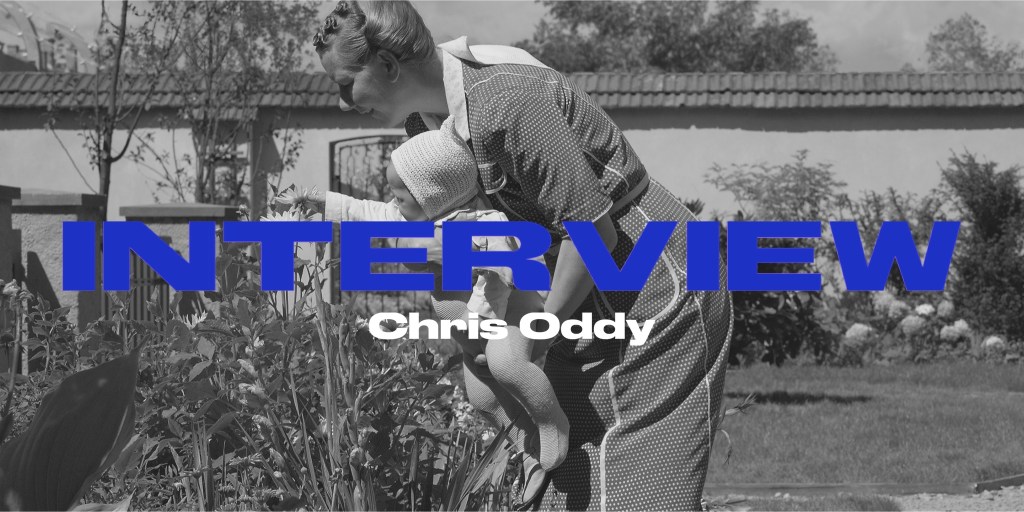
Jonathan Glazer’s haunting film The Zone of Interest is mainly set in and around a 1937 house that belongs to the Höss family. The children run around upstairs as matriarch Hedwig tends to their idyllic garden. On the other side of this picture-perfect house is Auschwitz: the death camp overseen by Rudolf Höss. While what happens on the other side of the wall is never explicitly shone, its sinister nature lingers in each room.
Offscreen Central had the opportunity to talk to production designer Chris Oddy about recreating the Höss home, the functionality of the garden, and making it feel modern as a reminder that this horrifying atrocity is not the distant past.
Jillian Chilingerian: This film is just really one that I’m going to be thinking about for quite a long time and I’m sure a lot of other people. I remember hearing about it at Cannes and I was anticipating it for months and months and months. I saw it finally in December and I was completely blown away by everything, from the sound to the production design to the cinematography to what Jonathan Glazer was able to do. So I’m excited to dive into building this nauseating kind of world of humanity.
Chris Oddy: Yeah, yeah.
Jillian Chilingerian: The house is such a central character to what unfolds in the story. So starting with that and joining Jonathan in this, what was your research process? Did you visit the real house, because it’s such a pivotal almost character within the story?
Chris Oddy: Absolutely. We searched many places in Poland trying to find somewhere suitable to build a house and by suitable I mean, a situation to a river and the right kind of foreigner on the landscape. We went right around the houses and came back to the area of Auschwitz. We’ve worked together for 20 more years, Jon and I, and we’d been talking about the project long before he visited Poland and Auschwitz before me and was enthused about the house. I went there and had a sort of three-day excursion to Auschwitz. Camp. I’ve never been to the camp before, so every day I start with a journey around the museum and then pop around the house and look around. The residents were contacted and we got access. I visited the garden a few times, which is now a collection of allotments, it’s not what it was. But there are still elements to be seen forensically amongst the structures of the garden and what was original and what wasn’t. The obvious thing was everything was 80 years too old. In researching through publications and archives within the museum, they were extremely helpful once we’ve got an ongoing relationship with them. Evidence started to sort of just filter out along with firsthand accounts from people who cleaned the house and so on about details within the actual house. The proportions of the house are quite similar, but the house we used was a bit smaller, but we were quite keen on trying to use it and it’s only about maybe 100 yards or so down the road. Still on the same aspect as the river and still adjacent to the Auschwitz camp with a very substantial bit of plot of scrappy land around it. There were a couple of photographs within the archive of the house from the camp, also from the campsite, which is very beautiful. All the photographic evidence is black and white, so the palette of the house is an application of the kinds of colors that were right for them plus emotional choice from my side.
Jillian Chilingerian: When you’re watching the film, it doesn’t feel like a very far-away past it still feels very modern so it serves as a reminder.
Chris Oddy: You sculpt the piece as much as you sort of predetermined where you’re going but what was very clear was to not make a period drama to not make it remote or distant from the us. An example would be that there’s a sheet of plastic on his desk, a sheet of perspex, and that came from a witness statement that he did indeed have a sheet of perspex on his desk, and I was very surprised by that, it’s an incredibly modern material for them particularly. When I researched it became apparent that IG Farben the chemical factory was within the zone, and the producers used in the gas chambers were a chemicals production company. So real cutting-edge technology, and they produced perspex, so he had a sheet of perspex on his desk because it was extremely modern. It’s very important to sort of make sure that the house and the things that they own felt like they were new to them, and therefore new now because it was important not to make it a historic piece.
Jillian Chilingerian: As an audience member when we kind of see that there’s this approach of making them not feel like they’re centuries ago then it kind of serves as a reminder for me and younger audiences that history repeats itself.
Chris Oddy: Yeah, I mean, I think it’s the expectation isn’t that we would see a period setting would therefore deliberately old and I think even with things like the wheelbarrow the prison gardener brings down the path that with good state taken within the camp you know, I think even that onset was sort of a little bit discombobulating for people. They were like don’t you want to age that a bit then I said, Well, no, it was made yesterday, literally yesterday, so, of course not.
Jillian Chilingerian: Under the Skin is one of my favorite films and the voyeuristic approach of the camerawork and we see it again in this one, it’s very reality TV like Big Brother as they go on their daily life.
Chris Oddy: We were very conscious of that when we were making it. It is in our culture, isn’t it? It was very important to put this 21st-century eye on it because that helps bring it closer to us.
Jillian Chilingerian: When you’re approaching something that is very idealistic, we go outside to the pool and the garden and it’s very perfect. It tells you everything about Hedwig and the order in this house, but there’s also that underlying sinister within watching them go on their day as if the things on the other side of the wall aren’t happening. How do you from your role add in that emotion within like the space?
Chris Oddy: Well, it’s difficult to answer. It is about checks and balances as you bring in elements of the world that seemed consistent with the research of their aesthetic, in the garden, for example, is a combination of dichotomy, function, and a bucolic wish to enjoy the wild. The planting is quite cacophonous, with lots of different plants planted together and quite close unlike formal municipal gardens at the time, which would be more ordered almost Edwardian. Their passion for plants at the time, was much more of creating a sense of wild. In aerial photographs, the kind of formal hard landscaping, the cars, the pool, the greenhouse, and all those elements were very sort of rigid and laid out. Once you put these things together, I think that evokes a bit of disquiet, some aspects of the garden feed into the house. The house came from the garden in some ways because I had more evidence of the garden than I did of the house but I was very struck with the connection between the house and the garden wall that they built, and how it abutted the camp wall. The camp walls mee the garden walls, they’re not joined to it, they just abut with it. That is still evident in their garden today, even though it’s sort of cracking away and falling apart. That juxtaposition I found compelling this kind of, sort of nouveau riche Romanesque palisade wall up against the death camp.
Jillian Chilingerian: It’s very jarring to see those side by side. Going back to the functionality of the house and how they don’t know how that’s normal for them to use that ought to use basically like all the space that they have to create like to her like her dream house of like, why she doesn’t want to move when he gets the promotion.
Chris Oddy: The evidence we uncovered is that they’d had this happen and he had gone to running it on his own. It sort of brought into focus more for me, certainly that they had chosen to live there because it was the case as mentioned in the conversation they have by the river, that many of the officers who worked with the company in that environment would take a house inside the town, which is where I was living when I was overseeing building the house and it’s only 15 minutes away and yet, they wanted to live that. I think that says a lot as well.
Jillian Chilingerian: The juxtaposition between their house and what that side of the wall looks like. Of course when we get to the end of the film, and we go to the museum it’s just like what’s happening on the other side of the wall and that’s even like I just really brings up a lot of bile as you’re watching and you’re kind of like oh my. We never see any violence but we hear a lot of it. Seeing that space and those items left behind compared to how these people were living throughout the whole movie with like, not even an ounce of anything.
Chris Oddy: They expected to see all those plants grow and they expected to see those trees grow up and mature and hide the camp. They were psychologically in their mind and were there for the long haul. That also very difficult to step into that their attitudes were impossible, but it was kind of imperative to not make monsters of them because it’s untrue to say that like many of the people involved in these kinds of atrocities, they are all people who are allowed to allow themselves or facilitate them themselves to enter this kind of mindset. I mean, evidence was clear that early on when they first started using the crematorium, he would have a motorbike sidecar to cover the sound of the screams so that the children couldn’t hear it. The younger of the family are victims and they lay their blame but they knew absolutely what they were doing.
Jillian Chilingerian: The scene of the young boy at the end and his brother in the greenhouse. Using the greenhouse I feel like nature’s always really soothing and just seeing him kind of turning that into his own little “playground” of replicating cyclical violence and like what children will take away there are many layers to everything.
Chris Oddy: Yeah, yeah, yeah.
Jillian Chilingerian: Well, thank you so much for this time. This film completely left me speechless from the look of it seeing their house and that pounding sound. The way the house was built has these constant reminders that this is not 100 years ago and we’re kind of seeing repetitions of it today.
Chris Oddy: Thank you. Great questions.
The Zone of Interest is currently in select theaters and expanding throughout the month of January.
You can read our review of The Zone of Interest here.

 offscreencentral.com
Leave a comment