
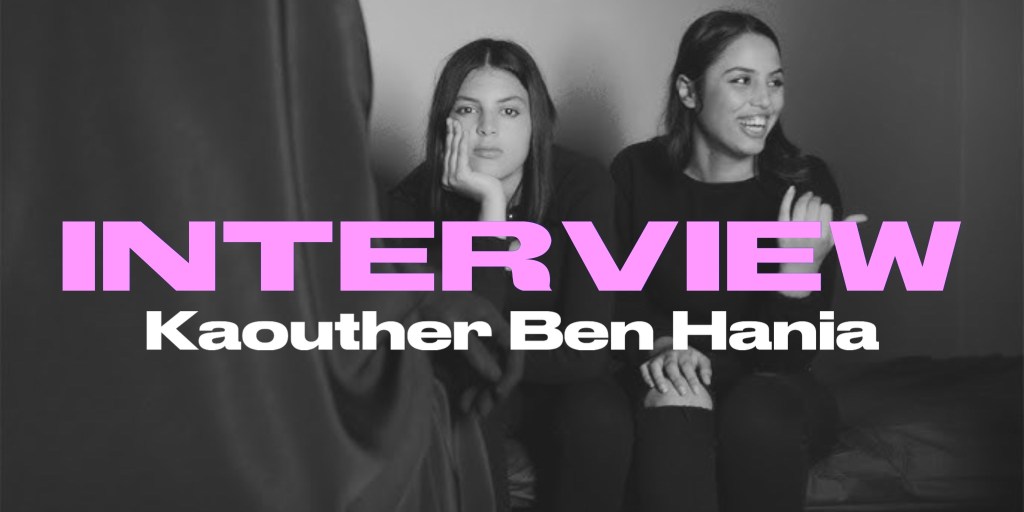
Shortlisted for Best International Feature and Best Documentary Feature for the upcoming Academy Awards, Four Daughters tells the true story of a Tunsian mother, Olfa Hamrouni, whose two daughters disappeared. Director Kaother Ben Hanai tells Ofla’s story by mixing documentary with fiction to capture a powerful story of women.
Oscars Central had the opportunity to talk to Kaouther Ben Hania about creating the film, themes of sisterhood and motherhood, and how Olfa’s story speaks to what is happening to women around the world.
Jillian Chilingerian: Hi. So nice to meet you.
Kaouther Ben Hania: Nice to meet you, too.
Jillian Chilingerian: Congratulations on both the shortlist for international feature and documentary. That’s so exciting.
Kaouther Ben Hania: Thank you.
Jillian Chilingerian: I’m excited to talk to you about this film. I remember hearing about it before Cannes and I was intrigued by this concept. I’m just so curious about your process of having a heavy story and figuring out this format of mixing fiction and documentary as the best way to explore the story.
Kaouther Ben Hania: It took me a long time, I was lost in the process and I was eaten by the doubt. When I started, it was in 2016 I heard Olfa telling the story of her daughters on the radio. It is a very interesting story, so I contacted her and my idea in the beginning was to do a fly-on-the-wall documentary. So I started filming Olfa and her two young daughters like this, but it didn’t work. It doesn’t give me answers and I know that when I don’t have the right form to tell the story the movie is not, is not there. So, I stopped, I did another movie and then I came back with fresh energy and ideas. I was talking all the time with Olfa’s daughters and they thought that what interested me in this story already happened in the past. So when you do a documentary, how do you film the past, because a documentary is filming reality. In the role of a documentary, there is a well-known cliche used to convey the past, which is a reenactment and I was thinking about this cliche that I don’t like, and I was like, maybe I can use it in another way to try to have something very open like a bridge to theatre, where the real characters are directing the actors and the actors are asking questions and having debate and thinking about those memories. So it’s something between remembering, explaining, trying to understand, and also healing, you know, by this introspective work. So when I got this idea, everything went quickly. I spent years and years trying to do this film and nothing worked out, but when I had this idea, it was like magic.
Jillian Chilingerian: I have two sisters and a very close relationship with my mom. I love seeing how you capture that bond of what it means for sisterhood, motherhood, and daughterhood.
Kaouther Ben Hania: For me, it’s a woman’s story, it’s a sister’s story. Since we have two sisters not here anymore, it was a very challenging idea for me to create a sisterhood with the tools of cinema and it was beyond my expectations because the actresses and the two young daughters of Olfa became sisters during the shooting. Those are like universal themes, our relationship to our mother, all those elements are beyond culture, beyond the political context or geographical context, they speak to everybody.
Jillian Chilingerian: The idea of memory and past and reflection, I would assume, for this family, that going through these emotions could be therapeutic in getting that space to process it.
Kaouther Ben Hania: First of all, what fascinated me with Olfa and her two daughters, is that they are natural-born storytellers. They own their story, they can tell you their story, and go through all the pain even sometimes they have a lot of humor, so it wasn’t like they were reliving for the first time. As a filmmaker, to create a safe space for them and the actors, safe space. So we can trust each other because when you have a crew, sometimes you don’t know all the people, and you don’t feel comfortable. So my work was to reduce at the minimum the number of people on the set and also to have the majority of feminine technicians behind the camera to gather people who are not judgmental, who are empathic, who are compassionate so we create this safe space.
Jillian Chilingerian: Often we hear a lot of tragedies happening across the globe of women in different areas. A lot of people will have heard but it’s kind of diving into that the idea or the core of like, why does this happen to women?
Kaouther Ben Hania: I’m happy that you noticed this because this story, started with what we see with the news. We hear a lot of things especially today with social media, and we have like very strange and tragic stories all over the world, but it doesn’t impact us, because we don’t know those people, we can just imagine the situation and that’s always the visible part of the iceberg. In general, we live today with this word with so much information that we become amnesic. This is where we come to cinema and literature because I think it’s the opposite of amnesia, it’s something that builds a common memory between human beings because it takes time to dive deep to understand, construct, and give meanings to things. So this my my job, and what I love about about cinema is sharing with the audience something very deep and complex.
Jillian Chilingerian: The power of being able to connect these stories with faces and that it doesn’t become so desensitized at all. These are the people and this is their story and one of the conversations that stuck out to me from the beginning of the film, is with the two actresses, where they’re getting into character. A lot of the time with actors, they create their backstory to whatever role they’re stepping into. In this film, they mentioned this is true and there’s nothing outside of it that. They probably won’t be the same people after going through this.
Kaouther Ben Hania: I knew that this was not a comfortable position for actors. They are here in my movie out of their comfort zone because actors don’t meet real people. Actors work on characters written on paper, and they discuss the character with the director, this is what what they do. Here we have a real family story, directing those actors and discussing with them. So, I mean, we see in the first minutes of the movie, the actor playing the mother telling her, I’ll protect myself, you will not get into my head and the mother is like, defying her thinking and what if you can’t tune but if you can’t, and this is mainly a metaphor about this encounter in the movie because it’s, it’s a documentary people think about when we have actor it’s not documentary, but it’s also documentary, but what does it mean to be an actor, the process of understanding having empathy to your character, so you have like moments like this.
Jillian Chilingerian: It’s a fascinating way of storytelling that, to me stuck out because you don’t see it often. Was there anything that surprised you when you watched it or as you were going through the process watching the actresses and the real people merging almost into one and creating what felt like a very real family bond?
Kaouther Ben Hania: This is what I love about documentaries because I’m the first audience of my movie. So I’m like, surprised all the time. I expect many things because I’m setting the rules, but many times I’m surprised. For example, the bond between the girls, was a very wonderful surprise for me, because it’s quickly they became sisters making jokes together, even giving each other clothes.
Jillian Chilingerian: Thank you for the time to talk about this film. What you were able to put with these two genres that I probably would have never thought to put together and it’s such an important story for women, as we mentioned, that I just love seeing and also a good reminder that like the female experience is not a monolith and we can have stories of women all over the world.
Kaouther Ben Hania: Thank you.
 offscreencentral.com
Leave a comment