
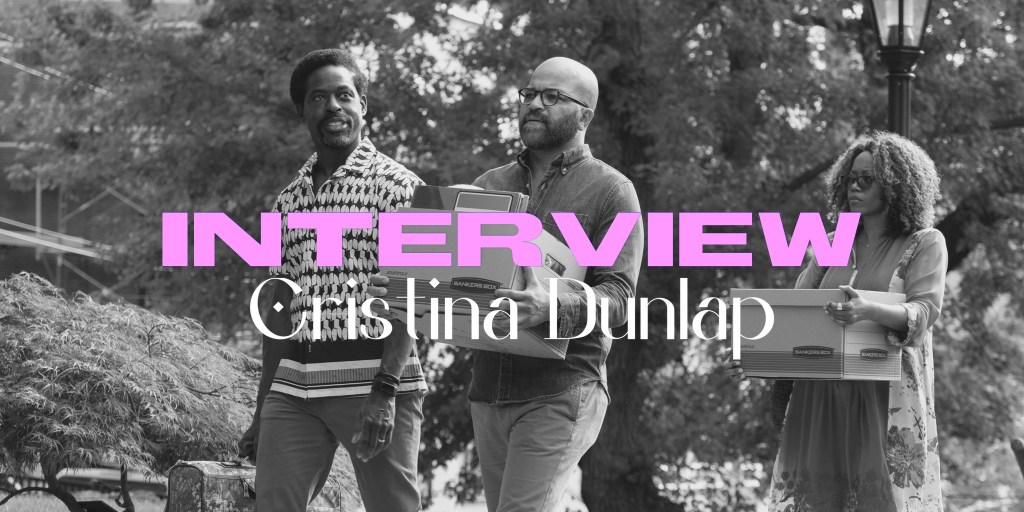
In American Fiction, Thelonious “Monk” Ellison (Jeffrey Wright) is an author struggling to get his work out there and read. As he grows frustrated by the consumption of “Black” books that focus on offensive stereotypes, he sets out to show them how easily they can be fooled. He writes a novel that fits what they flock to under a pen name. Much to his surprise, he has a hit book on his heads. Our Artisans Editor, Jillian Chilingerian, sat down with American Fiction‘s Director of Photography, Cristina Dunlap to discuss the film, working with a first time director, and more.
Jillian Chilingerian: Hi, Cristina so nice to meet you.
Cristina Dunlap: Nice to meet you. Thanks for having me.
Jillian Chilingerian: Of course, I love talking to cinematographers, especially female cinematographers because it feels like there’s just so little, and especially this year with some of the movies I’m like, Where are the women? I loved American fiction, it was one of the best theatrical experiences I’ve had in a while everyone was laughing and crying through many range of emotions. It hits in the right parts of humanity.
Cristina Dunlap: Well, thank you so much.
Jillian Chilingerian: When you get the script and approach it from a cinematographer-like angle when you read it, do you envision how the scenes are going to look? What are the first thoughts that go through your head?
Cristina Dunlap: I got the script through an associate of Cord Jefferson whom I had met on a music video years before. She was working for Cord on this film and knew he was looking for a DP and she emailed me out of the blue and was like, “Hey, I am working for Cord Jefferson, if you know him, but he wrote this script, and I feel like you would like it and you guys would get along. Can I send it to you?” And she did. I didn’t know what to expect in reading it. I was just blown away. I can’t remember feeling the last time I read a script. I’m connecting to the material when my brain is flooded with images as I’m reading the script, and I just can’t stop thinking of things and visualizing certain scenes. So as I was reading, I just started pulling references. Sometimes when I make a lookbook, I’ll kind of pick key scenes in the movie that really stick out for me and almost make like, a loose storyboard from frames that exist on Shotdeck, so the director can kind of see what’s in my brain. So I did that for several scenes in this film and I brought that to Cord.
Jillian Chilingerian: With this being his first time directing, how were those conversations with what he’s envisioning and what you’re envisioning?
Cristina Dunlap: I know that some people don’t want to put in the time before they have the job and it depends on the script, but like I said, with this one, it was just really clear in my mind, but it’s always tricky because you don’t want to overwhelm the director and bring something that doesn’t resonate with them at all. But Cord is an extremely open person and he’s generous and lets everyone bring their creativity onboard. He was like “This is my first time directing I am open with what you want to do, I trust you”, so he was very specific that tonally, he didn’t want it to go into like, the farce territory. He wanted it to be satirical and comedic, but the family story and hitting that was extremely important to him. I pulled from a lot of dramas versus comedies because I think we wanted the visual theme to be around Monk’s isolation in the frame and also the way people enter the frame and come into his life. Like, there’s always people encroaching on him and I wanted to represent that visually. Even just the opening scene, ran a very long lens on him and then we went pan over to introduce this student who’s somebody who’s going to come in out of left field and disrupt his. That was one of my ideas that I brought to Cord early on that he liked, and we sort of built off of that. But yeah, he was extremely open to anything.
Jillian Chilingerian: Watching the movie I thought of how you use blocking and framing to bring us into how Monk sees the world and the aura around him with color palettes or lighting. I remember the scene when he walks into where Issa is, and then the white woman in front of him stands up when they’re applauding.
Cristina Dunlap: Thank you. I tried to be very intentional about it because, I feel like the cinematography of the movie can be too distracting sometimes if you’re trying to make these big, like sweeping moves and everything about the camera. So I was trying, to find ways to visually communicate emotion without stealing the show. It’s a fine line because we’re in so many houses and it’s a lot of people talking in rooms and finding a way to make that interesting and communicate the feeling of the scene without disrupting.
Jillian Chilingerian: I noticed there are also a lot of practical locations that we go through which as an audience viewer, I love when it’s like a real location because sometimes I watch something and I just feel the artificiality. This feels very grounded to the different tones and themes we go through. What was it like to be in these actual locations and play with those natural elements I also noticed we have a lot of windows and closed-off rooms.
Cristina Dunlap: That was a challenge in this film. We shot it in 26 days and we had a lot of locations so we were just going from space to space to space. We don’t have a lot of time to even pre-light or have a rigging crew., so the beach house was a particularly challenging location. We were very lucky that they gave us eight weeks of prep and Boston. So we spent a lot of time scouting and finding the right places and everybody fell in love with this beach house. For me, because I knew we wanted to see the motion through the windows and walking into the space there was extremely dark, there’s dark wood, and I think inside on the light meter was reading at like point eight and outside was above a f 64. Oftentimes we were using every light on the truck to get exposure inside of that room. There was the office space or the meeting with Wiley where I tried to make everything cool because the family house was about warmth and feeling love and the family even though tumultuous relationships and a lot were going on. There’s still a lot of love there so I wanted that to feel like an inviting safe space in contrast, the Paula Bateman office is almost icy cold and the beach house is sort of the perfect mix of those two because we have the warmth from the wood and the actual setting of the house and then this cool light coming in from outside that was creating these flares that I love.
Jillian Chilingerian: Their is such a natural progression of these different spaces that we’re feeling that that coldness and then feeling where Monk feels the most comfortable with his family. Those juxtapositions can signal us as the audience a little bit more into his head and like how he’s thinking. You use a lot of wide lens shots, which reminds me of The Simpsons where it’s comedic within the frame of aspect ratio. The environment adds to the comedy without having like, you know, the script is funny, but like, it also just ties into like at the beginning when Monk is at that book, conference thing, and it reveals the room that he’s in.
Cristina Dunlap: It’s tough because in comedies, generally, people want to shoot it very wide so you can see all the characters at the same time and sort of what is going on. But I think in this there’s also so much emotion behind the comedy going on it that makes it funny, and especially just the slightest micro reactions in Jeffrey. They see such a brilliant actor and he can just move an eyebrow and it communicates so much so I wanted to be able to be kind of tight on the faces while still seeing a lot of the room, which is why we chose the 235 aspect ratio and found that we had such an incredible ensemble cast we could include more people and frame while being tighter on their faces. I mean, so that was definitely and just being specific about the blocking going through the beats of each scene with the court and being like okay, what is the heartfelt moment was the moment we want everyone to laugh and find a way to shoot that and then Hilda, our editor, with the editing choices that she made, really complimented it. One of my favorite edits in the film is with Paula Bateman in the office, and we’re just tight on her face the entire time, and when she’s talking about prison abolition, she cuts to the wide and we see the Ruth Bader Ginsburg poster with boxing gloves on for the first time in the room. When Jeffrey is in the conference, we cut and show that it’s that space. I used to work as an editor, so I shot list and edit order in my mind and then I have to reorder it into shooting order. So we were very much on the same page about a lot of that stuff.
Jillian Chilingerian: Wow, that’s so cool to have those instincts and like those back-and-forth skills in those spaces.
Cristina Dunlap: It helped.
Jillian Chilingerian: One of my favorite scenes is when Monk is starting to write his fake autobiography book and we go through these different motions where we never cut to a different space but like we’re still in the room with him. What was it like setting up those sequences?
Cristina Dunlap: I read a few different versions of the script. I’m trying to remember there was one version where it actually took place in an alleyway and then Cord decided to bring it back and keep it in the room with Jeffrey I was a huge fan of that version because we without giving too much away that and kind of takes a left turn all of a sudden it becomes very meta, so we didn’t want that to come in out of nowhere. We wanted to sort of pepper that in this scene was the perfect moment to do that. So originally, we were gonna get a little weirder with it and we’re gonna when it’s when Monk looks at the character, played by Oak who’s wearing the eyepatch and he says, What am I gonna say now? And he tells him he’s gonna go into this sort of self-deprecating monologue that we were going to dim all the lights down to have a spotlight come up on him but when Oak showed up to set, he was wearing the eyepatch and it turned out he had scratched his cornea that day. He was in a lot of pain and he asked, “Is it okay if I wear the eyepatch” Cord was like, “Yes” While were lighting it, we realized that the lights coming on and off were affecting his vision and making it painful for him. So the worst thing you can do for someone with a scratched cornea is to change the lighting because their pupil is dilated and it’s very painful. So we ended up having a bring down all the lights in the room. I think it was a happy accident because I ended up adding a smoke filter and we made it really sort of intimate and it almost feels dreamlike as opposed to going a lot bigger with the surrealism. It’s a lot more grounded and then we decided to continue that through the end of the film and then the ending is even more grounded than we originally anticipated. I think it helps the film as a whole and you never know what is going to work and what’s not but our original idea of having to pivot last minute, I think was a good thing in the end.
Jillian Chilingerian: Oh my gosh, that’s so crazy. It is interesting how things like that like to work out or just lead you in a direction you never knew and like it’s like, oh my gosh, that’s what exactly what we needed. Yeah.
Cristina Dunlap: I love it when that happens. I mean, it’s also about being able to adapt on set, and because some directors might have gotten upset and Cord was like “Okay, what else can we do? So we had to think quickly at the moment and we also had very few takes so we were able to work on some interesting steadicam with our steadicam artist Xavier Thompson. I knew originally that I wanted to start on Monk and then reveal that these characters were in the room, and that was going to be the opening shot, but then it sort of turned into okay, let’s cover the entire scene in this one shot and then we’ll cover the entire scene from another angle and this one shot and see what we get. It helps the fluidity of the scene. There’s just something it’s one of my favorite scenes in the film too. They’re all such incredible actors, and it’s just really fun to watch it come to life all in real-time.
Jillian Chilingerian: Yeah, I love that real-time of when you’re writing and you’re like backspace or what if we did this and that’s how I feel how our brains work. Going into the fluidity of the camera, when we first get to the family home and the beginning with Monk and his sister, and then I think that’s when we meet his mom. The camera pans across and is very welcoming and inviting to us and with the color palette this is a place of safety even though there are tumultuous relationships that haven’t been healed yet. How did you decide to choreograph those movements?
Cristina Dunlap: I had an idea that we wanted it to be very fluid when Monk came home. When things play out in real time, the audience sort of gets drawn in a little easier and you forget that you’re watching a film when there are fewer cuts and you just feel like you’re in the space so I wanted that coming home to feel that way inviting and for it to be very easy for the audience to fall into most objective and see all of the relationship dynamics and how they play out like there’s his mom who’s kind of teasing him and you can only do that with someone you have a close relationship with and then his sister who’s always sort of in a separate space in the house because there is this both emotional and physical distance between them. Lorraine is guiding us through the house because she is holding everything together and keeping all the relationships intact. So we planned this move, but I don’t like to impose it on the actors. I like to see what they’re gonna do first, and it’s so interesting because oftentimes, I think when you’re on the right track, they feel it too and you’ll find they do almost exactly what you wanted without having to say anything. So there’s always sometimes you have to ask for some adjustments, but just the timing of it all it was how I saw it in my head.
Jillian Chilingerian: Everything just seems like it feels so natural to like what the film needed and these different decisions. There are a lot of tonal changes and themes, exploring a lot of different areas of the media industry, family, racial dynamics, and romance. There are emotional scenes between Monk’s brother and his mom and it feels like almost like a very healing movie. How is that a challenge to kind make sure from a visual perspective that all of those are represented and flowing naturally throughout the progression of the story?
Cristina Dunlap: Yeah, I mean, it was the thing to watch out for from the beginning. We always approached all the scenes as you would a dramatic film, and then just found those moments in framing and lensing when we wanted to say it’s okay to laugh. There were a few times I saw the screen and in that moment between Sterling and his mom when she says I always knew you were a queer sometimes the audience would laugh which was surprising to me because I always found it such a heartbreaking moment. So it just goes to show you never know what someone is going to take away or maybe it’s just uncomfortable laughter. I tried not to sort of force what the person was feeling. What Cord told me was “I don’t want this movie to be a lesson or for people that feel like they’re being scolded. Everything’s up for interpretation. There are no right or wrong answers.” The conversation between Monk and Issa is like half the people are gonna walk away on her side and half the people are gonna walk away on Monk’s side and that’s what he wanted. It’s more about asking questions and telling people how to feel. So I tried to honor that with the framing and the lensing and just being in the right place at the right moments and making sure you can feel the emotion that’s going on and what’s happening and especially with Jeffrey making it feel like we’re in his world so you can fall into that more subjective viewer position.
Jillian Chilingerian: There’s a lot of breathing space to be able to digest and have that interpretation. This film is an all Black cast and I feel like a lot of the time in film the lighting just always looks off and I love how everyone is lit in this film.
Cristina Dunlap: Oh, thank you. I’ve been lucky enough in my career to light people who are all different skin tones. It’s all about the face shape and seeing what works for each person and then leaning into that toolbox. With Jeffrey and his glasses, it’s about finding ways to sneak in softer light that wasn’t going to ping in his glasses. Often Sterling was shirtless, and he’s just such a beautiful man and it was about giving him more contrast in the face and finding highlighted edges and Issa has the most perfect skin than anyone I’ve ever seen. You couldn’t put a light on her that looks bad. So it’s just person to person and what works for them and having trying different things on certain different types of light. I don’t like when things feel overlooked so I lean a lot into practicals in the space which I think helps grounded and then having larger sources far away that fill it in.
Jillian Chilingerian: Everyone perfectly complements each other when they’re all sharing the space and I love it when Sterling’s in the pool, at nighttime.
Cristina Dunlap: Yeah, that was a tough location. We were in a backyard that was surrounded by other houses, so there was nowhere we could park a condor to get our moonlight source. Our gaffer had a friend who’s an arborist and he came and he climbed these trees in the backyard and was hanging gem ball lanterns 50 feet in the air. We had to get creative with our time and budget and just physical constraints of being impractical locations.
Jillian Chilingerian: How was that when they’re on the beach looking for Monk’s mom, how was setting up that lighting out there?
Cristina Dunlap: That was a tough one. We had high winds and then we had one far down the beach pointing back because there was a lighthouse down there and we wanted to take that light of the lighthouse coming through that would be dramatic. So we had some lights on a condor down there and then the one undressed, we had to wait and see if the wind died down. Leslie Uggams who is just incredible in her 80s and nightgown walked down the beach waving in the water she was game for it and just had no complaints. She was incredible. It’s one of the only scenes in the movie that we go hand-held for because I feel like Jeffrey is such a controlled and calculated person. I never wanted the camera to feel out of control because even though he is internally spinning out I think he presents as extremely meticulous. His relationship with his mother is so important that that connection is something that keeps him tethered, so when she was missing he sort of let loose. We had another camera in the water shooting back toward her so we could feel the water encroaching.
Jillian Chilingerian: The things that you do to get the shot and it came out well. That camera movement is for him because everything I see Jeffrey in, if his character is going through something I’m like he just always seems like he has it together and it just always feels in character. This film flows so well even though like you wouldn’t imagine a film with this many tones and themes, you and everyone just made it such an engrossing story that you’re very invested in these characters and want to know them. These little nuances that you wouldn’t notice on a first watch helped tell us a lot about this character and his world.
Cristina Dunlap: Thank you. So much. Such insightful, great questions. It was really fun. I appreciate it. I feel like you understood the film.
American Fiction is currently in theaters.
 offscreencentral.com
Leave a comment