
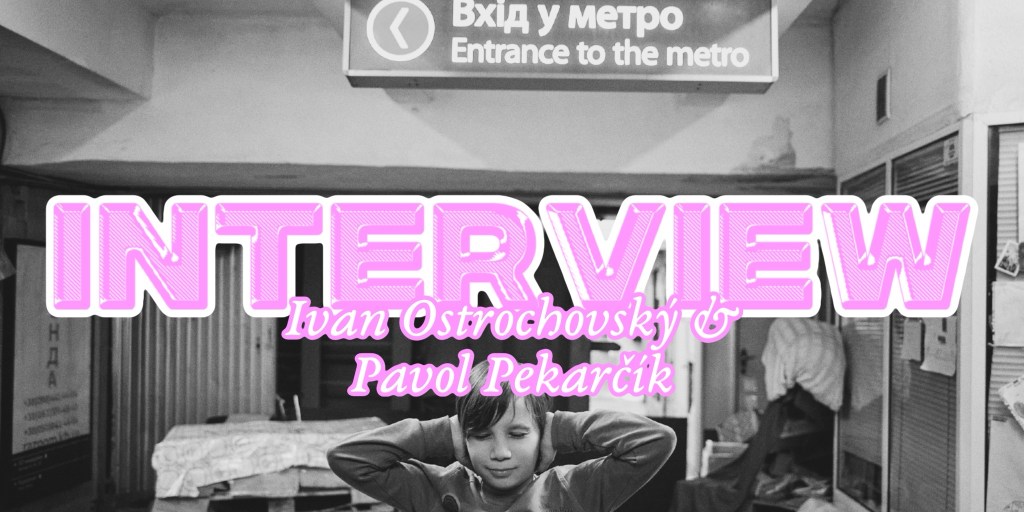
Photophobia, Slovakia’s contender for the Academy Award for Best International Feature, blurs the line between documentary and fiction. The story of 12-year-old Niki (and his family and friendships) while living in the Kharkiv metro during the still-ongoing Ukraine war, Photophobia won the Europa Cinemas Label Award at the Venice Days indie festival. We sat down over Zoom with directors Ivan Ostrochovský and Pavol Pekarcik, with the help of a translator, to chat about the feature.
Ayla Ruby: It’s lovely to meet you. Thank you both.
Pavol Pekarcik: Me too.
Ayla Ruby: So for both of you, can you talk about your journey to making this movie? How did you decide to tell this story, and how did bringing all of the pieces together work?
Pavol Pekarcik: Yeah, I try explain that. Looks… we are classmates. That’s mean, we know each other 30 years or 40. Yeah, we are pretty old guys.
Ayla Ruby: You have a long history.
Pavol Pekarcik:Yeah, we have a long history on school, or on some parties and so on. That means we know each other very well. And it’s a very important thing when you’re going to war zone. Because you know what you can expect from the other one. Yeah? And that’s mean that was very natural choice for each of us to go together with the humanitarian aid there. Because we also a little bit like… when we see something, some kind of massive destruction, we change from the directors to be a little bit activist, and we just packed the car and going to war, and give the things what people need. And that was start. Yeah? That’s all.
Ayla Ruby: So I read that… So I think that you started this by going to… Was it you went to a camp in 2022, and is that how your first inkling that this is a story that needs to be told?
Ivan Ostrochovský: Okay. When we bring the humanitarian helps, and because we have a lot of friends in Ukraine because we shoot films before in… I shoot movie there, with 107 mothers in Odessa prison, and we want to control what happened with these people. And after this, because when we in Kyiv, it was like end of March and somebody said that Kharkov, which is the biggest city, and which is only 30 kilometers from Russian border, that it was very dangerous situation because the Russian army was like…
Pavol Pekarcik: Encircled. Yeah, encircled like this.
Ivan Ostrochovský: Encircled the city and Pavol show you how we go to city, like this.
Pavol Pekarcik: Yeah. Like this. Only one way go in.
Ivan Ostrochovský: Yeah. We go the city, and we try and find… Because when we know we don’t want to shoot big heroic film about war because we know the Ukrainian filmmakers will be shooting this, a lot of these movies, and I understand why, but we looking for something like small, human, and ordinary. Because I teaching film history in Slovakia, and it was like always in Czechoslovak history, maybe 15 years after war, the filmmakers made only big heroic movies. And after this 15 years period, start shooting like easy story, how ordinary people reflect this period. And we want to jump in year 2040 when the heroic movies will be already-
Pavol Pekarcik: Done.
Ivan Ostrochovský: … on in cinemas, and we want to bring the very easy story. The war is somewhere behind, and in this situation, war is up and because… We find this metro. The metro was in maybe one kilometers out from the front line, and these kids… When we was there, the kids was two months inside, don’t go up, don’t see sunshine, only this crazy neon lamps. And the neon lamps was 24 hours. Like not dark. You sleep open eyes, like neon, like neon, neon, neon. It was very, very crazy for-
Pavol Pekarcik: For biorhythm, for biorhythm.
Ivan Ostrochovský: You lose your times in head. It’s morning, it’s… And it was very… I think so, very destructive for the people. Also the war, but you know. And we find 1500 people there, and it was like we start speaking with adults, and these adults was depressive because the war, and the house was destroyed, and somebody from family was hide or dead. But we don’t want to pushing for… because you shooting movie about the war, this topic is already depressive, and we want to find something what don’t pushing for this emotion. And we see the kids, which was more funny like these adults, and we think this will be good way how bring the story which will be… bring to different emotion which you see every day in TV. Because it already war was two months, and it was only destruction and dead people. And we know after one year… like situation is now, people is tired from war. Everybody say it was so long, and looking for a way how everything will be end. And me and Pavol, we hope when you see this film, you find different kind of emotion when you think about this war. And it was like… We won’t bring this.
Pavol Pekarcik: I just want to put some word on that. But because when you shoot some kind of ordinary action of ordinary guys, it’s easy to personificate you like spectators because you are also ordinary to them, and you can feel the pretty strong connection because when you’re a mother you can connect with what you can see.
Ivan Ostrochovský: But you never fight. You don’t never shoot, but you every day cooking, you every day cleaning. Kids, you every day teaching with kids, and the people knows this not… like don’t know how to…
Translator (Katarina Tomlova): Yeah. He’s saying that they don’t know how to fight in the frontline but everybody know how it is to cook, or how it is to put your children to bed. So it’s very much connectable to wider audience and understandable.
Ayla Ruby: That makes a lot of sense. So this obviously is like a hybrid, right? It’s there’s documentary, and then there’s acting. Can you talk about where the lines are for that? How the reality, the fiction, and obviously it’s a very profound and human story. And I think it’s done so beautifully, and I don’t think I said that at the beginning, but I loved it and I thought it was beautiful.
Ivan Ostrochovský: Everything is fictional, is casting. I’m joking. No, when we was there in the metro station, and we only two or three weeks not shooting, we only watched the situation and looking like we made like… because we have 1500 stories, and every stories was good for a movie. But we focus for kids, and we choose this family because it was whole family like father, mother, and kids. Because lot of families was only mother or only grandmother and we choose this family. They’re not actors. But we was nervous because we don’t know how will be this situation, will be… Because every day, it was possible the Ukrainian army bring these people out from this metro, like evacuation. And we don’t know we have one week or two weeks for shooting, and we wrote very easy script, like small guy meet girls and want to escape from metro because need the sun. And we wrote like… really it’s not script, is more like idea. And we want to find situation which will be slowly… the film will go from start to end. And very help was the cowboy guy was very helps bring the topic. The topic about how it is, love is important when this crazy situation-
Ayla Ruby: The musician?
Ivan Ostrochovský: Correct.
Ayla Ruby: The older man. Yeah. Yeah.
Ivan Ostrochovský: We call him the cowboy because had this hat. An cowboy in Ukrainian metro. And it was all… It was more hard was because the kids was very mentally tired. We can shoot only maybe two hours in day. It was 24 hours day. We was like we sleep there with these people, but find the moments when was possible the kids will be really… have funny moments. It was very hard. And we shooting three months, and you see every moment when the kids was really smiley.
Pavol Pekarcik: Happy.
Ivan Ostrochovský: Happy. And it was more biggest problem. Don’t pushing like, “We shooting today.” It’s not like when you’re shooting film with actors, but in normal situation. But also, we try, we hopes during the shooting the kids like little …
Translator (Katarina Tomlova): We will distract them, the attention of the kids.
Ivan Ostrochovský: This story is fiction, but people are real.
Pavol Pekarcik: No, no, I’m not on that. I disagree with him.
Ayla Ruby: Oh. Let’s talk about that.
Pavol Pekarcik: No, because look. Yeah, we fight with pretty insecurity what’s happened next. Ivan… because every evening they close the Panzer doors and every morning they open that, and you don’t know what be before the doors when they open, if that will be a Russian or Ukrainian. We was in pretty insecure situation. But when we have a little bit more of time, we can construct all the story from the observation. For me, observation is a very nice. And I think we have a very nice observation moments there, and these authentic… observation moments give the authenticity to this acting moment for me. For me, it’s work like this.
Ayla Ruby: It isn’t something you have to imagine, it’s something that it’s the reality almost that you are as filmmakers, you are also part of that reality. So the cinematography is really quite amazing, and given especially all of the constraints, given that you are in this situation. But I want to ask about the Super 8 mm filming and using that. Can you talk about that? Can you talk about the choice and the little scenes that go through the film?
Pavol Pekarcik: Okay. Me? No, we just looking for something because we just thinking how the kids can imagine the terror, what’s happened outside. And Super 8 is kind of when I told you Ayla Super 8, you are from LA?
Ayla Ruby: No, I’m from outside… I’m from Virginia.
Pavol Pekarcik: Okay, you are from Virginia. No. Because when I told you Super 8, you just imagine something when your family going through the mountains, and so something with a positive emotion and something familiar. And for us that was a perfect… because we have with us Super 8 mm camera, and for us it was a perfect medium for kind what kids can thinking about the war. And the Super 8, the small stories we shoot that because when you sit on the metro after three days, because people are depressive, and this depression grew on you, and you are pretty happy when you can go out. And we have these possibilities because we have many volunteers, friends, and they go evacuate somebody from the gray zone, they go to transport some medicals to the Bakhmut hospital. And especially, we want to go to… not want to, they ask us, “Hey you want to go to evacuation with us?” And we are so happy because you are on the sun. You feel the wind on the hair, not on mine, but on Ivan hair. He has a crazy hair. And from that trips, that was an action of the Super 8 things. But the Super 8 things was a pretty real also. You see the destruction on your own eyes. But Super 8s give them some kind of kid’s imagination or something like that.
Pavol Pekarcik: Tenderness. Tenderness.
Ivan Ostrochovský: In Czechoslovakia, we call this 8 millimeter camera like family format. Because people using for private situation. Like you born child, they’re shooting small kids, you’re shooting when somebody finishing high school, like nice family moments. And we want to use in this format which is using for nice moments, for not very nice moment. Like go to some-
Pavol Pekarcik: Some hybrid. Hybrid. Hybrid also.
Ivan Ostrochovský: And it was the idea, make these portraits. Because it was also very funny when we… The guy with the guitar and the keyboard. We say when we… Because his house was destroyed with bombing, and he putting the staff from house, and go to street. And Pavol say like, we can make your photo. And because it’s like the house was burning, and you lose everything, but when somebody make your photo, you make smile.
Ivan Ostrochovský: Because you see camera, you want to make… And it was-
Pavol Pekarcik: You want to be nice. You want to be nice on the… Some kind of-
Ivan Ostrochovský: It was like total… We imagine it’s crazy when somebody making this smile in this situation, and we want to find this kind emotion, like when something is total crazy and nice in the same moment.
Pavol Pekarcik: Same Ivan now. Like Ivan now, he’s a nice…
Ivan Ostrochovský: Crazy hair, but really nice.
Pavol Pekarcik: Yeah.
Ayla Ruby: Can you both talk about… So you mentioned your cowboy and the music. And can you talk about him? And how did you decide that this was a theme you wanted to carry through, and this was the way to do it because it’s well done.
Ivan Ostrochovský: You like cowboys?
Ayla Ruby: And folk music.
Ivan Ostrochovský: Yeah. No, it’s like I never say this because when the cowboy bring… like working with the main topics about the love, how… Because they are 85… He have 85 years.
Pavol Pekarcik: 86. 86.
Ivan Ostrochovský: And he looking for somebody too, like Nikita. And because when we was young with Pavol, the Russian army was in Czechoslovakia because Russian army go in 1968, like go Czechoslovakia.
Pavol Pekarcik: Invade.
Ivan Ostrochovský: And we must teaching Russian language when we was kids. And now we know Russian, and in Kharkov, everybody speak Russian because it’s like it’s Ukraine but Russian-
Pavol Pekarcik: Region.
Ivan Ostrochovský: Russian region. And everybody speak Russian, and this cowboy speaking in Russian, not in Ukrainian language.
Ayla Ruby: Interesting.
Ivan Ostrochovský: But we never… Because for us, it’s Russian language, we understand. We never have problem with like, he’s speaking Russian? And we have Ukrainian co-producer, and for him it was very hard when the Russian very poetic songs in this situation. Like also making like… when during the Second World War, American soldier and you using the Japan love songs when you guys fighting together. You’re like… And we don’t really realized in this moment, after shooting. And it was also like contrast, bring contrast also when the 8 millimeter and why kids was funny and adults was… It was more busy there. But it was like we don’t realizing when we shooting.
Pavol Pekarcik: I have a nice feedback about the cowboy because when some Ukrainian see him, they are pretty nervous from him, and they told me cowboy is something what Ukrainian needs to strip out. We want to strip out from the Russian, from the songs, from some kind of Russian pop, and they want to put it out.
Ivan Ostrochovský: And also was very funny because the guy is very nice, but everybody in metro hate him because he played… because when you are five months there, and the cowboy knows like 30 songs, but when you every day have the 30 songs, and he wake up in night and start playing, and people, “Ah, please don’t. No more. No more singing, please.” He have also bad biorhythm, and that mean he started singing at 3 o’clock in the morning, and on the mid of the day, he sleeps, and people are pretty crazy from him. On 86, I want to have so big energy to women like him. It will be nice for me. He’s a master of flirt, for me.
Ayla Ruby: And that came out, right, in the film I think. Can we also talk about the young… So Niki and the young girl. Can we talk about their story? How did that come to be? And are they friends now in real life? What has happened with that?
Pavol Pekarcik: For us, that was pretty easy because when we have a Nikita we just told ourselves, okay, we pick for him nicest girl on the metro, and yeah, that was-
Ayla Ruby: Worked.
Pavol Pekarcik: That’s it. That worked. Nikita was happy and Viki is, “Okay. I do that for you.”
Ivan Ostrochovský: No, because Viki was like metro star because when CNN or French television… because BBC and every two days, three days, TV news bring… go there and shooting how looks the metro. And because Viki was nicer girl in metro, everybody want to shoot with-
Pavol Pekarcik: With her.
Ivan Ostrochovský: Like, how you feel the war? And the kids was… But when you… The Viki have 100 interviews, like professional. How you feel in war, and this. And these kids started joking because when you shooting first time, it’s like you are really-
Pavol Pekarcik: You’re answering pretty serious. But after the 10th or 50 same question, after 50 days, you are pretty… You are joking, start joking.
Ivan Ostrochovský: And the Viki was tired, and we were like Niki and Viki don’t …
Translator (Katarina Tomlova): They didn’t know each other before.
Pavol Pekarcik: They didn’t because Nikita is from Kharkiv and Viki is from maybe around 12 kilometers is Lyptsi, is a village very close to Russian border. Viktoria is from there. But in metro station they’ll be together around five or six months they live together.
Ayla Ruby: Gotcha. And I know we’re pretty close on time, so I’d love to know, is there an enduring message that you want folks to know about the movie? Is there something that you want them to take away from Photophobia?
Pavol Pekarcik: For me, I cannot kill my activist heart. And for me it’s most important what I want to… I want, when people see this movie, to be a little bit… to help Ukraine in any possible way what they know because this destruction is massive. We don’t see nothing like this on the world.
Ivan Ostrochovský: And also, we know when we start shooting because when you know the war only from TV news, it’s the same every day, two years. And people logically lose the connection. It’s tired when you have the same information every day. And we hope so we bring the little different type of emotion, not about only speaking about guns and how kilometers or meters like front line is pushing and… Because I think so this is main goal for artists or like now… Because when the war starting, everything was total exciting, like war is bad. But I think so the main work is now when the normal people losing attention. And I think so now it’s really, really need working with how will be people thinking about this Ukrainian war.
Pavol Pekarcik: It will be nice when people after this movie feel that changing urgency. Because when you have some kind of the scale of the values, it cannot be on the first step somewhere up the price of the fuel. You know?
Ivan Ostrochovský: We understand everybody’s tired about the war, but Ukrainians is most tired.
Ayla Ruby: Yeah. Thank you both so much.
 offscreencentral.com
Leave a comment