
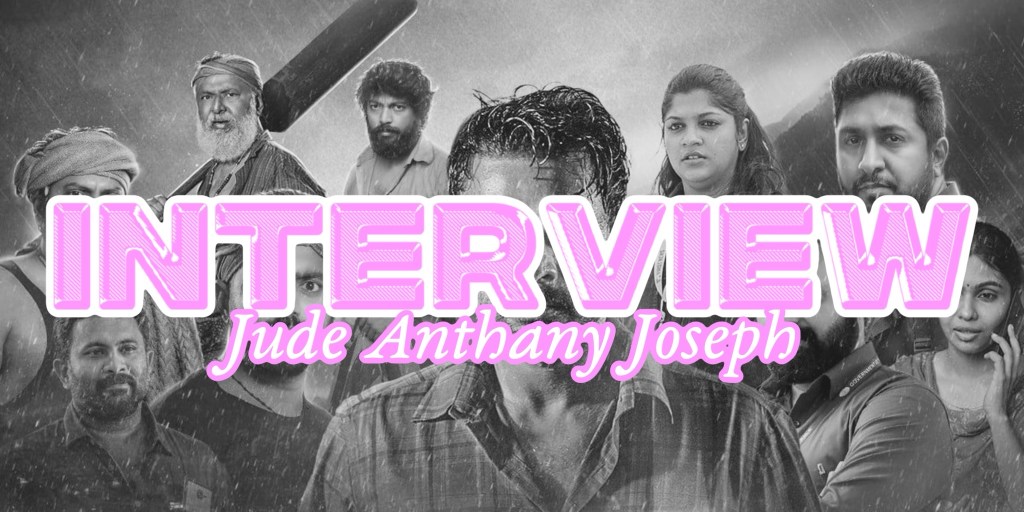
2018 is India’s official contender for Best International Feature at the upcoming Oscars. It’s a Malayam language survival drama inspired by the actual events of the 2018 floods in Kerala, India. We sat down with writer and director Jude Anthany Joseph to talk about bringing the story to screen, including his real-life experiences during the flood.
Ayla Ruby: First, it’s lovely to meet you. I was just watching part of the film again because I just thought it was really lovely.
Jude Anthany Joseph: Lovely to meet you too, Ayla. Yeah.
Ayla Ruby: Can you talk about your journey to this movie? I’ve read that there’s a very personal connection for you. Can you explain that?
Jude Anthany Joseph: Yeah, of course. The 2018 flood happened in Kerala, and I was a victim of that flood because in my house, it’s not a flood vulnerable area. So I was watching TV that the flood is coming to some houses in Kerala and I was, oh, sad thing happening around the Kerala. So the officials were saying nothing to worry about. So I just slept and during 1:30 AM or so, I had the sound and I opened my backyard. It’s like the flood was coming to my home. So it was scary and I had to rush from my home. My parents were some different place. My wife was in some other place, so we all divided by the flood, and it rained for five days and I lost my house, I lost my car, I lost my phone, everything I lost. And I thought, that’s the end of my life. And I was crying literally, after the flood then, “Okay, I lost everything, what should be do now.” But then this NGO came to me and they asked me if I can do a video for the people of Kerala to give them hope, saying that the life is not over yet, you have to live the life again. So I was the one who needed that video badly. So I thought, okay, let’s find out what is there in that story. Then I took all the newspapers, all the news cutting, the news videos during the flood time because I was not able to get connected to the world. So I just went through these news articles, the news videos. So I found that there was a great humanity story happened, which I was not aware of. So I thought I should make into film, not the video. And I tried to write the script from that time and I picked up the real stories from the news and I fictionalized the stories and I wrote the script and it was my 12th draft of the script when I started filming. And I worked really hard to make it as much real as possible so that the people of Kerala will connect to the characters of the film, and it worked. Yes.
Ayla Ruby: So it has very much so connected with people there and I think just around the world. Can you talk about… So you set out, hoping to have that happen, hoping to have that message. When did you realize that this is very powerful, this is very meaningful and resonating for people and for yourself? Was there an instance or when did you know this was very special?
Jude Anthany Joseph: Yeah, when I went through the news articles, my mindset was very different when I started reading the news because I was like, nobody did anything to help the people in Kerala. I was so angry at the government and other people for not giving proper informations or giving the rescue operations, but that was not the case. They tried to help us, the people, not the government, the people all came together like we are together, we have to help each other. So I thought that was not the case even a week before. The people were fighting against each other in the name of God, in the name of parties, the political parties, the caste, the color. So one week before the flood, everybody was fighting each other and when the flood came, the people all together, they were helping each other. So that was the moment I realized that, okay, this is the best story I have ever heard. I have to make the new film. And I tried to bring that unity in my film, and the moment I realized that this is going to be huge, the people of Kerala, their strength, their unity, it’s like a miniature version of the world. Wherever this disaster is happening all around the world, the people comes together and they’re trying to help each other. Even the hurricanes, the wildfires, the earthquakes, everything the people are joining like forces without any guidance from anybody. So it’s like the natural instincts of human being when it comes to a disaster, we help each other. That’s the best thing about human beings. So that was a thing which motivated me to do this film.
Ayla Ruby: So your main character played by Tovino Thomas. Can you talk a little bit about deciding to, but there are obviously lots of characters, but that main narrative telling his story and following that through the film, how did you decide on that? Can you talk about his character?
Jude Anthany Joseph: Sure. When I read the newspapers, there was this front page news about the guys who saved some people, and there was this big news about. Some people came in the boat and everything. But the news which I was most concerned about was a small column news about a guy saving a family and died there. And his name was not written in the news, only the age, like a guy aged 35 years old, died trying to save a family. That was a small news. So I thought people like them has to be acknowledged even after they lost their life. I wanted to make sure the people that unsung heroes of that flood and there has to be bringing to the big screen. And this family, family of mother, father, and disabled child, they lost their life. Only the mother survived and real incident, they were there at home, stuck in their home without getting any help and they tried to save this kid, but for two, three days they couldn’t hold him in water. And the mother got fainted out, and when she was awake, she found dead bodies of her own son and father. That was a real incident, which came in very small newspaper column. So I thought I should tell the story, and in fact, I tried to save them in my film. I saved the family in my film. In fact, only the mother survived, and she’s still there in Kerala living her life. That’s a very sad story about her.
Ayla Ruby: Can you talk about… was there a story that you didn’t get a chance to tell in the film that you really wanted to, or are there things or do you feel like focusing on the heroism of everybody, because everyone coming together, or do you think, was there anything you didn’t quite get to tell?
Jude Anthany Joseph: Yeah. I think to make a film, which is two and a half hours of length and to make all the incidents in the film, it’s very difficult job to do. But for my ninth draft, I had all these things done. It’s like three hours and half long film.
Ayla Ruby: Wow.
Jude Anthany Joseph: Yeah. So for my 12th draft, I just avoided few incidents, to say, one, the media person was there in the film, one lady who was very committed to the work and she was giving this news reports in the water and everything. And then she suddenly sees that a child is drowning in water. Then she throws her mic and camera and she jump into the water and saving that child. That scene was there in my script, but unfortunately I couldn’t film it because the length was going like anything. So I thought if I’m doing a web series about the flood, I will make sure that all the incidents I planned in the beginning, I’ll make sure that I’ll try to put them in that web series.
Ayla Ruby: So you started this film in 2019, right? Pretty soon or 2018?
Jude Anthany Joseph: 2018, I started the script and we started filming in 2019, but the COVID came, and we couldn’t show the fill, and then we started again in 2022.
Ayla Ruby: Can you talk about that? Was it challenging or was it not quite so challenging to get back into gear after that time period had gone by? And was there anything that had sat with you in the story that, maybe, you thought of things differently or you thought, okay, I’m a couple of years out, this is-
Jude Anthany Joseph: Yes. When we started filming the film in 2019 October, we shot for 15 days, the main character Anoop played by Tovino Thomas. His character, like his house, his shop and introduction were made, and this girl comes to the school as a teacher, they’re meeting. That portions we shot. And after that, we were trying to start the film by 2020 March, but unfortunately the COVID came, and we have to stop the filming and everything. So while the COVID was going on, I was with the script and I found it that if there is a blind man character and who’s coming to the shop, and I changed the script to the shop was initially owned by the hero character, then I changed it into the blind man’s shop, and I rewrote the script and it was good. The COVID gave me enough time to make the changes and the entire script was rewritten. And when I started the film again in 2022, I did not use any of the footages, which I shot in 2019 because the child was grown. He was so small when I filmed the sequences in 2019 and he was two years old.
Ayla Ruby: Yeah. They grow up.
Jude Anthany Joseph: Yeah, they grow up. He was taller. So I thought, okay, I’ll restart again. And I filmed that again because everything was changed and even the script became much better than the previous version. So I restarted the entire thing again.
Ayla Ruby There are a lot of moments. The film is very big, right? There’s water, there’s big… There’s a dam. I would love to ask about a couple of things, but can you talk about recreating this dam on set and the conceptualization of that process? Just I guess to start with?
Jude Anthany Joseph: Yeah. Actually the first thing I did was I went to the dam to visit the dam with my production designer and the cinematographer. We three went there and watched the entire dam from distance, and we went very near to the shutters of the dam, and we walked on the dam and everything and we took photos and we just recreated few portions in the sets. The extensions were done by the CGI people. We gave them the photos and everything because we didn’t get any permission to shoot near the dam because due to the security reasons. And so we created this tank in the set, only the shutter portions… We created two shutter portions and mechanically the production designer, they had this lever to operate the shutter just like they do in dams. But the thing was, it was under control and the water coming was using pumping system and the artificial drain and the night effects all coming together, they created the same scenario again. And the tree was artificial tree. We made the tree with the steel structure and the fiber and everything. So it was like an artificial tree and we just pulled the tree with some strings attached to it. So yeah, that thing worked actually.
Ayla Ruby: And so there’s another big moment too. There’s this helicopter rescue moment, where Anoop is on the radio and saving folks. Can you talk about that? Was there a real helicopter?
Jude Anthany Joseph: Yeah, actually I tried to hire a real helicopter, but the thing is that hiring a helicopter is too expensive, and we won’t be able to shoot the correct way because the helicopter, we can’t ask the helicopter to be stayed for three, four minutes. All the people that’s very risky to have that. So we created a helicopter with the help of the photos which are available in internet, we built the helicopter without the blades, and we hand the helicopter in a 150 feet crane. And above that, we had this propeller to give the wind effect. We had one propeller with the artificial rain above the helicopter with help of another industrial crane. And among that, we had this one more crane for the camera to be shot. And it was like three industrial crane, huge cranes using these things. And the people were like 300 to 400 people down and with the umbrellas and everything. So they act like they would shake the umbrella to get the feeling that this wind defect is happening. And in CGI we added the blades. We only added the blades in CGI, the rest of the portion, everything we built. And we took eight whole nights to shoot that sequence here.
Ayla Ruby: Oh, wow. I mean it’s really cool just to say… So there’s another moment too, and I’m asking about the specific moments just because I’m in awe, very interesting there were to pull off as a filmmaking perspective. So there are these fisher boats at the start, and I think that kind of, almost foreshadows that people are helping, people are getting together, but it looks like it’s on the ocean. Can you talk about that?
Jude Anthany Joseph: Yeah, actually, initially I thought I’ll go to the sea to shoot this entire sequences. And I tried to go to the sea. I found a place where we can shoot near the sea, but the kind of waves in the sea at nights are too dangerous to shoot because we cannot control the boats or we cannot control the artificial rain, the lights and everything. So it was the best way to shoot the entire sea sequences in a tank. So that same tank we used to for the shooting of flood sequences, we used the same tank and we created a huge tank, like 20 feet higher. And we filled the water in that tank and we created a ramp to the boats. So when the water is filled in that tank, it was like a water bucket. Whenever the tank is full, the bucket is full, it’ll automatically come on the ramp and to give this waves effect and manually we shake the boat using the steel rods attached to the boat. There were 15 people shaking the boats in the tank and we created this waves effect using bigger JCBs. The drums attached to the JCB will just push the drums in the water so that the waves be coming on the tank. So yeah, again, we took almost nine nights to shoot those sequences. The ship was not there in the tank. That’s the only part we created. We just put some big thing in the tank so that the people will look at that and we say, “Oh, huge ship coming.” So they acted like they’re seeing this bigger ship in tank. Yeah, the end sea sequences was shot in the tank, same tank.
Ayla Ruby: Oh, that’s amazing. So shifting gears a little bit back to the actors. You just mentioned the actors. Can you talk about bringing your cast on board? Can you talk about how did you get everyone that you wanted to have? Was there anyone’s performance that was just incredible, it really surprised you that you loved?
Jude Anthany Joseph: Yeah, all the characters that the actors are very familiar and they’re too busy with some other films also. They’re doing independent films as heroes. All the characters in the films are heroes. They are independent heroes. They’re doing their own films. But when I approached them for these characters, they were all interested and said that this is our film. This is the story of our Kerala, so we have to do this film. So they try to get dates from other films and they called them and said that we are doing this film, so we just need five or six days for the character of Anoop, who is the main character in the film, Tovino played that role. And we shot him for 45 days. And for this Asif Ali who has done the fisherman character. We did 22 days of him and six days of Kunchacko Boban who did the government official character, five days of this lady who was there for the media person. So it was like five to 10 days maximum of each artist will get, we had to manage the shoot within that. The most impressive portion I did was from an artist, underwater portions. We created another tank of 15 feet higher to shoot the underwater sequences. And for that shoot, that was the last three days of shoot of Tovino Thomas. And I asked him to… We planned it for three days, and he had this ear infection. And he was like, “Brother, I won’t be able to go under the water because I have this ear infection.” But he had only three days for us. The schedule was about to finish. Then he said, “Okay, let’s try this.” And our DOP, the cinematographer said that, “Tovino if you go under the water, if something happens, you just show the sign that it’s not good and if you want to go up, you just say go up.” So we cannot talk under the water. So when I said action, he can hear it using the underwater speakers and everything. He went there with the weight in his pocket, like to go underneath, you have to put some weights on you. And he went down with the weight and he took that big knife and he did all the things in the water and for the dying sequences, I said, “You have to give this action, like you’re losing your last breath.” And after that shot, I saw one bubble coming out of his mouth and I said, “Cut”. And when he was up, the first question he asked me, “Did you see the bubble I put at the end of the shot.” I was like, “Oh, my God, how did you do that?” And he was so professional and he was so passionate to do this character, even with this ear infection. And we finished the entire sequences within one and a half days, which was very helpful for the production also. We planned it for three days, but he finished in one and a half days. And that was amazing. I was really impressed by the artist. It was great.
Ayla Ruby: That’s incredible. Was there anything that, I know we’re starting to get close to time, but so is there an enduring message that you want to leave people with about the film, for the film? Because what do you want folks to remember?
Jude Anthany Joseph: Yeah, there is a sentence in the beginning of the film, A Disaster. It’s just a news until it hits us. We watch the disaster on television around the world. We are watching earthquakes, we are watching hurricanes, we are watching floods. I was a person who used to watch all the disaster on television, and I was like, “Oh, it’s very sad that these people are getting,” but I’ll forget that thing in the evening with some other news coming on the television. Unless the disaster comes to us, we don’t have any idea about how it’ll change a person’s life because I’m not the same before the flood or after the flood. I have changed a lot. The perception and the connection with the people I have now is not the same like before I had this flood. So the point is that you have to save your nature, the natural resources, and you have to help the people around you. If you are living in this entire world, you are lucky to have this life and you should be thankful to the people around you, thankful to the nature. And you have to thank everybody who is living in this world and who has lived in this world that time before you. So that’s the message I wanted to give the world. Yeah.
Ayla Ruby: That’s beautiful. Well, thank you so much and thank you for the interview and the time. And again, I really enjoyed the film.
Jude Anthany Joseph: Thank you so much, Ayla. Thank you so much that you love. And it was a great interview ever happened. Yeah.
Ayla Ruby: Oh, that’s wonderful.
Jude Anthany Joseph: Thank you so much.
 offscreencentral.com
Leave a comment