
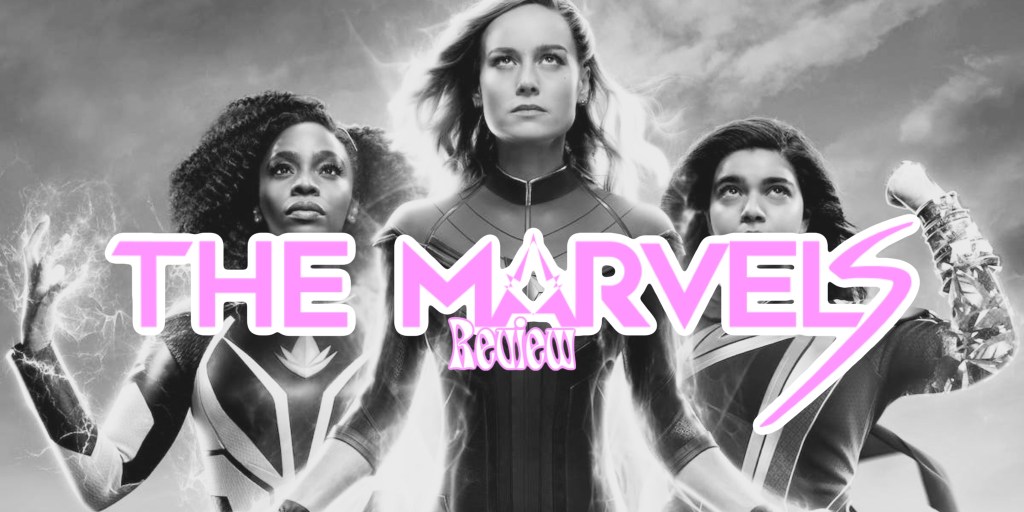
The idea of having a female superhero movie still feels like a novel idea in 2023. We praised Patty Jenkins when she helmed Wonder Woman for DC Films back in 2017. We were hyped when Marvel released their first solo female superhero movie, Captain Marvel, which ushered audiences into the MCU’s grand finale, Avengers: Endgame in 2019. Between 2020 and 2021, audiences were treated to Black Widow, Wonder Woman: 1984, andBirds of Prey. Despite all of these titles, there’s an impression that studios have to be convinced that female-centric superheroes and their stories are profitable and worth investing in. With a new cinematic landscape post-COVID lockdown, the bloat of superhero fatigue, and little promotion due to the SAG-AFTRA strike, the odds felt stacked against The Marvels, the follow-up to 2019’s Captain Marvel. However, The Marvels enters the MCU roster as a fun, breezy movie that revitalizes the fun in the franchise without compromising its three female protagonists.
Picking up the baton from Anna Boden and Ryan Fleck, Nia DaCosta takes on the mantle for the Captain Marvel sequel. After already making a name for herself in another franchise, Candyman, the first Black female director of Marvel wastes no time with The Marvels; literally, the movie is under two hours, keeping the story and action well-paced. Speaking of the action, because of the entangled nature of Carol, Monica, and Kamala’s powers, it allows for creative fight coordination and choreography as the actresses switch throughout the fight. The cinematography from Sean Bobbitt and editing from Catrin Hedström and Evan Schiff have a kinetic rhythm to it, combining to create inventive action scenes that aren’t just a CGI-fest.
The visual effects in The Marvels are an improvement compared to that of Ant-Man and the Wasp: Quantumania. Whether it was due to more time because of its changing release dates or taking advantage of more practical sets, we may never know. For one, incorporating the animation style from the Ms. Marvel series is a perfect introduction to who Kamala Khan is if someone had never watched the Disney Plus series; also, it’s evidence that Marvel can blend their properties visually across different platforms. Like Guardians of the Galaxy Vol. 3, The Marvels also leaned in to using visual effects for more grotesque props, for instance (light spoiler) Flerken eggs that pop up around the SABER space station. However, the visual effects aren’t perfect; there are a few scenes that noticeably could’ve been touched up and make it less apparent that the actors were in front of a green screen. This is why we support the visual effects artists unionizing.
The Marvels had the tall order to not only make a sequel to 2019’s Captain Marvel, but also bring Monica Rambeau and Kamala Khan from their Disney Plus series to the silver screen in an organic way to the story. On this front, The Marvelsseamlessly blended these three heroines together due in no small part to their onscreen chemistry together. In this outing as Captain Marvel, Oscar winner Brie Larson appears more comfortable as Carol, fitting into her role as commander. Teyonah Parris blends effortless humor with evocative sorrow, reuniting with her long-lost aunt and still grieving the loss of her mother. The standout that makes this trio shine is the genuine enthusiasm oozing out of Iman Vellani as Kamala Khan. Her passion and delightful demeanor kept this movie as fun as it was. Kamala is the glue that made this trio work as well as they did. Together, Larson, Parris, and Vellani’s performances worked in harmony, building each other up and allowing them all to shine.
In addition to the main three heroes, an unexpected highlight of The Marvels is the inclusion of the Khan family: her mother Muneeba, played by Zenobia Shroff; her father Yusef, played by Mohan Kapur; and her brother Aamir, played by Saagar Shaikh. Just like in the Disney Plus series, they bring so much of that natural family humor that comes from having a teenage daughter who also happens to be a superhero. Later, they ground so much of the cosmic absurdity with their fish-out-of-water humor when they joined Nick Fury on SABER. Speaking of which, Samuel L. Jackson appears like he’s having a blast quipping with Carol and interacting with the Khans. Compared the dour, serious nature of Secret Invasion, it’s nice to see Nick Fury let loose communicating with Carol, a friend he’s had for 30 years now.
When it comes to the strengths of The Marvels, it’s two-fold. First, The Marvels leans into the weird nature from comics without sarcasm or cynicism. Audiences are treated to Broadway-level musical moments, mainly when the trio of heroes land on Aladna where the inhabitants speak through singing. Sure, it’s a little cheesy but there’s a level of cheese that gets lost in comic book movies when they tend to be grounded and played straight serious. It’s a welcomed change of pace that allows The Marvels to stand out from the catalog of 33 movies. Second, The Marvels is at its best when Larson, Parris, and Vellani are onscreen together. Whether it’s a training montage set to The Beastie Boys or Carol confiding in Monica and Kamala how she falls short of the hero they see her as, the three Marvels give the movie its heart. By the end of the movie, it’s clear what they mean to each other and each other’s impact moving for. The three heroines are the best part of their own film, which is saying something when antagonists and villains often steal the limelight.
Speaking of which, the mark of a great Marvel movie often comes down to its villain. Unfortunately for The Marvels, this is where the movie falls flat. This is no part due to Zawe Ashton or her abilities as an actor playing Ronan the Accuser’s successor, Dar-Benn; in fact, she brings the same level of fanaticism intensity that Lee Pace when he played a Kree villain. The story had something interesting set up with Dar-Benn’s connection to Carol, but any further follow-through is dropped. This is the third time a Kree Marvel villain failed to make an impression (Ronan the Accuser, Yon-Rogg, and Dar-Benn); what’s worse, it’s the second time this year that narrative opportunities to do something with the Skrull-Kree conflict fall flat. There is something rich and allegorical that could be told with the Kree and the Skrulls, considering the current state of world events. Yet somehow, Marvel doesn’t seem to know how to crack the code. Then again, Marvel hasn’t had the best track record of going deeper with politics within the MCU.
We can’t discuss a Marvel movie without discussing the ending and mid-credits scene. Without spoiling anything, based on the last scene and the mid-credits scene, the puzzle pieces are starting to come together as to where the MCU is heading. After Phase 4 laying a lot of groundwork, much like Phase 1 and Phase 2 did, it’s nice to these scenes being used towards crafting the future. Instead of dropping deep cut comic book Easter eggs, these scenes use characters that have already been established to tease what’s ahead. Selfishly as a fan, these scenes made me downright giddy.
Despite the changing release dates, skepticism of the future of the MCU, and the weight of Marvel’s past box office glory, The Marvels defiantly sets out to be its own story of three women supporting each other and saving the universe together. It’s refreshing to see Nia DaCosta and her creative team have fun with superheroes on a cosmic adventure in a breezy, well-paced movie. Once more, The Marvels stands as a reminder to little girls that they, too, can be the heroes of their own story.
No, this isn’t the Marvel movie that’s going to make critics and audiences proclaim that the “MCU is back in its glory days.” It’s not up to The Marvels to carry that weight; it is one part of a new phase of movies and series that Kevin Feige has orchestrated and will come together in this saga’s endgame, Kang Dynasty and Secret Wars. While it remains to be seen whether Feige can pull off this feat again, The Marvels and the Season 2 finale of Loki are evidence that the creative juices haven’t run out for Marvel.
Grade: B-
Oscars Prospects:
Likely: Best Visual Effects
Should be Considered: None
Where to Watch: In Theaters

Meredith Loftus
she/her @meredithloftus
Lives in LA. Enjoys baking, hiking, and explaining why Mamma Mia deserves its own cinematic universe.
Favorite Director: Wes Anderson
Sign: Gemini
 offscreencentral.com
Leave a comment