

Within the first five seconds, The Killer gives off major Cool Girl energy as David Fincher’s sleekest film. It is a true technical treat for longtime Fincher Fans, proving why he is a master of the digital film age.
Based on the French graphic novel, The Killer is a sleek, technological noir that doesn’t meet the normal cliches of an assassin story. Michael Fassbender as The Killer is a bit of a khaki-wearing dweeb that listens to The Smiths and does yoga all while exuding sexual energy through his calculated routine. His usual plan is thrown off when a bullet hits a female target, making for a clean getaway through a gorgeously edited sequence backed by the thumping score of Trent Reznor and Atticus Ross only to discover his girlfriend is put into immediate danger from his mistake.
Andrew Kevin Walker’s script perfectly paces out a standard revenge thriller through multiple cities of New Orleans, New York, and Chicago. With sparse dialogue, it is a film that heavily relies on its technical craftsmanship to deliver, and this is a showcase of the power of sound and sight. The film adaptation matches the same deadpan comedy of its source material elevated by the magic of David Fincher’s touch. Since the film revolves strongly around the idea of details, Fincher makes sense as the perfect director to create a compelling observation of a killer doing the unglamorous tasks of hardware store trips and picking up Amazon deliveries. While it does align with Fincher’s usual directing approach, he is willing to sacrifice his comfort zone to push his limits as a filmmaker.
Like previous Fincher characters, The Killer doesn’t ask for audience empathy. This is a world with bad people doing bad things leading to worse decisions as he goes on with his plan. He is a normal man, save for the killing, who messes up and has to face his actions in the only way he knows how to move on with his life. He is not a hero or antihero, just a bucket hat-wearing killer who prefers a McGriddle with no bun. It is a fairly simple character not masked by complexity, but his ability to blend in or stand out as a form of survival in this underground world. The Killer doesn’t have a name or identity, he uses aliases and fake passports to complete his job.
There are no moral qualms for what he does, it is a job to him. A job that requires commitment and precision, but what happens when something like killing suddenly becomes personal to him? There is some deep-rooted emotion masked by the mantras and routines, but it’s apparent within The Killer. Subconsciously The Killeris a story about how we define ourselves by our professions, and the world is black and white with no gray space. His work as a hitman requires a majority of his time doing nothing until it’s time to do his job. As he goes on his journey, he resembles a disgruntled employee dealing with the consequences of his mistake and then seeking revenge on his own company for taking over his life. The Killer has a moment to come to terms with his profession as just another soul-sucking gig making him more like us than we could’ve ever imagined. An average khaki-dressed man is a part of a much larger system.
Michael Fassbender as The Killer never lets up on his cold-blooded persona. There are no moments to chisel away at his icy exterior, but instead elevate the nature of this man. He is not seeking redemption but precision for his job. At no point did he let himself question morals; he had no issue snapping a neck to attain his goal. There is a cynical nature to how he operates but because we are placed in his internal monologue there is comedy to hearing himself repeat mantras and lies to keep going. Almost as if he is trying to justify everything to himself with how he feels about the world. The smooth deliveries from Fassbender captivate your ears as he melodically describes humanity’s worst qualities. The funny part is that for someone as striking as Fassy, he manages to effortlessly disguise himself in the backdrop. These internal monologues make The Killer one of Fincher’s funniest films full of a running gag of fake names and a glimpse into the rise and fall of a tech-dependent world. Fincher might not have wanted Fassbender as his Steve Jobs, but he makes a fantastic Killer.
The Killer operates as a spatial experience that communicates subjectivity and objectivity mainly from the point of view of The Killer. The audience is so close, not in terms of distance but sound in The Killer’s existence. The visuals and sound work beautifully together to polish a version of this unnamed man for the audience to move between his feelings and their own. Fincher and his frequent collaborators, Erik Messerschmidt, Kirk Baxter, Ren Klyce, Trent Reznor, and Atticus Ross place the audience in the mind of its titular character through multiple segments racing around the world. Each act is perfectly attuned both visually and audibly to how the brain intakes noise and sights. Through six chapters plus a prologue and epilogue, The Killer is dripping in crisp and sophisticated styling. Containing all core Fincher themes of obsession and perfection, The Killerfeels like the culmination of his filmography into one that results in a rewarding viewing experience.
The Killer innovatively uses sound to put you in the temporal lobe of its central figure. Ren Klyce beautifully layers sounds on top of sounds for you to dissect from the machinery in the hospital to the ringing in The Killer’s ears. It speaks to the amount of detail put into craft a whole existence for a single man. Trent and Atticus’s haunting electronic score works on a subliminal scope as the pulses mirror Fassy’s thought process in real time diving deeper and deeper into his neurons. Sound is a character in the film as Fincher chooses to show different visuals of well-known cities focusing on the sound to tell the story more so than what is on the screen. This perfectly places the audience into the soundscape of whatever atmosphere they are inhabiting.
Lately, the digital films of the 2020s have felt offensively flat, but Erik Messerschmidt is here to save the form. Coming off an Oscar win for the richly shot Mank, Messerschmidt teams back up with Fincher pulling in classic composition, blocking, and lighting that oozes in every frame especially that landscape look at the Paris apartment our assassin is staking out. It is so observational and voyeuristic, presenting clarity in how the human eye takes in images. It feels like a flex for cinematography with the intent behind each shot. Even as the story gets a bit more chaotic, Messerschmidt switches precision to off-center with handheld shots to represent what is at stake when The Killer does not stick to his plan.
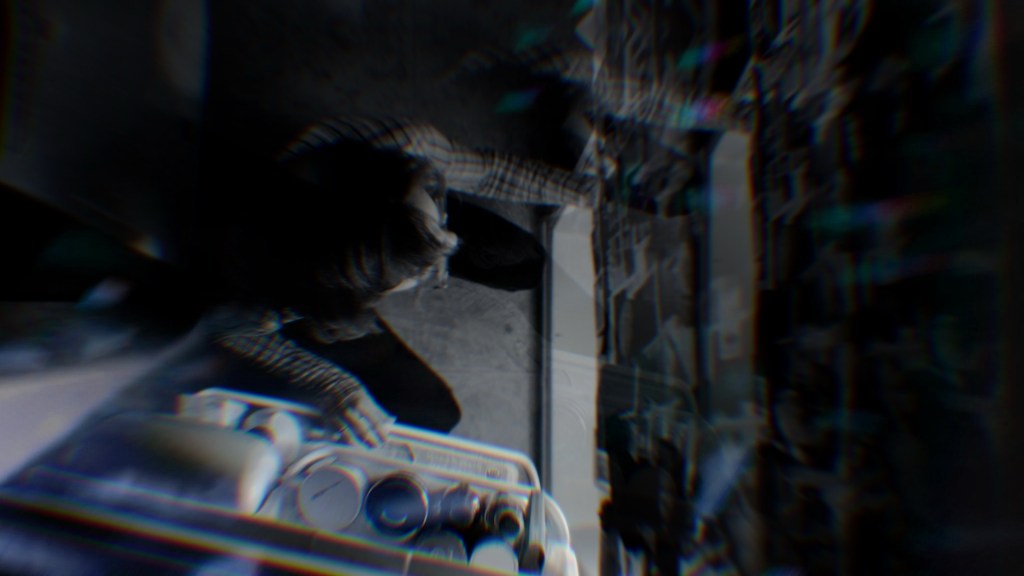
One of the most surprising sequences from a director who I wouldn’t describe as an action guy is the insane low-lit fight sequence. Fincher subverts expectations from his visuals and sound choices, focusing on a more muted approach to one of the more suspenseful scenes. There is a lingering hand-to-hand combat full of intensity with only sound that supports the placement of the player as he moves in. Messerschmidt never leaves you wishing the film was not shot in digital so you can feel something, The Killer is industrial, but the warmth of the visuals adds a soul to the nameless man.
The Killer is a part of David Fincher’s greatest hits, being a prime example of what happens when everyone on your team is aligned in making the same film. While to some it may feel return to form, he manages to surpass our expectations with an emotional, chaotic world full of detail and planning. In a rare occurrence, like The Killer, he allows humanity to come inside his ice castle which leads to an entertaining thriller. He has reworked his quirks for the modern age, simply refining and reinventing which makes whatever else comes next from him highly anticipated.
Grade: A+
Oscars Prospects:
Likely: Best Sound, Best Original Score
Should be Considered: Best Actor (Michael Fassbender), Best Editing, Best Cinematography, Best Costume Design, Best Director, Best Adapted Screenplay
Where to Watch: In Select Theaters; Streaming on Netflix

Jillian Chilingerian
she/her @JillianChili
Lives in LA
Favorite Director: David Fincher
Sign: Leo
 offscreencentral.com
Leave a comment