
At Oscars Central, we stand in full solidarity with both the WGA and SAG-AFTRA. This piece was written during the 2023 WGA and SAG-AFTRA strikes. Without the labor of the writers and actors currently on strike, films would not exist. If you are able to, you can make a donation to the Entertainment Community Fund here.
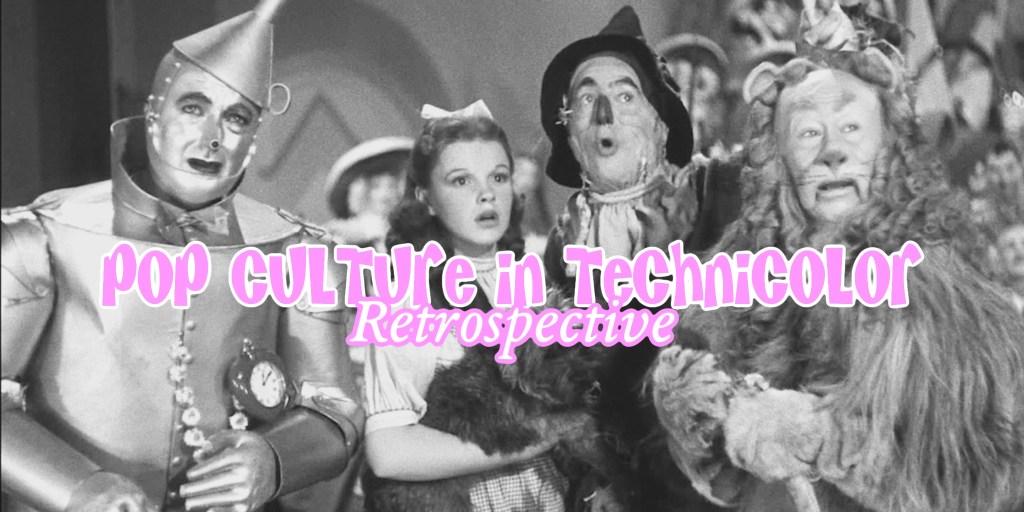
The 2022 documentary Lynch/Oz describes The Wizard of Oz (1939) as “America’s primordial fairytale.” An enduring emblem of pop culture, few children’s films of the 1930’s and the decades before having lasted in the American consciousness quite so brightly. A novel set during the turn of the 20th century, grounded in the Kansas dust fields with the distinct tornado whistling through its frame. This is one of the great American stories, akin to Mark Twain and Louisa May Alcott. It’s a film that is quite frankly about the American dream. And yet, what makes the success of The Wizard of Oz so remarkable is its strangeness. The film leans into darkness, whimsy, and even surrealism.
As is widely known, the film was not successful during its first run in theaters. Despite being released during a year considered Hollywood’s greatest of all time, The Wizard of Oz failed to make a profit during its first run. America turned its attention to domestic dramas like Gone with the Wind, while remaining neutral as the geopolitical environment of Europe took a dark turn. The film was later reintroduced to audiences through television in the 1950’s. This is somewhat ironic, as television at the time was obviously in black and white, and what makes The Wizard of Oz so wonderful is its use of color as a technical marvel.
Released during the crux between black and white and color film, The Wizard of Oz was one of the first examples of a prestige picture stepping into the color world. The iconic sequence in which Dorothy transitions from sepia gray to color is perfectly executed by the filmmaker. Chaos from the tornado stops abruptly, silence fills the frame, and Dorothy seamlessly moves into a new world. The Wizard of Oz is a technical achievement in the history of film. Seamlessly blending special effects such as the tornado– which is spooky to this day– and beautiful practical sets, this balance pulls the world of Oz together.
Despite being a financial bust at the time, the film did receive recognition at the 1940 Oscars. The movie was recognized for its two most lasting triumphs: Judy Garland and the film’s music. The film was nominated for Art Direction, Special Effects, Original Song, Original Score, and Best Picture. The film was awarded best song for “Somewhere Over the Rainbow” and best original score. Judy Garland received a special honorary Juvenile Academy Award, one of the only twelve of these awards that were ever given out. They’re a fun Oscars quirk– literal mini Oscars.
Recognition of Garland’s talents is well deserved. At just sixteen, she carries the film, at once tearfully melancholic and wonderfully earnest. It’s very easy for child actors to become sickeningly sweet, struggling to reach certain depths. Judy circumvents this flaw, expressing sentimentality that leaves no room for cynicality. There are two scenes in particular that represent the heights of this performance. The first scene is her beautiful rendition of “Somewhere Over the Rainbow” in her broad emotive voice. The second is her tearful coming of age, when she realizes in the end before she taps her slippers that there’s no place like home. It’s genuinely one of the greatest child performances of all time, joining the likes of Tatum O’Neal in Paper Moon and Alex Hibbert in Moonlight.
In terms of criticism and the broader film community, The Wizard of Oz remains present in the canon. The American Film Institute loves this film, naming it the 10th greatest American film of all time on its 2007 “100 Years… 100 Movies” list. Granted, it decreased by four spots compared to the 1998 list. The 2022 Sight and Sound “Greatest Films of All Time” poll placed this film at 144th place in the critics’ poll, and 322nd in the director’s poll.
And yet, the film remains a teaching tool for its simple, yet sharp screenplay. Foreshadowing, set-ups and pay-offs, and witty humor run through the script, making it a wonderful tool for young screenwriters. I myself was taught this film in my screenwriting class in school. The parallels to Dorothy’s real world– beyond being clever writing– are a tribute to childhood imagination. The film even subverts typical patterns in musicals. Often, the protagonist has a “I Want” song, in which they express longing for something more than their current predicament. Dorothy expresses this in “Somewhere Over the Rainbow,” wanting to go somewhere where she will be treated with a little more warmth and kindness. The screenplay refutes this in the end, helping Dorothy to understand that the love she receives from her aunt, uncle, friends, and Toto is enough. In other words, Dorothy is taught to appreciate what she already has. The writers do this by taking everything away from her and replacing it with a world that seems to be more strange than comforting.
The film remains an icon of pop culture, with films as recent as Barbie (2023) referencing the iconic picture. We are set to see an adaptation of the musical Wicked next year. Outside of the movies, hundreds crowd to see the ruby slippers at the Smithsonian every day. It’s wonderful to see this prop honored at a museum set in the nation’s capital, aiming to educate about American history. I saw them myself when I was a teenager. I remember seeing the red sequins dazzling in the cases’ lights, with eyes struggling to get a glimpse of the shoes. Even at that point I understood these were an important object, and it makes my heart happy that the little shoes Judy danced in are given a place of honor in the narrative of pop culture and broader American history.
 offscreencentral.com
Leave a comment